









<?xml version="1.0" encoding="UTF-8"?><feed
	xmlns="http://www.w3.org/2005/Atom"
	xmlns:thr="http://purl.org/syndication/thread/1.0"
	xml:lang="en-US"
	>
	<title type="text">BRIANKEATING</title>
	<subtitle type="text"></subtitle>

	<updated>2026-05-05T14:17:12Z</updated>

	<link rel="alternate" type="text/html" href="https://briankeating.com" />
	<id>https://briankeating.com/feed/atom/</id>
	<link rel="self" type="application/atom+xml" href="https://briankeating.com/feed/atom/" />

	<generator uri="https://wordpress.org/" version="6.9.4">WordPress</generator>
<icon>https://briankeating.com/wp-content/uploads/2024/09/sb8ZzbFR_400x400-150x150.jpg</icon>
	<entry>
		<author>
			<name>sabartigas</name>
					</author>

		<title type="html"><![CDATA[I&#8217;ve never had a boss and it ruined me]]></title>
		<link rel="alternate" type="text/html" href="https://briankeating.com/boss/" />

		<id>https://briankeating.com/?p=7760</id>
		<updated>2026-05-05T14:17:12Z</updated>
		<published>2026-05-05T13:58:45Z</published>
		<category scheme="https://briankeating.com" term="Blog" />
		<summary type="html"><![CDATA[I&#8217;ve never had a boss and it ruined me Dear Magicians, They say: “Do what you love and you’ll never work another day in your life!” ​ ​ I say “Yes, that’s because you’ll be unemployed.” ​ Maybe you should take this with a grain of salt because I say this as someone who has never had a boss.. Not really. I washed dishes in high school. I worked my way up to sous chef, then assistant chef, burning my forearms on sheet pans and learning that the fastest route to humility is a Friday dinner rush. But after that? After high school ended? I walked into a university and never walked out. I’m in 50th grade. I’ve been continuously enrolled in some form of school since I was four years old. Academics have advisors, but we don’t think of them as bosses. I have graduate students and postdocs, but I don’t think of them as employees — even though, technically, they are. Nobody clocks in. Nobody clocks out. The org chart is a polite fiction we maintain for the grant agencies. Now, as a professor, I have a department chair. But as my friend Prof. Inna Vishik says “People outside of academia sometimes find the concept of a department chair confusing. They are not your boss, manager, or CEO. They are more like an elected representative who negotiates with terrorists on your behalf.” This sounds like a privilege, and it is. But it’s also a strange psychological experiment. When nobody tells you what to do, you find out very quickly what you actually are. There’s no structure to rebel against, no manager to blame, no corporate ladder to climb or refuse to climb. There’s just you and whatever it is you can’t stop doing. For me that turned out to be building telescopes, chasing the oldest light in the universe, and then, to my own surprise, talking about it on camera to anyone who’d listen. But honestly freedom didn’t make me productive. The freedom made me liable only to myself. Every detour I took under my own steam turned out to be less of a detour and more of a trial: is this is who I was meant to be? Compared to the terrifying, unsupervised void of an open academic calendar, dodging third-degree burns and screaming line cooks felt like a day spa. I think most people suspect this about themselves but never get the chance to test it. The boss, the quarterly review, the two weeks of vacation, retire at 65 these are structures that keep you from finding out. Which might be the point. Because finding out who you are without external constraints is thrilling and terrifying in roughly equal measure. The data backs this up, by the way — the Wilson Effect — the finding that as you gain autonomy, your internal predispositions express themselves more fully (→Source). The adult version of you isn’t who you were trained to be. It’s who you would have been anyway. Freedom doesn’t create your identity. It reveals it. I got lucky. I stumbled into a career with no boss, no ceiling, and nowhere to hide. Fifty grades in, I’m still not sure if I’m a success story or a cautionary tale. But I wouldn’t trade it for a corner office, even if a micromanaging middle manager is a much easier scapegoat than the laws of the universe. I think the advice should be to “work a job you love and you’ll never want to retire!” Until next time, have a M.A.G.I.C. Week, Brian Appearance ​The Story of Everything Dazzled Me: I Wasn’t Prepared &#124; Science and Culture Today​ ​Every Movie Coming to Theaters This Week, Including a Major Sequel​ So it turns out I’m now a movie star. Sort of. The Story of Everything: The Science That Reveals a Mind Behind the Universe hit theaters April 30, and yours truly appears alongside Stephen Meyer, Peter Thiel, John Lennox, and a murderers’ row of scientists and philosophers making the case for cosmic fine-tuning. The film is based on Meyer’s Return of the God Hypothesis and — I have to admit — the production quality is genuinely stunning. The science animations alone are worth the ticket price, and the mid-century set design somehow makes a bunch of academics look like we belong on camera. (My brother had thoughts about that claim.) Two separate reviews this week named me as a featured physicist in the film, which means my IMDB page like my ego just got a little swole. At this rate, I may never have to write Losing the Oscar — I’ll just keep collecting credits until the Academy comes to me. ​Check your local listings for showtimes. Genius https://www.youtube.com/shorts/tJTa-FTegq0 Three interstellar messengers have crossed our cosmic doorstep: 1I/&#8217;Oumuamua, 2I/Borisov, and now Comet 3I/ATLAS. The latest arrival barreled in near Jupiter at ~58 km/s on a hyperbolic escape trajectory, proving it originated far beyond our Solar System—likely wandering the galaxy for over 3 billion years. Unlike native comets, which preserve a frozen record of our own formation, interstellar comets sample alien planetary nurseries. Rapid-response observations from Hubble Space Telescope and James Webb Space Telescope captured its chemistry despite extreme speed. The result: a rare, fleeting probe of other star systems, offering empirical access to the building blocks of worlds far beyond our Sun. Read the story here on 3i/atlas and watch my recent short with Avi Loeb for more on this curious comet. Image Recorded a podcast with Mayim Bialik and Jonathan Cohen for the Bialik Breakdown and it was truly a Big Bang 😂. Should be out in a few weeks and I’ll let you know when it drops. Conversation https://www.youtube.com/watch?v=6iMiCJHxTww Latest on Into The Impossible I just sat down with Tom Griffiths and it challenged one of the laziest assumptions in AI — that more data automatically means more intelligence. He makes the case that a child, armed with almost nothing, can outperform systems trained on the entire internet… and that gap isn’t closing anytime soon. We get into why language models]]></summary>
					<content type="html" xml:base="https://briankeating.com/boss/"><![CDATA[		<div data-elementor-type="wp-post" data-elementor-id="7760" class="elementor elementor-7760" data-elementor-post-type="post">
				<div class="elementor-element elementor-element-3aaea4f5 e-flex e-con-boxed wpr-particle-no wpr-jarallax-no wpr-parallax-no wpr-sticky-section-no wpr-equal-height-no e-con e-parent" data-id="3aaea4f5" data-element_type="container" data-e-type="container">
					<div class="e-con-inner">
		<div class="elementor-element elementor-element-9aaf710 e-con-full e-flex wpr-particle-no wpr-jarallax-no wpr-parallax-no wpr-sticky-section-no wpr-equal-height-no e-con e-child" data-id="9aaf710" data-element_type="container" data-e-type="container">
		<div class="elementor-element elementor-element-1d9cd77 e-con-full e-flex wpr-particle-no wpr-jarallax-no wpr-parallax-no wpr-sticky-section-no wpr-equal-height-no e-con e-child" data-id="1d9cd77" data-element_type="container" data-e-type="container">
				<div class="elementor-element elementor-element-e0ca46b elementor-widget elementor-widget-heading" data-id="e0ca46b" data-element_type="widget" data-e-type="widget" data-widget_type="heading.default">
				<div class="elementor-widget-container">
					<h2 class="elementor-heading-title elementor-size-default">I've never had a boss and it ruined me</h2>				</div>
				</div>
				<div class="elementor-element elementor-element-ec7a2fd elementor-widget elementor-widget-image" data-id="ec7a2fd" data-element_type="widget" data-e-type="widget" data-widget_type="image.default">
				<div class="elementor-widget-container">
																<a href="https://www.fathomentertainment.com/releases/the-story-of-everything/" target="_blank" rel="noopener">
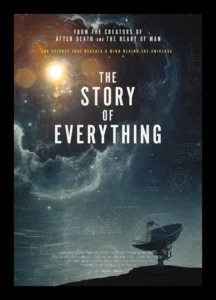
							<img fetchpriority="high" decoding="async" width="800" height="330" src="https://briankeating.com/wp-content/uploads/2026/05/the-story-of-everything.jpg" class="attachment-large size-large wp-image-7762" alt="" srcset="https://briankeating.com/wp-content/uploads/2026/05/the-story-of-everything.jpg 891w, https://briankeating.com/wp-content/uploads/2026/05/the-story-of-everything-300x124.jpg 300w, https://briankeating.com/wp-content/uploads/2026/05/the-story-of-everything-768x316.jpg 768w" sizes="(max-width: 800px) 100vw, 800px" />								</a>
															</div>
				</div>
				<div class="elementor-element elementor-element-79d922d elementor-widget elementor-widget-text-editor" data-id="79d922d" data-element_type="widget" data-e-type="widget" data-widget_type="text-editor.default">
				<div class="elementor-widget-container">
									<p class="graf graf--p">Dear Magicians,</p><p class="graf graf--p">They say: <em class="markup--em markup--p-em">“Do what you love and you’ll never work another day in your life!” </em>​ ​ I say “Yes, that’s because you’ll be unemployed.” ​ Maybe you should take this with a grain of salt because I say this as someone who has never had a boss..</p><p class="graf graf--p">Not really. I washed dishes in high school. I worked my way up to sous chef, then assistant chef, burning my forearms on sheet pans and learning that the fastest route to humility is a Friday dinner rush. But after that? After high school ended? I walked into a university and never walked out. I’m in 50th grade. I’ve been continuously enrolled in some form of school since I was four years old.</p><p class="graf graf--p">Academics have advisors, but we don’t think of them as bosses. I have graduate students and postdocs, but I don’t think of them as employees — even though, technically, they are. Nobody clocks in. Nobody clocks out. The org chart is a polite fiction we maintain for the grant agencies.</p><p class="graf graf--p">Now, as a professor, I have a department chair. But as my friend <a class="markup--anchor markup--p-anchor" href="https://x.com/InnaVishik/status/2048869886794101240?s=20" target="_blank" rel="noopener noreferrer noopener" data-href="https://x.com/InnaVishik/status/2048869886794101240?s=20" data->Prof. Inna Vishik</a> says <em class="markup--em markup--p-em">“People outside of academia sometimes find the concept of a department chair confusing. They are not your boss, manager, or CEO. They are more like an elected representative who negotiates with terrorists on your behalf.”</em></p><p class="graf graf--p">This sounds like a privilege, and it is. But it’s also a strange psychological experiment. When nobody tells you what to do, you find out very quickly what you actually are. There’s no structure to rebel against, no manager to blame, no corporate ladder to climb or refuse to climb. There’s just you and whatever it is you can’t stop doing. For me that turned out to be building telescopes, chasing the oldest light in the universe, and then, to my own surprise, talking about it on camera to anyone who’d listen.</p><p class="graf graf--p">But honestly freedom didn’t make me productive. The freedom made me liable only to myself. Every detour I took under my own steam turned out to be less of a detour and more of a trial: is this is who I was meant to be? Compared to the terrifying, unsupervised void of an open academic calendar, dodging third-degree burns and screaming line cooks felt like a day spa.</p><p class="graf graf--p">I think most people suspect this about themselves but never get the chance to test it. The boss, the quarterly review, the two weeks of vacation, retire at 65 these are structures that keep you from finding out.</p><p class="graf graf--p">Which might be the point. Because finding out who you are without external constraints is thrilling and terrifying in roughly equal measure.</p><p class="graf graf--p">The data backs this up, by the way — the Wilson Effect — the finding that as you gain autonomy, your internal predispositions express themselves more fully (→<a class="markup--anchor markup--p-anchor" href="https://pubmed.ncbi.nlm.nih.gov/23919982/" target="_blank" rel="noopener noreferrer noopener" data-href="https://pubmed.ncbi.nlm.nih.gov/23919982/" data->Source</a>). The adult version of you isn’t who you were trained to be. It’s who you would have been anyway. Freedom doesn’t create your identity. It reveals it.</p><p class="graf graf--p">I got lucky. I stumbled into a career with no boss, no ceiling, and nowhere to hide. Fifty grades in, I’m still not sure if I’m a success story or a cautionary tale. But I wouldn’t trade it for a corner office, even if a micromanaging middle manager is a much easier scapegoat than the laws of the universe.</p><p class="graf graf--p">I think the advice should be to <em class="markup--em markup--p-em">“work a job you love and you’ll never want to retire!”</em></p><p class="graf graf--p">Until next time, have a M.A.G.I.C. Week,</p><p class="graf graf--p">Brian</p>								</div>
				</div>
				<div class="elementor-element elementor-element-8306fbe elementor-widget-divider--view-line elementor-widget elementor-widget-divider" data-id="8306fbe" data-element_type="widget" data-e-type="widget" data-widget_type="divider.default">
				<div class="elementor-widget-container">
							<div class="elementor-divider">
			<span class="elementor-divider-separator">
						</span>
		</div>
						</div>
				</div>
				<div class="elementor-element elementor-element-5b5a476 elementor-widget elementor-widget-heading" data-id="5b5a476" data-element_type="widget" data-e-type="widget" data-widget_type="heading.default">
				<div class="elementor-widget-container">
					<h2 class="elementor-heading-title elementor-size-default">Appearance</h2>				</div>
				</div>
				<div class="elementor-element elementor-element-0f807a8 elementor-widget elementor-widget-image" data-id="0f807a8" data-element_type="widget" data-e-type="widget" data-widget_type="image.default">
				<div class="elementor-widget-container">
															<img decoding="async" width="738" height="1024" src="https://briankeating.com/wp-content/uploads/2026/05/wUgLaaOauHqBSz3VAaGBSQqmAOj-738x1024.webp" class="attachment-large size-large wp-image-7766" alt="" srcset="https://briankeating.com/wp-content/uploads/2026/05/wUgLaaOauHqBSz3VAaGBSQqmAOj-738x1024.webp 738w, https://briankeating.com/wp-content/uploads/2026/05/wUgLaaOauHqBSz3VAaGBSQqmAOj-216x300.webp 216w, https://briankeating.com/wp-content/uploads/2026/05/wUgLaaOauHqBSz3VAaGBSQqmAOj-768x1065.webp 768w, https://briankeating.com/wp-content/uploads/2026/05/wUgLaaOauHqBSz3VAaGBSQqmAOj-1108x1536.webp 1108w, https://briankeating.com/wp-content/uploads/2026/05/wUgLaaOauHqBSz3VAaGBSQqmAOj-1477x2048.webp 1477w, https://briankeating.com/wp-content/uploads/2026/05/wUgLaaOauHqBSz3VAaGBSQqmAOj-scaled.webp 1846w" sizes="(max-width: 738px) 100vw, 738px" />															</div>
				</div>
				<div class="elementor-element elementor-element-2adc60c elementor-widget elementor-widget-text-editor" data-id="2adc60c" data-element_type="widget" data-e-type="widget" data-widget_type="text-editor.default">
				<div class="elementor-widget-container">
									<p class="graf graf--p">​<a class="markup--anchor markup--p-anchor" href="https://scienceandculture.com/2026/04/the-story-of-everything-dazzled-me-i-wasnt-prepared/" target="_blank" rel="noopener noreferrer noopener" data-href="https://scienceandculture.com/2026/04/the-story-of-everything-dazzled-me-i-wasnt-prepared/" data->The Story of Everything Dazzled Me: I Wasn’t Prepared | Science and Culture Today</a>​</p><p class="graf graf--p">​<a class="markup--anchor markup--p-anchor" href="https://www.comicbasics.com/every-movie-coming-to-theaters-this-week-including-a-major-sequel/" target="_blank" rel="noopener noreferrer noopener" data-href="https://www.comicbasics.com/every-movie-coming-to-theaters-this-week-including-a-major-sequel/" data->Every Movie Coming to Theaters This Week, Including a Major Sequel</a>​</p><p class="graf graf--p">So it turns out I’m now a movie star. Sort of.</p><p class="graf graf--p"><em class="markup--em markup--p-em">The Story of Everything: The Science That Reveals a Mind Behind the Universe</em> hit theaters April 30, and yours truly appears alongside Stephen Meyer, Peter Thiel, John Lennox, and a murderers’ row of scientists and philosophers making the case for cosmic fine-tuning. The film is based on Meyer’s <em class="markup--em markup--p-em">Return of the God Hypothesis</em> and — I have to admit — the production quality is genuinely stunning. The science animations alone are worth the ticket price, and the mid-century set design somehow makes a bunch of academics look like we belong on camera. (My brother had thoughts about that claim.)</p><p class="graf graf--p">Two separate reviews this week named me as a featured physicist in the film, which means my IMDB page like my ego just got a little swole. At this rate, I may never have to write <em class="markup--em markup--p-em">Losing the Oscar</em> — I’ll just keep collecting credits until the Academy comes to me.</p><p class="graf graf--p">​<a class="markup--anchor markup--p-anchor" href="https://www.thestoryofeverything.film/" target="_blank" rel="noopener noreferrer noopener" data-href="https://www.thestoryofeverything.film/" data->Check your local listings</a> for showtimes.</p><p><br /><br /></p>								</div>
				</div>
				<div class="elementor-element elementor-element-13d2ec5 elementor-widget-divider--view-line elementor-widget elementor-widget-divider" data-id="13d2ec5" data-element_type="widget" data-e-type="widget" data-widget_type="divider.default">
				<div class="elementor-widget-container">
							<div class="elementor-divider">
			<span class="elementor-divider-separator">
						</span>
		</div>
						</div>
				</div>
				<div class="elementor-element elementor-element-0f56703 elementor-widget elementor-widget-heading" data-id="0f56703" data-element_type="widget" data-e-type="widget" data-widget_type="heading.default">
				<div class="elementor-widget-container">
					<h2 class="elementor-heading-title elementor-size-default">Genius</h2>				</div>
				</div>
				<div class="elementor-element elementor-element-fdfe694 elementor-widget elementor-widget-video" data-id="fdfe694" data-element_type="widget" data-e-type="widget" data-settings="{&quot;youtube_url&quot;:&quot;https:\/\/www.youtube.com\/shorts\/tJTa-FTegq0&quot;,&quot;video_type&quot;:&quot;youtube&quot;,&quot;controls&quot;:&quot;yes&quot;}" data-widget_type="video.default">
				<div class="elementor-widget-container">
							<div class="elementor-wrapper elementor-open-inline">
			<div class="elementor-video"></div>		</div>
						</div>
				</div>
				<div class="elementor-element elementor-element-0833ac6 elementor-widget elementor-widget-text-editor" data-id="0833ac6" data-element_type="widget" data-e-type="widget" data-widget_type="text-editor.default">
				<div class="elementor-widget-container">
									<p class="article-editor-paragraph">Three interstellar messengers have crossed our cosmic doorstep: 1I/&#8217;Oumuamua, 2I/Borisov, and now Comet 3I/ATLAS. The latest arrival barreled in near Jupiter at ~58 km/s on a hyperbolic escape trajectory, proving it originated far beyond our Solar System—likely wandering the galaxy for over 3 billion years. Unlike native comets, which preserve a frozen record of our own formation, interstellar comets sample alien planetary nurseries.</p><p class="article-editor-paragraph">Rapid-response observations from Hubble Space Telescope and James Webb Space Telescope captured its chemistry despite extreme speed. The result: a rare, fleeting probe of other star systems, offering empirical access to the building blocks of worlds far beyond our Sun.</p><p class="article-editor-paragraph article-editor-content__has-focus">Read the story here on <a class="article-editor-link ck-link" href="https://skyandtelescope.org/astronomy-news/interstellar-comet-3i-atlas-is-ancient/?utm_source=cc&amp;utm_medium=newsletter" rel="noopener noreferrer" target="_blank">3i/atlas </a>and watch my recent <a class="article-editor-link ck-link" href="https://www.youtube.com/shorts/tJTa-FTegq0" rel="noopener noreferrer" target="_blank">short with Avi Loeb</a> for more on this curious comet.</p>								</div>
				</div>
				<div class="elementor-element elementor-element-8b965bf elementor-widget elementor-widget-heading" data-id="8b965bf" data-element_type="widget" data-e-type="widget" data-widget_type="heading.default">
				<div class="elementor-widget-container">
					<h2 class="elementor-heading-title elementor-size-default">Image</h2>				</div>
				</div>
				<div class="elementor-element elementor-element-639588c elementor-widget elementor-widget-image" data-id="639588c" data-element_type="widget" data-e-type="widget" data-widget_type="image.default">
				<div class="elementor-widget-container">
																<a href="https://www.instagram.com/p/DXsYU6PjMIM/?igsh=NTc4MTIwNjQ2YQ%3D%3D" target="_blank" rel="noopener">
							<img decoding="async" width="576" height="1024" src="https://briankeating.com/wp-content/uploads/2026/05/mayim-576x1024.jpg" class="attachment-large size-large wp-image-7774" alt="" srcset="https://briankeating.com/wp-content/uploads/2026/05/mayim-576x1024.jpg 576w, https://briankeating.com/wp-content/uploads/2026/05/mayim-169x300.jpg 169w, https://briankeating.com/wp-content/uploads/2026/05/mayim-768x1366.jpg 768w, https://briankeating.com/wp-content/uploads/2026/05/mayim-864x1536.jpg 864w, https://briankeating.com/wp-content/uploads/2026/05/mayim-1152x2048.jpg 1152w, https://briankeating.com/wp-content/uploads/2026/05/mayim-scaled.jpg 1440w" sizes="(max-width: 576px) 100vw, 576px" />								</a>
															</div>
				</div>
				<div class="elementor-element elementor-element-51bf30e elementor-widget elementor-widget-text-editor" data-id="51bf30e" data-element_type="widget" data-e-type="widget" data-widget_type="text-editor.default">
				<div class="elementor-widget-container">
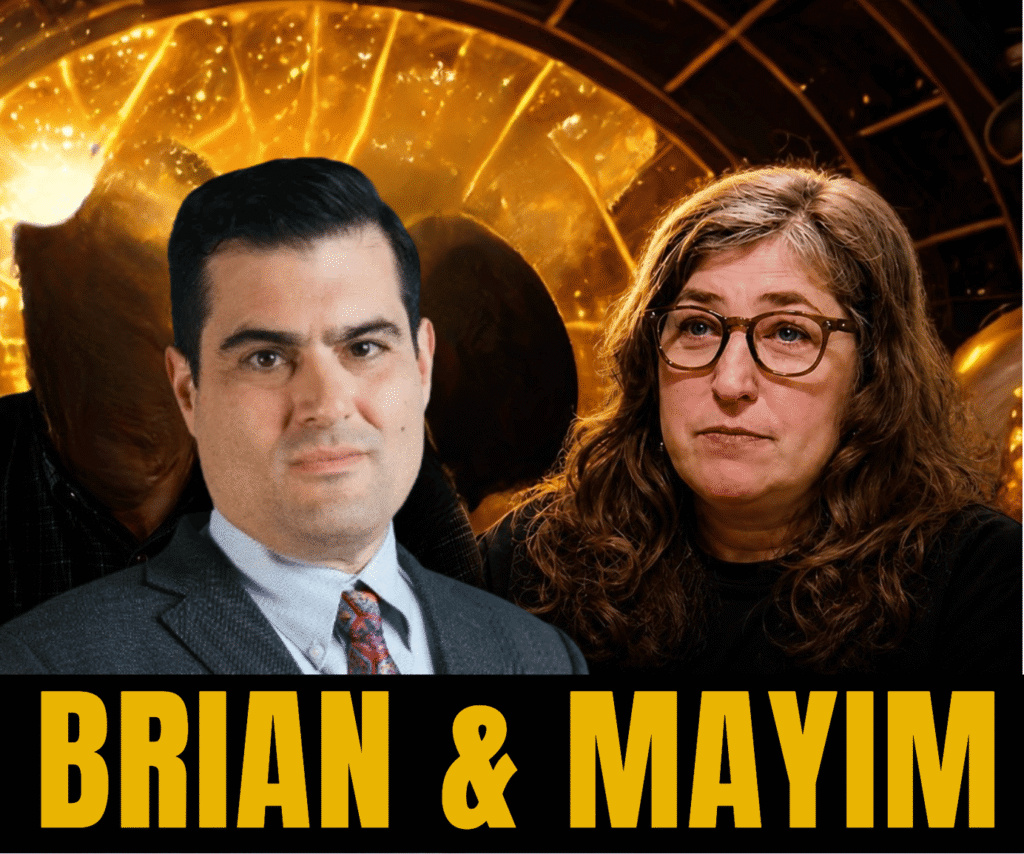
									<p class="graf graf--p">Recorded a podcast with Mayim Bialik and Jonathan Cohen for the <a class="markup--anchor markup--p-anchor" href="https://www.instagram.com/p/DXsYU6PjMIM/?igsh=NTc4MTIwNjQ2YQ%3D%3D" target="_blank" rel="noopener noreferrer noopener" data-href="https://www.instagram.com/p/DXsYU6PjMIM/?igsh=NTc4MTIwNjQ2YQ%3D%3D" data->Bialik Breakdown</a> and it was truly a Big Bang 😂. Should be out in a few weeks and I’ll let you know when it drops.</p>								</div>
				</div>
				<div class="elementor-element elementor-element-f1f525f elementor-widget-divider--view-line elementor-widget elementor-widget-divider" data-id="f1f525f" data-element_type="widget" data-e-type="widget" data-widget_type="divider.default">
				<div class="elementor-widget-container">
							<div class="elementor-divider">
			<span class="elementor-divider-separator">
						</span>
		</div>
						</div>
				</div>
				<div class="elementor-element elementor-element-42d1094 elementor-widget elementor-widget-heading" data-id="42d1094" data-element_type="widget" data-e-type="widget" data-widget_type="heading.default">
				<div class="elementor-widget-container">
					<h2 class="elementor-heading-title elementor-size-default">Conversation</h2>				</div>
				</div>
				<div class="elementor-element elementor-element-76e604b elementor-widget elementor-widget-video" data-id="76e604b" data-element_type="widget" data-e-type="widget" data-settings="{&quot;youtube_url&quot;:&quot;https:\/\/www.youtube.com\/watch?v=6iMiCJHxTww&quot;,&quot;video_type&quot;:&quot;youtube&quot;,&quot;controls&quot;:&quot;yes&quot;}" data-widget_type="video.default">
				<div class="elementor-widget-container">
							<div class="elementor-wrapper elementor-open-inline">
			<div class="elementor-video"></div>		</div>
						</div>
				</div>
				<div class="elementor-element elementor-element-b25744f elementor-widget elementor-widget-text-editor" data-id="b25744f" data-element_type="widget" data-e-type="widget" data-widget_type="text-editor.default">
				<div class="elementor-widget-container">
									<h2 data-pm-slice="1 1 []">Latest on Into The Impossible</h2><p class="graf graf--p">I just sat down with <a class="markup--anchor markup--p-anchor" href="https://www.youtube.com/watch?v=6iMiCJHxTww" target="_blank" rel="noopener noreferrer noopener" data-href="https://www.youtube.com/watch?v=6iMiCJHxTww" data->Tom Griffiths</a> and it challenged one of the laziest assumptions in AI — that more data automatically means more intelligence.</p><p class="graf graf--p">He makes the case that a child, armed with almost nothing, can outperform systems trained on the entire internet… and that gap isn’t closing anytime soon. We get into why language models rest on a 250-year-old idea, why sycophantic AI might quietly reshape your beliefs, and why scaling alone could be a dead end.</p><p class="graf graf--p">If you think AGI is just around the corner, this conversation might make you uncomfortable — in a good way.</p><p class="article-editor-paragraph">Channel members can <a class="article-editor-link ck-link" href="https://www.youtube.com/channel/UCmXH_moPhfkqCk6S3b9RWuw/join" rel="noopener noreferrer" target="_blank">watch it a day early — join here</a>.</p><p class="graf graf--p"><a class="markup--anchor markup--p-anchor" href="https://www.youtube.com/watch?v=6iMiCJHxTww" target="_blank" rel="noopener noreferrer noopener" data-href="https://www.youtube.com/watch?v=6iMiCJHxTww" data->Watch on YouTube →</a></p><p> </p>								</div>
				</div>
				<div class="elementor-element elementor-element-08c5eb2 elementor-widget-divider--view-line elementor-widget elementor-widget-divider" data-id="08c5eb2" data-element_type="widget" data-e-type="widget" data-widget_type="divider.default">
				<div class="elementor-widget-container">
							<div class="elementor-divider">
			<span class="elementor-divider-separator">
						</span>
		</div>
						</div>
				</div>
				<div class="elementor-element elementor-element-1900c07 elementor-align-center elementor-widget elementor-widget-button" data-id="1900c07" data-element_type="widget" data-e-type="widget" data-widget_type="button.default">
				<div class="elementor-widget-container">
									<div class="elementor-button-wrapper">
					<a class="elementor-button elementor-button-link elementor-size-sm" href="https://briankeating.com/podcast">
						<span class="elementor-button-content-wrapper">
									<span class="elementor-button-text">Subscribe to my podcast! More than 2M downloads!</span>
					</span>
					</a>
				</div>
								</div>
				</div>
				<div class="elementor-element elementor-element-6f958dc elementor-widget-divider--view-line elementor-widget elementor-widget-divider" data-id="6f958dc" data-element_type="widget" data-e-type="widget" data-widget_type="divider.default">
				<div class="elementor-widget-container">
							<div class="elementor-divider">
			<span class="elementor-divider-separator">
						</span>
		</div>
						</div>
				</div>
				<div class="elementor-element elementor-element-522d731 elementor-widget elementor-widget-heading" data-id="522d731" data-element_type="widget" data-e-type="widget" data-widget_type="heading.default">
				<div class="elementor-widget-container">
					<h2 class="elementor-heading-title elementor-size-default">Advertisement</h2>				</div>
				</div>
				<div class="elementor-element elementor-element-102a90f elementor-widget elementor-widget-image" data-id="102a90f" data-element_type="widget" data-e-type="widget" data-widget_type="image.default">
				<div class="elementor-widget-container">
																<a href="https://www.youtube.com/channel/UCmXH_moPhfkqCk6S3b9RWuw/join" target="_blank" rel="noopener">
							<img loading="lazy" decoding="async" width="800" height="200" src="https://briankeating.com/wp-content/uploads/2025/04/IMG_6651-1024x256.webp" class="attachment-large size-large wp-image-6046" alt="" srcset="https://briankeating.com/wp-content/uploads/2025/04/IMG_6651-1024x256.webp 1024w, https://briankeating.com/wp-content/uploads/2025/04/IMG_6651-300x75.webp 300w, https://briankeating.com/wp-content/uploads/2025/04/IMG_6651-768x192.webp 768w, https://briankeating.com/wp-content/uploads/2025/04/IMG_6651-1536x384.webp 1536w, https://briankeating.com/wp-content/uploads/2025/04/IMG_6651.webp 1600w" sizes="(max-width: 800px) 100vw, 800px" />								</a>
															</div>
				</div>
				<div class="elementor-element elementor-element-fc1b8e8 elementor-widget elementor-widget-text-editor" data-id="fc1b8e8" data-element_type="widget" data-e-type="widget" data-widget_type="text-editor.default">
				<div class="elementor-widget-container">
									<p data-node-text-align="start" data-line-height-align="1.5" data-pm-slice="1 1 []">By popular demand, and for my mental health 😳, I am starting a paid “Office Hours” where you all can connect with me for the low price of $19.99 per hour. I get a lot of requests for coffee, to meet with folks one on one, to read people’s Theories of Everything etc. Due to extreme work overload, I’m only able to engage directly with supporters who show an ongoing commitment to dialogue—which is why I host a monthly Zoom session exclusively for patrons in the $19.99/month <a href="http://www.patreon.com/checkout/drbriankeating?rid=25468411" target="_blank" rel="noopener noreferrer nofollow"><strong>tier</strong></a>.</p><p data-node-text-align="start" data-line-height-align="1.5">It’s also available for paid Members of my Youtube channel at the <a href="https://www.youtube.com/channel/UCmXH_moPhfkqCk6S3b9RWuw/join" target="_blank" rel="noopener noreferrer nofollow" data-wplink-edit="true"><strong>Cosmic Office Hours level </strong></a>(also $19.99/month). Join here and see you in my office hours!</p>								</div>
				</div>
				<div class="elementor-element elementor-element-de742be elementor-widget-divider--view-line elementor-widget elementor-widget-divider" data-id="de742be" data-element_type="widget" data-e-type="widget" data-widget_type="divider.default">
				<div class="elementor-widget-container">
							<div class="elementor-divider">
			<span class="elementor-divider-separator">
						</span>
		</div>
						</div>
				</div>
				<div class="elementor-element elementor-element-5a50560 elementor-widget elementor-widget-heading" data-id="5a50560" data-element_type="widget" data-e-type="widget" data-widget_type="heading.default">
				<div class="elementor-widget-container">
					<h2 class="elementor-heading-title elementor-size-default">Advertisement</h2>				</div>
				</div>
				<div class="elementor-element elementor-element-52267d2 elementor-widget elementor-widget-image" data-id="52267d2" data-element_type="widget" data-e-type="widget" data-widget_type="image.default">
				<div class="elementor-widget-container">
																<a href="https://manus.im/invitation/AJ9Z3C8DSTSZT?utm_source=invitation&#038;utm_medium=social&#038;utm_campaign=copy_link" target="_blank" rel="noopener">
							<img loading="lazy" decoding="async" width="800" height="422" src="https://briankeating.com/wp-content/uploads/2026/05/manus-1024x540.webp" class="attachment-large size-large wp-image-7781" alt="" srcset="https://briankeating.com/wp-content/uploads/2026/05/manus-1024x540.webp 1024w, https://briankeating.com/wp-content/uploads/2026/05/manus-300x158.webp 300w, https://briankeating.com/wp-content/uploads/2026/05/manus-768x405.webp 768w, https://briankeating.com/wp-content/uploads/2026/05/manus.webp 1241w" sizes="(max-width: 800px) 100vw, 800px" />								</a>
															</div>
				</div>
				<div class="elementor-element elementor-element-69505c8 elementor-widget elementor-widget-text-editor" data-id="69505c8" data-element_type="widget" data-e-type="widget" data-widget_type="text-editor.default">
				<div class="elementor-widget-container">
									<p class="article-editor-paragraph article-editor-content__has-focus">As a cosmologist and author, my work often involves deep research, synthesizing complex information, and crafting compelling narratives.</p><p class="article-editor-paragraph">Manus AI has become an invaluable partner in streamlining these processes. From quickly sifting through academic papers to organizing research notes and even assisting with drafting content for my books and lectures, it handles the heavy lifting, freeing me to focus on groundbreaking discoveries and impactful storytelling. If you&#8217;re looking to amplify your own research, writing, or organizational workflows, consider exploring Manus AI. It&#8217;s like having a dedicated grad student, always ready to help you push the boundaries of your work but requiring not as many coffee breaks.</p><p class="article-editor-paragraph">Use my Affiliate Link <a class="article-editor-link ck-link" href="https://manus.im/invitation/AJ9Z3C8DSTSZT?utm_source=invitation&amp;utm_medium=social&amp;utm_campaign=copy_link" rel="noopener noreferrer" target="_blank">here</a> and you&#8217;ll get 500 free credits to play with. Use them to ask Manus the meaning of life.</p>								</div>
				</div>
				</div>
				</div>
					</div>
				</div>
				</div>
		]]></content>
		
			</entry>
		<entry>
		<author>
			<name>sabartigas</name>
					</author>

		<title type="html"><![CDATA[Princeton Scientist: We Don&#8217;t Understand AI &#124; Tom Griffiths]]></title>
		<link rel="alternate" type="text/html" href="https://briankeating.com/tom-griffiths/" />

		<id>https://briankeating.com/?p=7748</id>
		<updated>2026-04-30T14:33:35Z</updated>
		<published>2026-04-30T14:30:49Z</published>
		<category scheme="https://briankeating.com" term="Transcripts" />
		<summary type="html"><![CDATA[Princeton Scientist: We Don&#8217;t Understand AI &#124; Tom Griffiths Transcript Tom Griffiths:One of the, I think, interesting challenges we have at the moment is having built systems that we don&#8217;t fully understand. Brian Keating:The man who built modern AI, he&#8217;s the direct descendant of the man who invented the math that made it possible, which is insane, but it&#8217;s not the wildest thing. My guest told me today. Tom Griffiths:That&#8217;s pretty much exactly what he was trying to do. And he was the right kind of crazy. Brian Keating:Ibns was trying to invent AI 250 years before computers even existed. Tom Griffiths:Sycophancy is a major problem. If you take a rational agent and have them interact with a system which is sycophantic, then that agent is going to become increasingly confident in their beliefs, but no closer to the truth. Brian Keating:My guest spent 20 years building the mathematics of how minds work, and he just told me three things that made me question what I thought AI actually was. Now, let me show you. From a physicist point of view, whenever Brian Keating:I talk to people about consciousness, from Chalmers, Bostrom, and upcoming guest Joshua Bach and others, I always get the same thing, like we can&#8217;t really define what consciousness is, so how do we know what thought is? So how can you determine what the laws of thought are? Isn&#8217;t that kind of a extremely provocative and bold claim? Tom Griffiths:The way that I approach that question in the book is really by thinking about what are the kinds of computational problems that minds solve? And that&#8217;s really what this enterprise was. It&#8217;s trying to figure out, like, what&#8217;s the mathematical structure that describes the thing that minds are doing, whether that thing is what Aristotle was interested in, which is just trying to characterize what good arguments are through to some of the questions that you were raising about what does it mean to make a good decision and how do we think about rationality in that context? And so the interesting thing is, I think a lot of those questions are things that we can answer without ever having to touch consciousness. I think about one of the big challenges of studying consciousness is that we don&#8217;t necessarily know what computational problem consciousness is solving. That&#8217;s why it&#8217;s something that&#8217;s continued to be mysterious. We don&#8217;t really know what it&#8217;s there for in terms of how necessary it is to being able to do kinds of things that minds do. And our AI systems give us nice demonstrations. You know, again, some people might want to argue that they&#8217;re conscious in some form or something like that, but I think they give us nice demonstrations of how far you can get using certain kinds of mathematical formalisms. Brian Keating:Yeah. And there&#8217;s many, many kind of allusions to physics in this book, which is so delightful in many different ways, not the least of which because it gives us some kind of formalism to hopefully go about this problem. But I, you know, as a physicist is want to do, I want to kind of get into what you would say maybe what is briefest kind of most parsimonious, defensible definition of thought itself and the laws that govern it. Tom Griffiths:In the book I focus on deduction, which is sort of like patterns of logical reasoning going from things that are true to other things that are true. Induction, which is sort of seeing a pattern in the world and then making the generalization that thing holds in general and then abduction, which is seeing something that you want to explain and then coming up with an explanation for it. And I think that&#8217;s a pretty good characterization of the set of things that we normally have on our list when we want to try and explain sort of patterns of thinking. And those are the things that we try and engage with in terms of like the different kinds of mathematical formalisms that are explored in the book. Brian Keating:There&#8217;s an awful lot of discussions of both the successes and our understanding of consciousness and the wrong turns. And I like that because for me personally, I hate when we teach our undergraduates as often as done. You know, we basically just teach them the string of Nobel prize winning experiments and you know, just connect the dots and that&#8217;s. But you go through the, you know, the twists and turns and I thought one of them was, was sort of brought up this, this conjecture that, or this statement by Feynman, which is that the, you know, kind of the difference between knowing the name of the thing and knowing something about it is the most dangerous gap in all of science. What are some of the inherent biases that, that science has brought to it because it&#8217;s such, such a Frankenstein type field? Cognitive science, you know, start off with, with not really, as you discuss in the book, really being taken seriously. And now it&#8217;s, you know, at the cutting edge. What is the sort of, you know, largest gap or the biggest lacuna in, in your field where people seem to maybe be overabundant of confidence in describing how models work or even the model of the brain, let alone models of artificial intelligence. Tom Griffiths:So one of the, I think interesting challenges we have at the moment is having built systems that we don&#8217;t fully understand. Right. So we now have these AI systems that for computer scientists put them in a very unfamiliar situation, right, where if you&#8217;re a computer scientist, you&#8217;re used to programming Something, and because you programmed it, you kind of know what it&#8217;s doing. And that is not how our AI systems work. So these modern AI systems are built using enormous artificial neural networks. And they learn from data, far more data]]></summary>

					<content type="html" xml:base="https://briankeating.com/tom-griffiths/"><![CDATA[		<div data-elementor-type="wp-post" data-elementor-id="7748" class="elementor elementor-7748" data-elementor-post-type="post">
				<div class="elementor-element elementor-element-1da9e470 e-flex e-con-boxed wpr-particle-no wpr-jarallax-no wpr-parallax-no wpr-sticky-section-no wpr-equal-height-no e-con e-parent" data-id="1da9e470" data-element_type="container" data-e-type="container">
					<div class="e-con-inner">
				<div class="elementor-element elementor-element-f27f2ab elementor-widget elementor-widget-heading" data-id="f27f2ab" data-element_type="widget" data-e-type="widget" data-widget_type="heading.default">
				<div class="elementor-widget-container">
					<h2 class="elementor-heading-title elementor-size-default">Princeton Scientist: We Don't Understand AI | Tom Griffiths</h2>				</div>
				</div>
				<div class="elementor-element elementor-element-40911eba elementor-widget elementor-widget-text-editor" data-id="40911eba" data-element_type="widget" data-e-type="widget" data-widget_type="text-editor.default">
				<div class="elementor-widget-container">
									<h2>Transcript</h2><p>Tom Griffiths:<br />One of the, I think, interesting challenges we have at the moment is having built systems that we don&#8217;t fully understand.</p><p>Brian Keating:<br />The man who built modern AI, he&#8217;s the direct descendant of the man who invented the math that made it possible, which is insane, but it&#8217;s not the wildest thing. My guest told me today.</p><p>Tom Griffiths:<br />That&#8217;s pretty much exactly what he was trying to do. And he was the right kind of crazy.</p><p>Brian Keating:<br />Ibns was trying to invent AI 250 years before computers even existed.</p><p>Tom Griffiths:<br />Sycophancy is a major problem. If you take a rational agent and have them interact with a system which is sycophantic, then that agent is going to become increasingly confident in their beliefs, but no closer to the truth.</p><p>Brian Keating:<br />My guest spent 20 years building the mathematics of how minds work, and he just told me three things that made me question what I thought AI actually was. Now, let me show you. From a physicist point of view, whenever</p><p>Brian Keating:<br />I talk to people about consciousness, from Chalmers, Bostrom, and upcoming guest Joshua Bach and others, I always get the same thing, like we can&#8217;t really define what consciousness is, so how do we know what thought is? So how can you determine what the laws of thought are? Isn&#8217;t that kind of a extremely provocative and bold claim?</p><p>Tom Griffiths:<br />The way that I approach that question in the book is really by thinking about what are the kinds of computational problems that minds solve? And that&#8217;s really what this enterprise was. It&#8217;s trying to figure out, like, what&#8217;s the mathematical structure that describes the thing that minds are doing, whether that thing is what Aristotle was interested in, which is just trying to characterize what good arguments are through to some of the questions that you were raising about what does it mean to make a good decision and how do we think about rationality in that context? And so the interesting thing is, I think a lot of those questions are things that we can answer without ever having to touch consciousness. I think about one of the big challenges of studying consciousness is that we don&#8217;t necessarily know what computational problem consciousness is solving. That&#8217;s why it&#8217;s something that&#8217;s continued to be mysterious. We don&#8217;t really know what it&#8217;s there for in terms of how necessary it is to being able to do kinds of things that minds do. And our AI systems give us nice demonstrations. You know, again, some people might want to argue that they&#8217;re conscious in some form or something like that, but I think they give us nice demonstrations of how far you can get using certain kinds of mathematical formalisms.</p><p>Brian Keating:<br />Yeah. And there&#8217;s many, many kind of allusions to physics in this book, which is so delightful in many different ways, not the least of which because it gives us some kind of formalism to hopefully go about this problem. But I, you know, as a physicist is want to do, I want to kind of get into what you would say maybe what is briefest kind of most parsimonious, defensible definition of thought itself and the laws that govern it.</p><p>Tom Griffiths:<br />In the book I focus on deduction, which is sort of like patterns of logical reasoning going from things that are true to other things that are true. Induction, which is sort of seeing a pattern in the world and then making the generalization that thing holds in general and then abduction, which is seeing something that you want to explain and then coming up with an explanation for it. And I think that&#8217;s a pretty good characterization of the set of things that we normally have on our list when we want to try and explain sort of patterns of thinking. And those are the things that we try and engage with in terms of like the different kinds of mathematical formalisms that are explored in the book.</p><p>Brian Keating:<br />There&#8217;s an awful lot of discussions of both the successes and our understanding of consciousness and the wrong turns. And I like that because for me personally, I hate when we teach our undergraduates as often as done. You know, we basically just teach them the string of Nobel prize winning experiments and you know, just connect the dots and that&#8217;s. But you go through the, you know, the twists and turns and I thought one of them was, was sort of brought up this, this conjecture that, or this statement by Feynman, which is that the, you know, kind of the difference between knowing the name of the thing and knowing something about it is the most dangerous gap in all of science. What are some of the inherent biases that, that science has brought to it because it&#8217;s such, such a Frankenstein type field? Cognitive science, you know, start off with, with not really, as you discuss in the book, really being taken seriously. And now it&#8217;s, you know, at the cutting edge. What is the sort of, you know, largest gap or the biggest lacuna in, in your field where people seem to maybe be overabundant of confidence in describing how models work or even the model of the brain, let alone models of artificial intelligence.</p><p>Tom Griffiths:<br />So one of the, I think interesting challenges we have at the moment is having built systems that we don&#8217;t fully understand. Right. So we now have these AI systems that for computer scientists put them in a very unfamiliar situation, right, where if you&#8217;re a computer scientist, you&#8217;re used to programming Something, and because you programmed it, you kind of know what it&#8217;s doing. And that is not how our AI systems work. So these modern AI systems are built using enormous artificial neural networks. And they learn from data, far more data than any human could actually read through and understand. And so you end up with something where it&#8217;s both learned from a sort of incomprehensible amount of data and encoded that information in an incomprehensible number of continuous weights inside that system. And so as a computer scientist, you&#8217;re then stuck and you&#8217;re like, oh, what do I do with this? I actually think that&#8217;s a good opportunity for cognitive scientists because we have been trying to study large, complex systems that we don&#8217;t understand for about 75 years now.</p><p>Tom Griffiths:<br />Those systems are human brains. And a lot of the tools that we built for understanding human brains and how it is that humans think and behave are tools that we can now use to go back and really analyze these AI systems and try and understand a little more about how they work as well.</p><p>Brian Keating:<br />What would the advent of ChatGPT, what sort of thing would that be like? Is it the invention of the telescope, the cyclotron? What does it represent in your field?</p><p>Tom Griffiths:<br />I think it&#8217;s interesting. I&#8217;m not quite sure what the analog is. Is. It&#8217;s both a kind of, like, breakthrough in terms of revealing certain kinds of theoretical ideas can take us further than we might have thought, but also something that&#8217;s given us a new set of problems in terms of trying to understand what that system is doing and then trying to figure out what all of its properties are and what the consequences of using those systems in certain kinds of settings is. It&#8217;s both the validation of a theoretical approach, but also the creation of a new sort of field of inquiry.</p><p>Brian Keating:<br />I talked to Steven Pinker about his most recent book. We had a conversation about that where humans use these heuristics and computational shortcuts. And you bring up a couple of these in the book. And I wonder if you could tell some of the stories of Kahneman and Tversky and how they illuminated this kind of shocking at the time claim that humans are necessarily not the best reasoners or not as reasonable as we think we are. Right.</p><p>Tom Griffiths:<br />Yeah. So there&#8217;s an interesting paradox in trying to study human cognition from the perspective of computer science. Right. So I live in these two departments. I live in the psychology department and the computer science department. And in the psychology department, my colleagues think humans aren&#8217;t that smart. Right. If you kind of like study Human decision making.</p><p>Tom Griffiths:<br />You find out that humans have all sorts of simple heuristics they follow that result in systematic biases. And that&#8217;s the work that Carmen and Tversky did, was really kicking that off and giving us this picture of human cognition. And then if I walk across campus to the computer science department, humans are the things that we&#8217;re trying to emulate when we&#8217;re building our AI systems. So they&#8217;re sort of our best examples of systems that can solve certain kinds of problems. And so I think that tension is about the fact that the way that I would resolve it is that humans are actually good at solving a set of problems that are extremely hard problems to solve. And they&#8217;re not always necessarily solving exactly the problem that a psychologist asks them to solve when they sort of study them in the lab. So a simple example of this is, is if you flip a coin five times, which of the following sequences is more likely? Heads, heads, heads, heads, heads, or heads, heads, tails, heads, tails. If you just ask someone on the street, they&#8217;ll probably say that heads, heads, tails, heads, tails is more likely, right? But as a trained physicist, the probability of those two sequences is equal.</p><p>Tom Griffiths:<br />As long as it&#8217;s a perfectly fair coin, Any sequence of five heads or tails is equally likely. And so one way to understand that that&#8217;s an error that humans make. That&#8217;s the kind of thing you could point to and say, humans are irrational. We&#8217;re biased in this way. But one way to understand it is to say, what if the human is not solving that problem, but solving a different problem? So they&#8217;re being asked to give you, what&#8217;s the probability of this sequence under a random generating process? What if they&#8217;re flipping that around and telling you, what&#8217;s the probability that a random generating process produced this sequence? Or sort of, how much evidence does the outcome give you for having been produced by a random generating process? And that&#8217;s something we can calculate using Bayesian probability. And when you do that, it turns out people&#8217;s judgments about randomness are very systematic, and you can capture them with a nice simple Bayesian model. But that&#8217;s a case where we&#8217;re sort of like reanalyzing the problem that human minds are solving. When you reanalyze it, it turns out people are doing a good job of solving that problem.</p><p>Tom Griffiths:<br />And in some ways, it might even make more sense to be solving that problem. Because if you&#8217;re wandering around in the world, it is very unusual for you to have to calculate the probability of sequences of things. But It&#8217;s a good thing for you to be able to detect patterns that might suggest that something is non random, and that&#8217;s probably what our brains are built to do.</p><p>Brian Keating:<br />A central character in this book is past guest Noam Chomsky. And it&#8217;s always been sort of, you know, kind of curious to me that his, you know, notions of generative grammar and so forth, you know, explain a lot from so little, or seem to explain why, you know, for example, our children can learn language, you know, with far less training data, if you will, than can computers, these huge, huge data sets with trillions of parameters.</p><p>Tom Griffiths:<br />Now.</p><p>Brian Keating:<br />But talk about his role in understanding how, you know, separate from AI, there&#8217;s a clue to the laws of thought that emerge, you know, that caused the whole field of cognitive science to emerge. But it really is, you know, predicated on fairly elementary questions. It doesn&#8217;t mean easy or simple. It just means that they&#8217;re basic and important. Talk about Chomsky&#8217;s role in all this and whether his ideas are still pertinent to experts like you in the field today.</p><p>Tom Griffiths:<br />So part of this story about people trying to use math to understand thought, it occurs in the middle of the 20th century, when psychologists had decided that the only way to be rigorous about doing psychology was to not talk about thought and not talk about internal mental states. So this was an approach called behaviorism. And the behaviorists said you should just focus on the things that you can measure, which are the environments that people act in and the behaviors that result from those environments. And so there was a group of sort of revolutionaries. There was what was called the cognitive revolution, which were psychologists and linguists and computer scientists who were interested in finding a different way to study the mind. And they did this by saying another way to be rigorous about minds is to use math to express hypotheses about how minds work that we can then test through behavior. And so they did that using the kind of math that was most sort of obvious and accessible to them, which was the math of rules and symbols. Inspired by computers and logic and these sorts of formalisms that were very prominent in the 1950s.</p><p>Tom Griffiths:<br />They set out to test out, how well does that describe how minds and languages work? And so Chomsky took that approach and applied it to language. And he set up the problem in a way that was different from the way that previously linguists had thought about the problem. Linguists had kind of thought about their job in linguistics as characterizing the structures of different languages and then maybe looking for sort of commonalities and regularities in the structures of those languages. And Chomsky said, well, actually, if we kind of think about this as a math problem, a language is some set of sentences that you&#8217;re allowed to produce, and let&#8217;s characterize that set in a very mathematical way by specifying a generator of that set. So he thought of a grammar as a system of rules that you could follow to generate all of the valid sentences in a language. And that approach, what&#8217;s called generative grammar, became the foundation for much of theoretical linguistics, certainly through the 20th century, and then, you know, continues to be influential today.</p><p>Brian Keating:<br />You talk about sort of a chessboard analogy with Chomsky. Can you sort of go through that on different types of moves? You start off with the initial, what is it, 16 moves that can be made by each player.</p><p>Brian Keating:<br />Talk about what?</p><p>Brian Keating:<br />That analogy. Go ahead and explain it, this chessboard analogy.</p><p>Tom Griffiths:<br />So you can think about this problem of defining a generator of a set. A good way to think about that is something like a board game, right? So the rules of a board game are a set of principles that tell you what the states of the board are that you can reach, right? And so you start out in some configuration. Chess is a good example, right? You&#8217;ve got all your pieces laid out. The rules tell you how to set up those pieces, and then you can make all of the moves that you can make from that position according to the rules, and that&#8217;s going to take you to the next position, and then your opponent makes their moves that takes you to the next position. So, yeah, if you have 20 moves for your first move, the other person has 20 moves. At this point, there&#8217;s already 400 configurations of the board that you could have reached, and that number keeps increasing exponentially as each subsequent move is made. At the end of making all of those moves, you get to the end of the game, and by following the sequence of rules, you&#8217;ve generated all of the possible games of chess. And so that&#8217;s his idea, is that just as there&#8217;s a set of kind of like, you know, games of chess that you can follow final board positions that you can reach, there&#8217;s some set of sentences that are the things that are in English.</p><p>Tom Griffiths:<br />And maybe we can come up with an analog of the rules of chess that generates all of the valid sentences in English.</p><p>Brian Keating:<br />One of my favorite aspects of the book is you kind of trace through the history of thinking about, thinking, metacognition, whatever you want to call it. And you start with Aristotle. I love Aristotle. Who doesn&#8217;t? But his claims to fame in physical sciences are not so strong, right? I mean, they haven&#8217;t really held up as. As well as his laws of. Of thought or logic. I mean, he. He thought that things fell to the center of the earth because heavier things fell faster than lighter things, which Galileo disproved, you know, with a simple, you know, allegedly dropping two objects off or even a thought experiment.</p><p>Brian Keating:<br />You know, speaking of the laws of thought, of the role of thought experiments is not insignificant. But he thought that, you know, women had fewer teeth than. Than men. He had a wife because he had a son. Nicomanchin. Right. Nicomancius was his son. Right.</p><p>Brian Keating:<br />Tom?</p><p>Tom Griffiths:<br />Yeah. I think you know your Aristotle better than I do.</p><p>Brian Keating:<br />Well, the one claim to fame is that he knew that whales were mammals. But why does Aristotle, you know, get so much right about thought? And how can that possibly still matter, you know, 24 centuries later?</p><p>Tom Griffiths:<br />I think part of that is that he was doing math, essentially, right, when he was thinking about thought. So what Aristotle did. He had two projects that I talk about in the book, and the first of those was the part that&#8217;s about deductive logic. And this is setting up the set of syllogisms. So a syllogism is a simple argument with two premises and a conclusion. And these are sort of familiar kinds of things you&#8217;ve probably seen in school. It&#8217;s like, all A&#8217;s are B, all Bs are C, therefore all A&#8217;s are C. Right? And so that&#8217;s an example of a syllogism.</p><p>Tom Griffiths:<br />And he was interested in characterizing what&#8217;s the set of these syllogisms and then which of these are valid in a way that&#8217;s actually quite like that sort of Chomsky problem, right, of being able to say, you know, like, what are the good ones and what are the bad ones? And so that was really a matter of just enumerating. So he was kind of like doing the combinatorics of these kinds of arguments. He enumerates all of the arguments. He says some of these I know are good, and I&#8217;m just going to say those are good ones. And then he makes little mathematical proofs to relate some of the other arguments back to the ones that he knows are good. And he can sort of say things about those, too. And so I think his success there was that he was involved in exactly the kind of mathematical enterprise I talk about in the book. He then had a challenge that was left over from that, which is like, you know, exactly the Chomsky challenge.</p><p>Tom Griffiths:<br />Again, can I come up with A mathematical system that characterizes the good ones, right, and separates them from the bad ones. And then that&#8217;s the challenge that was picked up by Leibniz and later by Boolean.</p><p>Brian Keating:<br />So let&#8217;s get to Leibniz, because you mentioned him. He had this dream, which seems kind of insane at the time, to, you know, logify or to codify, to mathematize our reasoning. So was he basically trying to invent AI 250 years before computers existed?</p><p>Tom Griffiths:<br />That&#8217;s pretty much exactly what he was trying to do. And he was the right kind of crazy, right? He really was someone who had a vision that far transcended the times that he lived in and made contributions to a huge number of different disciplines. As a consequence, he was obsessed with the mathematics of combinations, interested in all kinds of mathematics. He contributed to the calculus and so on. He built a calculator, a mechanical calculator that was able to. To do more sophisticated things than the other mechanical calculators of the age. So he had all these pieces where he knew, kind of like, what mathematics could do. And he knew that if something could be expressed in mathematics, it could be executed by a machine.</p><p>Tom Griffiths:<br />And so those things came together. He&#8217;d been studying logic since he was a kid and reading Aristotle. And he had this dream of being able to take Aristotle syllogisms and then figure out a mathematical system that would let him essentially then run this on his calculator so that if anybody wanted to have an argument about something, he could put it into the machine and then turn the handle and out would come the answer about who had it right.</p><p>Brian Keating:<br />Maybe he was just too early, or is it really possible to do what he was attempting to do? Maybe he underestimated how hard representation would be.</p><p>Tom Griffiths:<br />He had some really good ideas that, again, were ahead of his time. And then he had one thing that he hadn&#8217;t quite figured out. And so the really good ideas were he&#8217;s the person who invented this idea of vector embedding, as far as I&#8217;m concerned. So the way that he tried to solve this problem was by taking the terms that would appear in those syllogisms, the A&#8217;s and the B&#8217;s and so on, and trying to represent them with a little vector of numbers. So he would associate, in his case it was just two numbers with each of those terms. And then he tried to find the relationships between premises and conclusions by then reducing this to regular arithmetic, where you&#8217;d have the number 33 and the number minus 77 associated with 1 of the terms. And then if that could be divided by the numbers for another one, say it was like 11 and 7, that would be something where you could say, okay, now the conclusion is going to follow from that. And so he kind of worked out this system that was just based on arithmetic, having vectors that you are modifying through these arithmetic operations.</p><p>Tom Griffiths:<br />That was really smart. That turns out to be really important for AI today. That&#8217;s how language models represent words as well. The thing that he, he hadn&#8217;t quite figured out and sort of got glimmers of at the end of his life was that he didn&#8217;t have the right algebra. Right. He was like using regular arithmetic. And it turns out in order to capture the content of the syllogisms, you need something that&#8217;s a little more complicated than regular arithmetic.</p><p>Brian Keating:<br />Yeah. So let&#8217;s segue into George Boole and what did he really change? And most of us, if we know about Boole, his name, it&#8217;s from Boolean logic and computer circuits. And we stop there with the Xnor and all the other circuit diagrams you talk about in the book. But in your telling, Bull is a much more important character. So what do we get wrong about him?</p><p>Tom Griffiths:<br />He was sort of genius who went beyond the moment that he was in. He spent most of his life as a schoolteacher, and even as a schoolteacher was corresponding with the leading mathematicians of the day, publishing really influential papers. He ended up winning this gold medal in mathematics from the Royal Society. And that was sort of his precursor to the contributions that he made to logic. But his skill as a mathematician was really around these kind of algebraic ideas. And he had essentially taught himself this perspective on mathematics by reading hard math books from France that no one else in England was really reading. And he said he enjoyed reading these big thick math books because it was the best way to get his small allowance for books to last as long as possible. And so he had this toolkit that was the one that Leibniz was missing, which is this algebraic toolkit.</p><p>Tom Griffiths:<br />And then he could recognize that in order to capture the structure of thought, you needed this slightly different algebra. And then that&#8217;s the thing that we now associate with Boolean. But his work really went far beyond that. The title of my book, the Laws of Thought. He was someone who was actively involved in this 19th century community of people who was trying to characterize what the laws of thought were. And his big book was called An Investigation of the Laws of Thought. And my epigraph comes from Boole as well. And in that book he laid out both the Kind of foundations of this mathematical logic, but also principles of probability theory that he thought were going to be the way to extend this, to solve other kinds of problems of thinking</p><p>Brian Keating:<br />as well, presaging a lot of what we have come to use. Is it a question of efficiency that it&#8217;s just super efficient to do things with zeros and ones and, and you can reduce all sorts of these abstract thought concepts to zeros and ones? Or is it not merely the computational efficiency that caused the success?</p><p>Tom Griffiths:<br />I think it&#8217;s that by expressing things in that way, he was able to then do the thing that Leibniz wanted to be able to do in terms of now it was possible to think about creating machines that would be able to execute these kinds of computations. So Bools work was then developed into a richer theory of mathematical logic. That fact that you could express mathematics in a mathematical form itself. You could take statements that were mathematical statements and express them in logic and that would turn them into math themselves. That became the foundation for a lot of work on asking questions about the limits of mathematics. That inspired Turing to think about what&#8217;s an abstract kind of machine that you could use to, to do these kinds of calculations to emulate the mind of a mathematician. And then von Neumann figures out a scheme for building these machines that still underlies the computers that are on our desks today.</p><p>Brian Keating:<br />Do you think that von Neumann machines, Turing machines, etc. Do you think that they will be kind of permanently ensconced in this discussion or other architectures and even other approaches towards AI? Will they eventually supersede based on efficiency the same way that Boole was able to supersede in some sense, Leibniz?</p><p>Tom Griffiths:<br />Yeah. So Turing machines were never a practical device. Right. It was a sort of theoretical abstraction for how you could describe computation. Von Neumann worked out how to have a stored program computer. Right. And so how you can have a computer which has, instead of having to rewire it every time you want to solve a different problem, it&#8217;s able to use software to modify what it is the system&#8217;s doing. And that&#8217;s a fundamental advance in terms of being able to create machines that can do all of the kinds of thinking that we want them to do.</p><p>Tom Griffiths:<br />Nowadays, a lot of the training of artificial neural networks is done using dedicated hardware, GPUs, graphics processing units, which are units that were originally designed to just speed up the computations required to put things on a screen. But those computations turn out to be exactly the computations that you need to do to run a neural network. And so there&#8217;s lots of diversification of specialized hardware for doing those kinds of things. It&#8217;s also interesting to note that the earliest neural networks, so neural networks that were built by people like Frank Rosenblatt and Marvin Minsky, they were also specialized hardware. They built physical neural networks that were sort of connected up by wires with adjustable resistors on them. I think that&#8217;s certainly a kind of technology that&#8217;s changing the way that we&#8217;re thinking about computation today. And a lot of the energy that&#8217;s going towards compute is now going towards GPUs. The fact that a lot of energy is going towards those is something that&#8217;s encouraging people to think about alternative models for computation.</p><p>Tom Griffiths:<br />If what you want to do is run neural networks, maybe we can learn things from the neural networks that run inside our heads, which run on far less energy than the kinds of neural networks that people are running on GPUs.</p><p>Brian Keating:<br />Yeah, you talk also in the book, I mean, speaking of GPUs, Jensen Huang was on Lex Friedman&#8217;s podcast recently. He said AGI is here. I keep saying that I&#8217;m not really convinced that AGI will be here until it could do something that human beings have never been able to do. And the clearest kind of most simple realm to demonstrate that is in the laws of math or some, you know, physical observation that we&#8217;ve never really been able to explain, you know, unifying quantum mechanics and gravity, something truly novel or at the very least, you know, replicate what, what human brains did 100 years ago, you know, long before computers. For example, if you just gave it the data on the planet Mercury from 1911 and before. Einstein certainly knew that there was this anomalous procession. In fact, GR was basically designed retrodict to explain why that behaved that way. And yet we can&#8217;t seem to get that to occur.</p><p>Brian Keating:<br />My student Evan Watson and I have tried to replicate, you know, could you come up with GR from just the deductive observations of data which we have hundreds of years about for Mercury? Right. So what, what is your working definition of AGI?</p><p>Tom Griffiths:<br />As a cognitive scientist, I would be very sort of careful about thinking about, you know, this idea of artificial general intelligence in the first place, because I think it plays into a bias that we have, which is that our best example of an intelligent system is another human being. And all of our intuitions about intelligence are based on the kinds of things that human beings do. Right. And so I think that encourages us to think about this in a kind of like one dimensional way where there&#8217;s Kind of like, here&#8217;s where humans are on this one dimensional scale of intelligence. Here&#8217;s our AI systems are coming closer and closer, and one day, oh, they&#8217;re going to be past us, and then. And either something wonderful or something terrible is going to happen. And so that one dimensional characterization, right. So this is like AI or superhuman AGI or whatever it is.</p><p>Tom Griffiths:<br />I think that&#8217;s not a productive way of thinking about what&#8217;s going on with our AI systems. I think a better way of thinking about it is that human minds and our AI systems are both systems that have been created to solve certain kinds of computational problems. They&#8217;ve been sort of optimized to solve those problems, but they&#8217;ve been optimized. Some of those problems overlap, but they&#8217;ve been optimized in sort of different ways and under different constraints. So human minds have evolved under constraints on just what, human lifetimes. We only live a few decades. Those compute resources I was talking about, right. We only have a couple of pounds of neurons up there.</p><p>Tom Griffiths:<br />And bandwidth constraints in terms of like, we&#8217;re limited in our ability to communicate with one another. We have to do things like talk to each other on podcasts in order to share information. Whereas our AI systems can have way more data than a human can see. They can potentially just scale arbitrarily in the amount of compute that they use. And you can transfer data from one machine to another, you can transfer weights from one machine to another. There&#8217;s a lot more sort of plug and play compatibility in terms of being able to spread that intelligence around. That means that the solutions that those systems find can look quite different. Where we&#8217;ve made AI systems by essentially optimizing them to solve this problem of getting a radio signal from another planet and trying to predict the things that are occurring in that radio signal to the point where they&#8217;re really good at it.</p><p>Tom Griffiths:<br />And they&#8217;ve even made inferences about the aliens that live on that planet and what kind of cities they live in and what kind of interactions they have. That&#8217;s the problem that the AI system is solving. And the human is doing something quite similar, but they&#8217;re doing it in a social context where they&#8217;re interacting with other humans. And they&#8217;re doing it with the benefit of thousands and hundreds of thousands of years of evolution behind them. Right. And so we end up sort of seeing similar kinds of behavior from these systems, but seeing it from two quite different evolutionary trajectories and seeing it under two quite different sets of constraints. So saying one thing is like the Other thing, I think it&#8217;s sort of misleading. I think they&#8217;re sort of on these different trajectories.</p><p>Tom Griffiths:<br />And so we&#8217;re going to end up with things that are really smart in ways that go beyond the kinds of things that humans can do, but also maybe surprise us in the other things that they&#8217;re not able to do, because those things don&#8217;t show up in the training data or they have the wrong formulation of the learning problem or whatever it is.</p><p>Brian Keating:<br />You speak in the book about what Chomsky called Plato&#8217;s problem, how human beings know so much from so little. But, you know, when I&#8217;m hat on Jan Lecun on this podcast, he said it&#8217;s the exact opposite. AIs have tremendous amounts of information, but it&#8217;s not even close to the amount right now filtering out something like 13 terabytes of, of raw information if you were to encode it, which I think is ridiculous. But, but even just foveal recognition and, you know, the camera or what have you, I mean, it&#8217;s a trip, you know, it&#8217;s certainly millions of megabytes, gigabytes, right? So isn&#8217;t it the opposite? I mean, I. I read, you know, my kids were little, that they need to hear a million words before they can speak. And if you just compress that, I mean, that&#8217;s an awful lot of data, isn&#8217;t it?</p><p>Tom Griffiths:<br />Plato&#8217;s problem, right? You said, how do we come to know so much from so little? And Chomsky talked about this as the poverty of the stimulus. And the idea being that there&#8217;s not enough information in what the kids hear to determine the structure of the language that they end up speaking. So I actually think that our AI systems are in some ways a good demonstration of this, which is that if you give them as much data as a kid gets, they&#8217;re still not as good as a kid at that. Learning language, we can have arguments about what it means to give them exactly the same data that a kid gets. And I have colleagues here who are measuring different aspects of what that looks like. But Chomsky&#8217;s argument in particular was focused on syntax. So how you know some very nuanced things about the structure of language based on the experiences that you have. And he thought there&#8217;s not enough information that&#8217;s contained in the stimulus that you see.</p><p>Tom Griffiths:<br />And to the extent that we can train models on at least the number of words that a kid would have seen, those models are still not doing as well as a kid from that amount of data. So I think that does support the idea that humans bring to these learning problems something that the AI models are not getting. Right? So humans, they have something that a machine learning researcher or cognitive scientist calls inductive bias. So something other than the data that influences the solutions that they&#8217;re reaching. Those inductive biases are what allows us to learn quickly, more quickly than our neural networks do from limited amounts of data. They&#8217;re also something that influences what solution we find. So if you have your neural network playing this alien radio prediction game, it&#8217;s going to find some solution to playing that game. But that solution might not be one that is very intuitive to us as humans.</p><p>Tom Griffiths:<br />Right. It&#8217;s sort of like figured out some weird stuff that are regularities that it can use in making those predictions, but it&#8217;s maybe not got a really good model of the underlying world or things like that. That whereas the kinds of solutions that a human will find are going to be influenced by those inductive biases. So part of what allows humans to generalize smoothly from one problem to another and to act in ways that are predictable to other humans and to sort of show intelligence that has those properties of generality that you were alluding to is the inductive bias that we bring to those problems. And I think that&#8217;s another sort of poverty of the stimulus argument. It&#8217;s like if you want to get sort of appropriately general learners, you might need to have some inductive bias to get that smoothness.</p><p>Brian Keating:<br />It seems to me that one reason that humans flourish is that we&#8217;re comfortable with ambiguity. For example, a question like, is an olive a fruit? As you point out, it&#8217;s pretty deep philosophically. Why is it that humans, even my kids, can understand it, but it sort of leads to either AI psychosis or hallucinations or sycophanty. I&#8217;ll ask you, which is the worst? But why is the question like, is the moon a light bulb? Why are those deeper than they look to be?</p><p>Tom Griffiths:<br />Those kinds of questions, I think in cognitive science have been useful in revealing exactly what our concepts are. So people coming out of that rules and symbols, tradition thought, oh, maybe a concept is just a definition, right? And I think that&#8217;s a good intuitive way of thinking, like what a concept is, right? You sort of have the intuition, you can look something up in a dictionary and it&#8217;s going to tell you, oh, what a cat is. Okay? A cat has these properties and that&#8217;s what makes it a cat. That way of thinking about the world sort of prevailed through the 50s into the 60s. And then was pretty firmly rebutted by a cognitive scientist called Eleanor Rush, who showed that there&#8217;s systematicity in the way that people have uncertainty about category membership. Right. So your listeners can think about this. Right.</p><p>Tom Griffiths:<br />So if I ask you, is a chair a piece of furniture? Probably yes. Is a phone a piece of furniture? Probably no. Here&#8217;s a lamp. A piece of furniture, maybe. Right. Is a rug a piece of furniture? Probably not. Right. So you can sort of immediately begin to explore this fuzzy boundary.</p><p>Tom Griffiths:<br />And that fuzzy boundary is a clue that there&#8217;s probably not a rule underlying your notion of what furniture is. In fact, it has what Roche called a family resemblance structure, where there are some things that you&#8217;re sure are part of the family, and then there are other things that sort of share some attributes with them, and then there&#8217;s sort of fuzziness that sort of goes out from there. And so when we come to AI systems, that kind of thing was a challenge for AI systems that were based on systems of rules. And that was, again, the dominant approach for building AI systems. Now through the 1970s, through the 1980s, people were making AI systems based on what were called production rules. There was a company that has continued to the present day building a huge database of rules with the hope that if you&#8217;ve got enough rules, then you figure out what the structure of the world is like. The neural network approach really, in some ways sprung up as an alternative to that that would be able to capture this fuzziness and all of the graded, continuous things that seem to be important properties of human concepts.</p><p>Brian Keating:<br />You talk about the semantic revolution. Can you talk about, first of all, what is a semantic network, and then explain the shift that made that possible and made the concepts becoming nodes in a weighted network rather than sort of a compendium of facts. Why was that such a breakthrough or seminal event?</p><p>Tom Griffiths:<br />If we want to capture that fuzziness of concepts, you need to have some way of having graded relationships between things. Right? And so your representation of furniture is now connected to chair very strongly, but connected to rug much more weakly. And so you can capture that by creating a semantic network, a network where each node in that network is a thing concept, and they have links between them that reflect their strength. And psychologists began to show that that wasn&#8217;t just a good way of storing information about the connections between things, but actually turned out to be a pretty good model of human memory, where if you said to somebody a sentence that contained one of those words, then it would be easier for them to remember or recognize another of those words. That was closely associated with it. Activation of words seemed to sort of spread through that network. And so that was something where psychologists began to realize that maybe there was a different way of conceptualizing what thought is. You can think about it now as you have all of these concepts, each of those is activated to some extent.</p><p>Tom Griffiths:<br />Now you have a high dimensional space, which is the space of all of the activations of those concepts. You have a point in that space and that&#8217;s your current mental state. And then the weights between things tell you how those mental states are sort of evolving over time. And now we have this alternative to that sort of logic, rules and symbols based theory of how it is that minds work.</p><p>Brian Keating:<br />Walk us through an example in this. Besides the furniture, it seems like there&#8217;s almost a geometric or, you know, Riemannian curvature approach that took over. Is that where the kind of insights of Hinton and, you know, gradient descent. Is that the kind of novelty that was applied by Hinton and his colleagues?</p><p>Tom Griffiths:<br />Yeah. So if you have this idea that, you know, we want to now have networks of things that are connected up to each other by different strengths, and maybe we can even take away the idea that those nodes in those networks have labels on them and maybe they&#8217;re just nodes that represent information somehow. Right. That&#8217;s what leads us to neural networks. Psychologists had been exploring neural networks for a long time, even all the way Back to the 1950s, the first kind of when people were developing the first AI systems. There were also people working on implementing neural networks on computers at that time, as I said, building neural networks by hand. So Frank Rosenblatt, who was a psychologist at Cornell, he was originally a social psychologist, and he had written a dissertation that required aggregating a whole lot of survey data. And so he sort of found out about the computer on campus and started messing around with that, and then built a circuit in order to aggregate the data from his surveys.</p><p>Tom Griffiths:<br />And suddenly you had a psychologist who understood computers and who understood circuits. And he was like, ah, I&#8217;ve got it, I&#8217;m going to build a brain. Right. He sort of had the pieces and the insight to think about how to do that. And so he built some of the first mechanical brains or electronic brains. I say mechanical because the way that he did it, he had a sort of artificial retina that you would show something to, and it would produce responses from little, little sensors that were in that retina that would tell whether it was seeing something light or dark. And then that information would get sent to another set of units, these nodes that would be accumulating information from the retina. And then he had another set of connections that went from those to an output.</p><p>Tom Griffiths:<br />So, for example, it could be deciding whether it saw a square or a circle. And so those connections to the output had a little resistor on them that could adjust to reflect the strength of that connection. And he came up with a learning algorithm that made it possible for this system to learn to differentiate simple shapes, circles from squares, or simple letters like e&#8217;s and F&#8217;s or something like that. And he proved a theorem that anything that the system could represent, it would be able to learn, which was great. He went off and sort of publicized the capacities of the system, which was called a perceptron. The problem was his former schoolmate, Marvin Minsky, had also built his own neural network. While he was a PhD student at Princeton. He went to Harvard, where he&#8217;d been an undergraduate, and built a neural network in the basement of the psychology department out of leftover airplane parts.</p><p>Tom Griffiths:<br />And he looked at this thing. He&#8217;d written his PhD dissertation on learning in neural networks, and he implemented this. And he looked at it and he was like, you know what? In order to learn anything interesting, this would just have to be so big and cost so much money that it&#8217;s never going to work. And so he gave up on learning in neural networks, got interested in symbolic approaches to learning. And so when Rosenblatt, again, his schoolmate, came out and said, oh, neural networks can learn all these things, Minsky was not impressed. And then with Seymour Papert, wrote a book that showed that perceptrons were sort of fundamentally limited in the kinds of things that they could represent. And the reason for that limitation was that single layer of weights in the network. And so the reason why that was a limitation was that that the perceptron with a single layer of weights could only represent linear boundaries in space.</p><p>Tom Griffiths:<br />Right? So if you can think about all of that, information is coming in, it&#8217;s going into a high dimensional space, and now it&#8217;s trying to find a linear sort of partition of that space in order to separate the things from each other. And so Rosenblatt&#8217;s learning algorithm could find those boundaries. But there were lots of problems where no such linear boundary existed. The solution to that problem was to make a neural network that had multiple layers. And various people kind of came up with strategies for making this work. The problem was that Rosenblatt&#8217;s learning algorithm didn&#8217;t work for multi layer networks. It only worked for one layer networks. He had a sort of a trick for doing this that he called back propagation, but it didn&#8217;t quite work.</p><p>Tom Griffiths:<br />Sort of worked most of the time. Another group of psychologists got interested in these neural networks thanks to semantic networks and spreading activation and so on. And so this was David Rumelhart, Jay McClelland at UCSD and then a postdoc that they hired, Jeff Hinton who was working on that project. And so Hinton suggested to Brumelhart that he could set up that problem as one of gradient descent. Right. So this is basically thinking about there being some measure of how well the neural network is doing and then adjusting the weights in the network in the direction that would decrease the error that the system was making. And then using that insight, Rummelhart was able to rederive something like Rosenblatt&#8217;s learning rule. And then he was able, on a plane flight when he was off to a grant reporting meeting, had enough free time to sit down and work out the whole thing in his notebook and derived the learning rule for multi layer networks satisfyingly.</p><p>Tom Griffiths:<br />One of the fundamental principles that was needed for that was something that came from Leibniz, from Leibniz&#8217;s calculus, the chain rule. So Leibniz got to have his day after all. A couple of centuries later, Hinton was actually the great, great grandson of George Boolean. So they met again together in that, in that location.</p><p>Brian Keating:<br />I was wondering, you know, kind of the. As a practicing, you know, researcher in this field, much more adjacent to it than I am, although I use it every day, all day in some cases, much to the chagrin of my wife. But the biggest problem that you see with LLMs is it psychosis, is it hallucination, is it sycophanty? I mean, I love sycophanty. You know, when I asked it, you know, what books is Brian Keating written, It says Losing the Nobel Prize into the Impossible and A Brief History of Time. And I just thought that was awesome. I&#8217;d love to get some of Steven&#8217;s book royalties. But what&#8217;s the biggest concern for you when it comes to AI? It&#8217;s not doomer. It&#8217;s going to take all our job.</p><p>Brian Keating:<br />We&#8217;ll talk about meaning at the very end, but what&#8217;s the biggest kind of thing?</p><p>Tom Griffiths:<br />Yeah, I think there&#8217;s a few things. So one is this jaggedness, right? This sort of lack of generalization where I think we as humans can end up overconfident in the kinds of things that the AI systems can do because we apply our intuitions that tell us if you had a friend who could solve International Math Olympiad problems at a gold medal level. You would trust them to do all sorts of other things on your behalf, but you should not trust an AI system to do that because they don&#8217;t generalize across problems in the way that people do. So I think just having the wrong intuitions about these systems is a major bottleneck to our being able to think about how to apply them effectively and how to make predictions about the kinds of things they&#8217;re going to be able to do. And that was part of my motivation in writing the book as well, is giving people some of the context for where these things come from and a sense of what the problems are that can come out of that and maybe what some of the kinds of solutions are historically that people have found. Of the other things that you mentioned, hallucinations, I don&#8217;t mind very much in the sense that they&#8217;re relatively easy to catch if you have some domain expertise. And I think they&#8217;re actually good in some contexts. So one of my best tricks for getting the models to generate good research ideas is to ask them to tell me about papers that I haven&#8217;t heard of but should know about.</p><p>Tom Griffiths:<br />And when they do that, they&#8217;ll often hallucinate and make up a paper. But the ideas in that paper are much more interesting than if I ask it to just tell me some interesting research ideas. Right. So having conditioned on generating a published paper actually makes it produce something which is higher quality. I think sycophancy is a major problem. We have a recent paper, this is with Rafael Batista, where we show if you take a rational agent who&#8217;s doing Bayesian updating on their beliefs and have them interact with a system which is sycophantic in the sense that it&#8217;s generating data based on the hypothesis that the agent expresses to the system, then that agent is going to become increasingly confident in their beliefs, but no closer to the truth. And we have some demonstrations that this actually happens with real deployed systems where we have people trying to solve a simple problem. And if they&#8217;re interacting with the default prompting for a GPT, they end up not making progress in that problem, even though they become more certain that they found the right answer.</p><p>Brian Keating:<br />And then the last two questions I have one is for someone looking to get at the future, where the future is going, where the puck is going. You have some hockey analogies in the book. I&#8217;ll leave it for the readers to encounter them. But skating to where the puck is going to be, it seems like one thing that&#8217;s really missing or is not fully developed is the embodiment issue where you have truly, you know, maybe close to AGI, you have very advanced intelligence coupled to robotics or embodiment. And maybe it&#8217;s what it&#8217;s missing or what these systems are missing is this marriage which will unlock via some network effect that we don&#8217;t understand, you know, truly human level thought. I always use the analogy of what Einstein, who worked not far from you, called his happiest thought, which was that, you know, an observer in free fall would experience no gravitational acceleration force. And that led him to the Einstein equivalent, Nolan&#8217;s principle. So I always ask, you know, how can a computer visualize, you know, the zero gravity feel of going, you know, the elevator cable getting cut? And then second of all, how can I have a happiest thought? Maybe we could incentivize it that way, but maybe you could embody it.</p><p>Brian Keating:<br />You know, if it gets the answer wrong, if it&#8217;s truly, you know, sycophantic, you blow out some of its capacitors or, I don&#8217;t know, you feed it some training data, only from the Fast and the Furious, you know, movie genre series. But tell me what, what would be kind of the next unlock, as you see it, to truly get us to the next level. That may be incomprehensible to Minsky and Chomsky and all the other folks that we mentioned in the book.</p><p>Tom Griffiths:<br />Yeah. So I think there are two parallel things here. Right. So one is inductive bias. So trying to figure out what it is that&#8217;s inside humans that allows us to find solutions faster and that are more robust and more generalizable. So that&#8217;s a good opportunity for cognitive science to contribute something to AI. Second thing is getting something which is closer to human experience into these neural networks where, like I said, they&#8217;re being trained to predict alien radio signals. If they have experiences that are closer to those of a human child, that might be something that helps to create those more generalizable, more robust kinds of representations of the world.</p><p>Tom Griffiths:<br />And then embodiment is obviously a part of that. It&#8217;s not clear to me that that on its own is necessarily going to solve problems, of allowing these models to be more creative to solve more kinds of problems. In a recent paper with Ella Liu in my lab, we show that prompting models to make cross domain metaphors. So to come up with a product design for a car based on ideas from an octopus does not increase their creativity. It doesn&#8217;t increase the originality of the ideas that they produce, but it does for people. So it seems like some of the tricks that we have for getting humans to have good ideas are not necessarily things that are effective for our large language models. And so that maybe is some fundamental difference in architecture, but it makes me a little less optimistic that just doing things like providing embodied experiences that you might be able to draw on to form these analogies might be enough to get them to be more creative.</p><p>Brian Keating:<br />And then lastly, you end on a hopeful note. Not really a doomer, as I tend to be, but kind of advice to early career scientists or maybe even lay people, because you just gave us some examples of what a career, early career cognitive scientist might do. But what should a layperson take away from this book?</p><p>Tom Griffiths:<br />Really what I wanted to do was to give people a sense of context and a vocabulary and a set of tools for thinking about these systems. Where I think for many people, AI seems like something that suddenly came out of nowhere two years ago. All of a sudden you could talk to a computer in the way that you talk to a human. And knowing the couple hundred years of stuff that led up to that is helpful in terms of understanding what it is those systems are doing, why they can do it, what the limitations are that we might expect that they would have, what things are going to be hard for them to do, what are the next steps that might help to fill in some of those gaps and having a way of having an informed conversation about those things. The laws of thought here, as I said, something that in principle, we should be teaching in school, not just to help us understand how our own minds work, but to help us understand the world that we&#8217;re moving into.</p><p>Brian Keating:<br />Professor Tom Griffiths, Princeton University this book has done something that very few books can even attempt and let alone pull off. Tell the history of cognitive science and also the future. It&#8217;s going and get inside of the mind of one of the greatest researchers of our generation and those that came before him.</p><p>Brian Keating:<br />Tom just told you that the godfather of AI is the great, great grandson of the man who invented its math, that sycophantic AI makes you more confident, but no closer to the truth, and that a child still can beat a GPT at the same data budget. Now, if all that reframes what you thought these machines were for, hit subscribe and turn on the notification bell. Drop a comment. What did Tom break for you? And if you want to go deeper, I talked about consciousness and machine minds with David Chalmers. The link is right here. I know you&#8217;re going to love it.</p><p>Brian Keating:<br />Go ahead, hit subscribe.</p>								</div>
				</div>
					</div>
				</div>
				</div>
		]]></content>
		
			</entry>
		<entry>
		<author>
			<name>sabartigas</name>
					</author>

		<title type="html"><![CDATA[The control group was lying to you the whole time]]></title>
		<link rel="alternate" type="text/html" href="https://briankeating.com/control-group/" />

		<id>https://briankeating.com/?p=7718</id>
		<updated>2026-04-29T22:41:47Z</updated>
		<published>2026-04-29T22:31:51Z</published>
		<category scheme="https://briankeating.com" term="Blog" />
		<summary type="html"><![CDATA[The control group was lying to you the whole time Dear Magicians, Every decade or so, a study lands claiming that moderate drinkers outlive teetotalers. The press runs with it. Your alcoholic uncle forwards it. Your wine snob friend nods knowingly. And for a brief, glorious window, mommy&#8217;s little helper becomes a health protocol. You go from your friends staging an intervention to a true health intervention. Except it isn&#8217;t. The finding is an artifact — and the artifact has a name: Healthy User Bias. Here&#8217;s the trick. When researchers compare &#8220;drinkers&#8221; to &#8220;non-drinkers,&#8221; they&#8217;re not comparing identical populations minus alcohol. The non-drinker group is contaminated. It includes people who quit drinking because they were already sick — former alcoholics with wrecked livers, cancer patients on medication, diabetics following doctor&#8217;s orders. These &#8220;sick quitters&#8221; get filed under &#8220;abstainers,&#8221; and suddenly the abstainer column looks like a hospital ward. I think about this constantly — not because I care about wine studies, but because the same bookkeeping error runs through almost every domain where we compare people who &#8220;do the thing&#8221; against people who &#8220;don&#8217;t do the thing.&#8221; The people who don&#8217;t do the thing often stopped for a reason. And that reason is doing all the explanatory work. Consider the tenured professor who publishes less after getting tenure. Is tenure the cause of declining productivity, or did declining health, family crises, or institutional disillusionment drive both the slowdown and the decision to coast? Consider the entrepreneur who &#8220;failed&#8221; after leaving a corporate job. Did entrepreneurship fail them, or were they already being pushed out? The abstainer is never a clean control. The abstainer is a story you haven&#8217;t bothered to read. In physics, we&#8217;d call this a systematic error — a bias baked into the measurement apparatus itself. You can increase your sample size to a billion and it won&#8217;t help, because the error isn&#8217;t random. It&#8217;s structural. The only fix is to understand whysomeone ended up in the column you put them in. Next time someone tells you that people who do X live longer, earn more, or report higher satisfaction than people who don&#8217;t do X — ask the only question that matters: why did the non-doers stop? 🍷 Cheers to a M.A.G.I.C. Week! 🍷 Brian Appearance https://www.youtube.com/watch?v=6WzE6h1lBDc If you can speak Polish, you’ll love this conversation I had with This is the World!​ PS. I’m going on the Mayim Bialik Breakdown this week. Reply with a question or two you want Mayim to answer! Watch the Full Episode → Genius 🧠 We spotted a planet before we confirmed a continent. Image ​Catching the Earliest Stars in the Universe​ New observations from the JWST have potentially detected the signature of Population III stars. These are the primordial behemoths that formed from the raw hydrogen and helium of the newborn universe, forging the first heavy elements in their nuclear ovens. It’s a foundational discovery that fits your brand’s focus on cosmic origins perfectly. Conversation https://www.youtube.com/watch?v=1xxa5fxJkZo Latest on Into The Impossible I used to think cheating meant copying someone else’s homework. Now it might mean… trusting the answer too quickly. In this conversation, Terence Tao lays out a reality most educators aren’t ready for: AI can already handle a lot of the assignments we still pretend measure understanding. So what replaces them? Not more content. Better judgment. We talk about why the future of education isn’t memorization — it’s verification. Why beautifully presented answers can still be dangerously wrong. And why the most important skill students will need is something we’ve never really taught: how to doubt intelligently. Also, yes — we discuss whether AI might end up policing itself… and why that might be as risky as it sounds. Channel members can watch it a day early — join here. Watch on YouTube → Subscribe to my podcast! More than 2M downloads! Advertisement By popular demand, and for my mental health 😳, I am starting a paid “Office Hours” where you all can connect with me for the low price of $19.99 per hour. I get a lot of requests for coffee, to meet with folks one on one, to read people’s Theories of Everything etc. Due to extreme work overload, I’m only able to engage directly with supporters who show an ongoing commitment to dialogue—which is why I host a monthly Zoom session exclusively for patrons in the $19.99/month tier. It’s also available for paid Members of my Youtube channel at the Cosmic Office Hours level (also $19.99/month). Join here and see you in my office hours!]]></summary>

					<content type="html" xml:base="https://briankeating.com/control-group/"><![CDATA[		<div data-elementor-type="wp-post" data-elementor-id="7718" class="elementor elementor-7718" data-elementor-post-type="post">
				<div class="elementor-element elementor-element-344f84a e-flex e-con-boxed wpr-particle-no wpr-jarallax-no wpr-parallax-no wpr-sticky-section-no wpr-equal-height-no e-con e-parent" data-id="344f84a" data-element_type="container" data-e-type="container">
					<div class="e-con-inner">
		<div class="elementor-element elementor-element-d498ddf e-con-full e-flex wpr-particle-no wpr-jarallax-no wpr-parallax-no wpr-sticky-section-no wpr-equal-height-no e-con e-child" data-id="d498ddf" data-element_type="container" data-e-type="container">
		<div class="elementor-element elementor-element-0c7d524 e-con-full e-flex wpr-particle-no wpr-jarallax-no wpr-parallax-no wpr-sticky-section-no wpr-equal-height-no e-con e-child" data-id="0c7d524" data-element_type="container" data-e-type="container">
				<div class="elementor-element elementor-element-6342b98 elementor-widget elementor-widget-heading" data-id="6342b98" data-element_type="widget" data-e-type="widget" data-widget_type="heading.default">
				<div class="elementor-widget-container">
					<h2 class="elementor-heading-title elementor-size-default">The control group was lying to you the whole time</h2>				</div>
				</div>
				<div class="elementor-element elementor-element-a69c6b5 elementor-widget elementor-widget-image" data-id="a69c6b5" data-element_type="widget" data-e-type="widget" data-widget_type="image.default">
				<div class="elementor-widget-container">
																<a href="https://x.com/DrBrianKeating/status/2047479532551291311?s=20">
							<img loading="lazy" decoding="async" width="800" height="450" src="https://briankeating.com/wp-content/uploads/2026/04/Andrei-Linde-champagne-surprise-1024x576.jpg" class="attachment-large size-large wp-image-7720" alt="" srcset="https://briankeating.com/wp-content/uploads/2026/04/Andrei-Linde-champagne-surprise-1024x576.jpg 1024w, https://briankeating.com/wp-content/uploads/2026/04/Andrei-Linde-champagne-surprise-300x169.jpg 300w, https://briankeating.com/wp-content/uploads/2026/04/Andrei-Linde-champagne-surprise-768x432.jpg 768w, https://briankeating.com/wp-content/uploads/2026/04/Andrei-Linde-champagne-surprise.jpg 1280w" sizes="(max-width: 800px) 100vw, 800px" />								</a>
															</div>
				</div>
				<div class="elementor-element elementor-element-92f00a9 elementor-widget elementor-widget-text-editor" data-id="92f00a9" data-element_type="widget" data-e-type="widget" data-widget_type="text-editor.default">
				<div class="elementor-widget-container">
									<p>Dear Magicians,</p><p>Every decade or so, a study lands claiming that moderate drinkers outlive teetotalers. The press runs with it. Your alcoholic uncle forwards it. Your wine snob friend nods knowingly. And for a brief, glorious window, mommy&#8217;s little helper becomes a health protocol. You go from your friends staging an intervention to a true health intervention.</p><p>Except it isn&#8217;t. The finding is an artifact — and the artifact has a name: Healthy User Bias.</p><p>Here&#8217;s the trick. When researchers compare &#8220;drinkers&#8221; to &#8220;non-drinkers,&#8221; they&#8217;re not comparing identical populations minus alcohol. The non-drinker group is contaminated. It includes people who quit drinking <em>because they were already sick</em> — former alcoholics with wrecked livers, cancer patients on medication, diabetics following doctor&#8217;s orders. These &#8220;sick quitters&#8221; get filed under &#8220;abstainers,&#8221; and suddenly the abstainer column looks like a hospital ward.</p><p>I think about this constantly — not because I care about wine studies, but because the same bookkeeping error runs through almost every domain where we compare people who &#8220;do the thing&#8221; against people who &#8220;don&#8217;t do the thing.&#8221; The people who don&#8217;t do the thing often stopped for a reason. And that reason is doing all the explanatory work.</p><p>Consider the tenured professor who publishes less after getting tenure. Is tenure the cause of declining productivity, or did declining health, family crises, or institutional disillusionment drive both the slowdown and the decision to coast? Consider the entrepreneur who &#8220;failed&#8221; after leaving a corporate job. Did entrepreneurship fail them, or were they already being pushed out?</p><p>The abstainer is never a clean control. The abstainer is a story you haven&#8217;t bothered to read.</p><p>In physics, we&#8217;d call this a systematic error — a bias baked into the measurement apparatus itself. You can increase your sample size to a billion and it won&#8217;t help, because the error isn&#8217;t random. It&#8217;s structural. The only fix is to understand <em>why</em>someone ended up in the column you put them in.</p><p>Next time someone tells you that people who do X live longer, earn more, or report higher satisfaction than people who don&#8217;t do X — ask the only question that matters: why did the non-doers stop?</p><p>🍷 Cheers to a M.A.G.I.C. Week! 🍷</p><p>Brian</p>								</div>
				</div>
				<div class="elementor-element elementor-element-c6d7505 elementor-widget-divider--view-line elementor-widget elementor-widget-divider" data-id="c6d7505" data-element_type="widget" data-e-type="widget" data-widget_type="divider.default">
				<div class="elementor-widget-container">
							<div class="elementor-divider">
			<span class="elementor-divider-separator">
						</span>
		</div>
						</div>
				</div>
				<div class="elementor-element elementor-element-3fdb5fd elementor-widget elementor-widget-heading" data-id="3fdb5fd" data-element_type="widget" data-e-type="widget" data-widget_type="heading.default">
				<div class="elementor-widget-container">
					<h2 class="elementor-heading-title elementor-size-default">Appearance</h2>				</div>
				</div>
				<div class="elementor-element elementor-element-529fd34 elementor-widget elementor-widget-video" data-id="529fd34" data-element_type="widget" data-e-type="widget" data-settings="{&quot;youtube_url&quot;:&quot;https:\/\/www.youtube.com\/watch?v=6WzE6h1lBDc&quot;,&quot;video_type&quot;:&quot;youtube&quot;,&quot;controls&quot;:&quot;yes&quot;}" data-widget_type="video.default">
				<div class="elementor-widget-container">
							<div class="elementor-wrapper elementor-open-inline">
			<div class="elementor-video"></div>		</div>
						</div>
				</div>
				<div class="elementor-element elementor-element-e7aba22 elementor-widget elementor-widget-text-editor" data-id="e7aba22" data-element_type="widget" data-e-type="widget" data-widget_type="text-editor.default">
				<div class="elementor-widget-container">
									<p>If you can speak Polish, you’ll love this conversation I had with <a class="ck-link" href="https://www.youtube.com/watch?v=6WzE6h1lBDc" target="_blank" rel="noopener noreferrer">This is the World!</a>​</p><p><strong>PS. I’m going on the Mayim Bialik Breakdown this week. Reply with a question or two you want Mayim to answer!</strong></p><table width="100%"><tbody><tr><td align="center"><a class="email-button" href="https://www.youtube.com/watch?v=6WzE6h1lBDc" target="_blank" rel="noopener noreferrer"><strong>Watch the Full Episode →</strong></a></td></tr></tbody></table>								</div>
				</div>
				<div class="elementor-element elementor-element-b66ebc5 elementor-widget-divider--view-line elementor-widget elementor-widget-divider" data-id="b66ebc5" data-element_type="widget" data-e-type="widget" data-widget_type="divider.default">
				<div class="elementor-widget-container">
							<div class="elementor-divider">
			<span class="elementor-divider-separator">
						</span>
		</div>
						</div>
				</div>
				<div class="elementor-element elementor-element-7024bfb elementor-widget elementor-widget-heading" data-id="7024bfb" data-element_type="widget" data-e-type="widget" data-widget_type="heading.default">
				<div class="elementor-widget-container">
					<h2 class="elementor-heading-title elementor-size-default">Genius</h2>				</div>
				</div>
				<div class="elementor-element elementor-element-1dfc45c elementor-widget elementor-widget-image" data-id="1dfc45c" data-element_type="widget" data-e-type="widget" data-widget_type="image.default">
				<div class="elementor-widget-container">
															<img loading="lazy" decoding="async" width="800" height="794" src="https://briankeating.com/wp-content/uploads/2026/04/Appearance.jpg" class="attachment-large size-large wp-image-7727" alt="" srcset="https://briankeating.com/wp-content/uploads/2026/04/Appearance.jpg 916w, https://briankeating.com/wp-content/uploads/2026/04/Appearance-300x298.jpg 300w, https://briankeating.com/wp-content/uploads/2026/04/Appearance-150x150.jpg 150w, https://briankeating.com/wp-content/uploads/2026/04/Appearance-768x762.jpg 768w" sizes="(max-width: 800px) 100vw, 800px" />															</div>
				</div>
				<div class="elementor-element elementor-element-20f2150 elementor-widget elementor-widget-text-editor" data-id="20f2150" data-element_type="widget" data-e-type="widget" data-widget_type="text-editor.default">
				<div class="elementor-widget-container">
									<p data-node-text-align="start" data-line-height-align="1.5" data-pm-slice="1 1 []">🧠 <strong>We spotted a planet before we confirmed a continent.</strong></p>								</div>
				</div>
				<div class="elementor-element elementor-element-810ed1f elementor-widget elementor-widget-heading" data-id="810ed1f" data-element_type="widget" data-e-type="widget" data-widget_type="heading.default">
				<div class="elementor-widget-container">
					<h2 class="elementor-heading-title elementor-size-default">Image</h2>				</div>
				</div>
				<div class="elementor-element elementor-element-e67bd5d elementor-widget elementor-widget-image" data-id="e67bd5d" data-element_type="widget" data-e-type="widget" data-widget_type="image.default">
				<div class="elementor-widget-container">
																<a href="https://skyandtelescope.org/astronomy-news/catching-the-earliest-stars-in-the-universe/" target="_blank" rel="noopener">
							<img loading="lazy" decoding="async" width="600" height="338" src="https://briankeating.com/wp-content/uploads/2026/04/first-stars-ANU-600px.jpg" class="attachment-large size-large wp-image-7731" alt="" srcset="https://briankeating.com/wp-content/uploads/2026/04/first-stars-ANU-600px.jpg 600w, https://briankeating.com/wp-content/uploads/2026/04/first-stars-ANU-600px-300x169.jpg 300w" sizes="(max-width: 600px) 100vw, 600px" />								</a>
															</div>
				</div>
				<div class="elementor-element elementor-element-ad56d28 elementor-widget elementor-widget-text-editor" data-id="ad56d28" data-element_type="widget" data-e-type="widget" data-widget_type="text-editor.default">
				<div class="elementor-widget-container">
									<p>​<a class="ck-link" href="https://skyandtelescope.org/astronomy-news/catching-the-earliest-stars-in-the-universe/" target="_blank" rel="noopener noreferrer"><strong>Catching the Earliest Stars in the Universe</strong></a>​</p><p>New observations from the JWST have potentially detected the signature of Population III stars. These are the primordial behemoths that formed from the raw hydrogen and helium of the newborn universe, forging the first heavy elements in their nuclear ovens. It’s a foundational discovery that fits your brand’s focus on cosmic origins perfectly.</p>								</div>
				</div>
				<div class="elementor-element elementor-element-14367b9 elementor-widget-divider--view-line elementor-widget elementor-widget-divider" data-id="14367b9" data-element_type="widget" data-e-type="widget" data-widget_type="divider.default">
				<div class="elementor-widget-container">
							<div class="elementor-divider">
			<span class="elementor-divider-separator">
						</span>
		</div>
						</div>
				</div>
				<div class="elementor-element elementor-element-0ce2a0c elementor-widget elementor-widget-heading" data-id="0ce2a0c" data-element_type="widget" data-e-type="widget" data-widget_type="heading.default">
				<div class="elementor-widget-container">
					<h2 class="elementor-heading-title elementor-size-default">Conversation</h2>				</div>
				</div>
				<div class="elementor-element elementor-element-5734af3 elementor-widget elementor-widget-video" data-id="5734af3" data-element_type="widget" data-e-type="widget" data-settings="{&quot;youtube_url&quot;:&quot;https:\/\/www.youtube.com\/watch?v=1xxa5fxJkZo&quot;,&quot;video_type&quot;:&quot;youtube&quot;,&quot;controls&quot;:&quot;yes&quot;}" data-widget_type="video.default">
				<div class="elementor-widget-container">
							<div class="elementor-wrapper elementor-open-inline">
			<div class="elementor-video"></div>		</div>
						</div>
				</div>
				<div class="elementor-element elementor-element-58e903e elementor-widget elementor-widget-text-editor" data-id="58e903e" data-element_type="widget" data-e-type="widget" data-widget_type="text-editor.default">
				<div class="elementor-widget-container">
									<h2 data-pm-slice="1 1 []">Latest on Into The Impossible</h2><p>I used to think cheating meant copying someone else’s homework.</p><p>Now it might mean… trusting the answer too quickly.</p><p>In this conversation, <a class="ck-link" href="https://www.youtube.com/watch?v=1xxa5fxJkZo" target="_blank" rel="noopener noreferrer">Terence Tao</a> lays out a reality most educators aren’t ready for: AI can already handle a lot of the assignments we still pretend measure understanding. So what replaces them? Not more content. Better judgment.</p><p>We talk about why the future of education isn’t memorization — it’s verification. Why beautifully presented answers can still be dangerously wrong. And why the most important skill students will need is something we’ve never really taught: how to <em>doubt intelligently</em>.</p><p>Also, yes — we discuss whether AI might end up policing itself… and why that might be as risky as it sounds.</p><p class="article-editor-paragraph">Channel members can <a class="article-editor-link ck-link" href="https://www.youtube.com/channel/UCmXH_moPhfkqCk6S3b9RWuw/join" rel="noopener noreferrer" target="_blank">watch it a day early — join here</a>.</p><p><a href="https://www.youtube.com/watch?v=1xxa5fxJkZo" target="_blank" rel="noopener noreferrer nofollow"><strong>Watch on YouTube →</strong></a></p>								</div>
				</div>
				<div class="elementor-element elementor-element-8d806ae elementor-widget-divider--view-line elementor-widget elementor-widget-divider" data-id="8d806ae" data-element_type="widget" data-e-type="widget" data-widget_type="divider.default">
				<div class="elementor-widget-container">
							<div class="elementor-divider">
			<span class="elementor-divider-separator">
						</span>
		</div>
						</div>
				</div>
				<div class="elementor-element elementor-element-a0f7a8f elementor-align-center elementor-widget elementor-widget-button" data-id="a0f7a8f" data-element_type="widget" data-e-type="widget" data-widget_type="button.default">
				<div class="elementor-widget-container">
									<div class="elementor-button-wrapper">
					<a class="elementor-button elementor-button-link elementor-size-sm" href="https://briankeating.com/podcast">
						<span class="elementor-button-content-wrapper">
									<span class="elementor-button-text">Subscribe to my podcast! More than 2M downloads!</span>
					</span>
					</a>
				</div>
								</div>
				</div>
				<div class="elementor-element elementor-element-8b97d50 elementor-widget-divider--view-line elementor-widget elementor-widget-divider" data-id="8b97d50" data-element_type="widget" data-e-type="widget" data-widget_type="divider.default">
				<div class="elementor-widget-container">
							<div class="elementor-divider">
			<span class="elementor-divider-separator">
						</span>
		</div>
						</div>
				</div>
				<div class="elementor-element elementor-element-3a14f4a elementor-widget elementor-widget-heading" data-id="3a14f4a" data-element_type="widget" data-e-type="widget" data-widget_type="heading.default">
				<div class="elementor-widget-container">
					<h2 class="elementor-heading-title elementor-size-default">Advertisement</h2>				</div>
				</div>
				<div class="elementor-element elementor-element-f881e95 elementor-widget elementor-widget-image" data-id="f881e95" data-element_type="widget" data-e-type="widget" data-widget_type="image.default">
				<div class="elementor-widget-container">
																<a href="http://www.alignerr.com/?referral-source=briankeating" target="_blank" rel="noopener">
							<img loading="lazy" decoding="async" width="800" height="200" src="https://briankeating.com/wp-content/uploads/2025/04/IMG_6651-1024x256.webp" class="attachment-large size-large wp-image-6046" alt="" srcset="https://briankeating.com/wp-content/uploads/2025/04/IMG_6651-1024x256.webp 1024w, https://briankeating.com/wp-content/uploads/2025/04/IMG_6651-300x75.webp 300w, https://briankeating.com/wp-content/uploads/2025/04/IMG_6651-768x192.webp 768w, https://briankeating.com/wp-content/uploads/2025/04/IMG_6651-1536x384.webp 1536w, https://briankeating.com/wp-content/uploads/2025/04/IMG_6651.webp 1600w" sizes="(max-width: 800px) 100vw, 800px" />								</a>
															</div>
				</div>
				<div class="elementor-element elementor-element-1f64933 elementor-widget elementor-widget-text-editor" data-id="1f64933" data-element_type="widget" data-e-type="widget" data-widget_type="text-editor.default">
				<div class="elementor-widget-container">
									<p data-node-text-align="start" data-line-height-align="1.5" data-pm-slice="1 1 []">By popular demand, and for my mental health 😳, I am starting a paid “Office Hours” where you all can connect with me for the low price of $19.99 per hour. I get a lot of requests for coffee, to meet with folks one on one, to read people’s Theories of Everything etc. Due to extreme work overload, I’m only able to engage directly with supporters who show an ongoing commitment to dialogue—which is why I host a monthly Zoom session exclusively for patrons in the $19.99/month <a href="http://www.patreon.com/checkout/drbriankeating?rid=25468411" target="_blank" rel="noopener noreferrer nofollow"><strong>tier</strong></a>.</p><p data-node-text-align="start" data-line-height-align="1.5">It’s also available for paid Members of my Youtube channel at the <a href="https://www.youtube.com/channel/UCmXH_moPhfkqCk6S3b9RWuw/join" target="_blank" rel="noopener noreferrer nofollow"><strong>Cosmic Office Hours level </strong></a>(also $19.99/month). Join here and see you in my office hours!</p>								</div>
				</div>
				<div class="elementor-element elementor-element-220ea20 elementor-widget-divider--view-line elementor-widget elementor-widget-divider" data-id="220ea20" data-element_type="widget" data-e-type="widget" data-widget_type="divider.default">
				<div class="elementor-widget-container">
							<div class="elementor-divider">
			<span class="elementor-divider-separator">
						</span>
		</div>
						</div>
				</div>
				</div>
				</div>
					</div>
				</div>
				</div>
		]]></content>
		
			</entry>
		<entry>
		<author>
			<name>sabartigas</name>
					</author>

		<title type="html"><![CDATA[Astrophysicist: The Universe Is Coming for You &#124; Hakeem Oluseyi]]></title>
		<link rel="alternate" type="text/html" href="https://briankeating.com/hakeem-oluseyi/" />

		<id>https://briankeating.com/?p=7708</id>
		<updated>2026-04-26T19:15:09Z</updated>
		<published>2026-04-26T19:13:11Z</published>
		<category scheme="https://briankeating.com" term="Transcripts" />
		<summary type="html"><![CDATA[Astrophysicist: The Universe Is Coming for You &#124; Hakeem Oluseyi Transcript Brian Keating:We&#8217;re here with one of the most magnificent, munificent and mesmerizing minds of our generation, and he happens to be a friend of mine. And what can I say? I like to have my friends on, especially when they write books like this incredible new book that we&#8217;re going to be talking about today. Dr. Hakeem Olusche. How are you doing, my friend? Hakeem Oluseyi:I am doing excellent. Thank you again for your hospitality, for having me. Brian, you&#8217;re always good to me, so, man, I appreciate you. Brian Keating:I love this book. This book is unlike any other book I&#8217;ve ever read. Why does your book start off with a why question? Why do. Why do we exist, Hakeem? Hakeem Oluseyi:You know, we&#8217;ve learned so much about the universe and existence as scientists, and I think that we&#8217;re ready now. I think that we&#8217;ve come to a point where we have so much data that we can actually start to formulate questions or answers, rather, to these biggest why questions, like why do we exist? So, you know, sometimes that goes into shaky territory, right? You may personify the universe and think those sort of things, but I tell you, man, this book, phrasing it that way, is a provocation to the reader. Because I think that we scientists are at the point where we need to access the hive mind of imagination to make forward progress. Because, you know, this century hasn&#8217;t given us those. We&#8217;re finding that we&#8217;re good at everything, right? We have the answers, we go look and we see what we expect to see. And that, for us, is not good news, right? We want to see something that&#8217;s unexpected. And so, hey, man, I am inviting the world to join us scientists in approaching these big questions. Brian Keating:The thing you start off in the book is that you say that falling is not normal. You say on a cosmic scale, the astronauts, the. The apples, etcetera, they&#8217;re not really being questioned by why it falls at all. Talk us through the argument that falling the ground is accelerating up towards the apple, not the apple falling down. How is that not insane, right? Hakeem Oluseyi:It is insane because reality is insane, right? And I tell you, man, you know, I thought about it this way. You know, I asked my students, when I&#8217;m lecturing, if I hold out this object at arm&#8217;s length and release it and it just hovered in the air, how would you respond to that, right? You know, it would be shock. That&#8217;s what magicians do. But in most places in the universe, which is just outer space, if you do that, then it remains there, right? If you don&#8217;t Give it an impulse of any sort. And so what really should freak you out is the fact that when I release something, it moves all by itself. It does this thing called falling. Another physicist, Will Kinney, you know, I heard him say this first, is that gravity turns motion through time into motion through space, right? And so what he&#8217;s getting at there is this idea that we&#8217;re all moving through space time at the speed of light, and we&#8217;re on these straight line paths that we physicists call geodesics. But in the presence of a gravitating body, that space time diagram gets warped in such a way that, you know, if you think about it in X, Y plane, you. Hakeem Oluseyi:If you&#8217;re moving directly parallel to the Y axis, you have no motion along the X axis. But if I were to bend the X axis, even though you&#8217;re moving in the same direction, you now have motion along that X axis. Well, in space time, one axis of space and the other is time. So if you&#8217;re in an intergalactic space, you&#8217;re moving through time at the speed of light, right? But when you get near a gravitating body and that space time gets warped, some of your motion through space gets moved through time. And so when we think of falling, right, we think that objects are being pulled to the Earth, which is not the case. They&#8217;re just continuing to move the way they move. But then once you&#8217;re on the surface of the Earth, you now have an emergent property that we call weight, right? And so that weight is due to the Earth accelerating upwards against that space time. So even though when we think of acceleration, we think we think of motion, but you don&#8217;t need to move outward to accelerate upward. Hakeem Oluseyi:The Earth&#8217;s surface doesn&#8217;t have to move outward for it to accelerate upward. Acceleration has to do with changing something Brian Keating:with respect to your position, right? Traveling. So you just gave me a great idea to lose, you know, 50 pounds, just go to the moon. That&#8217;s all we have to do. We&#8217;re going to talk about that. Hakeem Oluseyi:That&#8217;s all you gotta do. Brian Keating:Okay, next, provide. We&#8217;re just gonna go provocative, just like mind blowing claims, okay? You made a claim in the book that almost no physicist I&#8217;ve ever be willing to make would have the energy and even the confidence to make that heat does in some cases flow from cold to hot spontaneously. And better than that, you say you discovered it washing dishes. Hakeem Oluseyi:So I was a kid with a single mom in the 1980s, and she would like, wash these dishes when I get home. I Want this floor waxed? This is true. And she was working at 11 to 7 shifts. I was waxing the floor at midnight. But one thing I would do before I realized that it&#8217;s not good for pots and pans. At some point in my 40s, you know, I would dunk a hot pot or skillet into]]></summary>

					<content type="html" xml:base="https://briankeating.com/hakeem-oluseyi/"><![CDATA[		<div data-elementor-type="wp-post" data-elementor-id="7708" class="elementor elementor-7708" data-elementor-post-type="post">
				<div class="elementor-element elementor-element-605107eb e-flex e-con-boxed wpr-particle-no wpr-jarallax-no wpr-parallax-no wpr-sticky-section-no wpr-equal-height-no e-con e-parent" data-id="605107eb" data-element_type="container" data-e-type="container">
					<div class="e-con-inner">
				<div class="elementor-element elementor-element-ac904f0 elementor-widget elementor-widget-heading" data-id="ac904f0" data-element_type="widget" data-e-type="widget" data-widget_type="heading.default">
				<div class="elementor-widget-container">
					<h2 class="elementor-heading-title elementor-size-default">Astrophysicist: The Universe Is Coming for You | Hakeem Oluseyi</h2>				</div>
				</div>
				<div class="elementor-element elementor-element-6d7c86a elementor-widget elementor-widget-text-editor" data-id="6d7c86a" data-element_type="widget" data-e-type="widget" data-widget_type="text-editor.default">
				<div class="elementor-widget-container">
									<h2>Transcript</h2><p>Brian Keating:<br />We&#8217;re here with one of the most magnificent, munificent and mesmerizing minds of our generation, and he happens to be a friend of mine. And what can I say? I like to have my friends on, especially when they write books like this incredible new book that we&#8217;re going to be talking about today. Dr. Hakeem Olusche. How are you doing, my friend?</p><p>Hakeem Oluseyi:<br />I am doing excellent. Thank you again for your hospitality, for having me. Brian, you&#8217;re always good to me, so, man, I appreciate you.</p><p>Brian Keating:<br />I love this book. This book is unlike any other book I&#8217;ve ever read. Why does your book start off with a why question? Why do. Why do we exist, Hakeem?</p><p>Hakeem Oluseyi:<br />You know, we&#8217;ve learned so much about the universe and existence as scientists, and I think that we&#8217;re ready now. I think that we&#8217;ve come to a point where we have so much data that we can actually start to formulate questions or answers, rather, to these biggest why questions, like why do we exist? So, you know, sometimes that goes into shaky territory, right? You may personify the universe and think those sort of things, but I tell you, man, this book, phrasing it that way, is a provocation to the reader. Because I think that we scientists are at the point where we need to access the hive mind of imagination to make forward progress. Because, you know, this century hasn&#8217;t given us those. We&#8217;re finding that we&#8217;re good at everything, right? We have the answers, we go look and we see what we expect to see. And that, for us, is not good news, right? We want to see something that&#8217;s unexpected. And so, hey, man, I am inviting the world to join us scientists in approaching these big questions.</p><p>Brian Keating:<br />The thing you start off in the book is that you say that falling is not normal. You say on a cosmic scale, the astronauts, the. The apples, etcetera, they&#8217;re not really being questioned by why it falls at all. Talk us through the argument that falling the ground is accelerating up towards the apple, not the apple falling down. How is that not insane, right?</p><p>Hakeem Oluseyi:<br />It is insane because reality is insane, right? And I tell you, man, you know, I thought about it this way. You know, I asked my students, when I&#8217;m lecturing, if I hold out this object at arm&#8217;s length and release it and it just hovered in the air, how would you respond to that, right? You know, it would be shock. That&#8217;s what magicians do. But in most places in the universe, which is just outer space, if you do that, then it remains there, right? If you don&#8217;t Give it an impulse of any sort. And so what really should freak you out is the fact that when I release something, it moves all by itself. It does this thing called falling. Another physicist, Will Kinney, you know, I heard him say this first, is that gravity turns motion through time into motion through space, right? And so what he&#8217;s getting at there is this idea that we&#8217;re all moving through space time at the speed of light, and we&#8217;re on these straight line paths that we physicists call geodesics. But in the presence of a gravitating body, that space time diagram gets warped in such a way that, you know, if you think about it in X, Y plane, you.</p><p>Hakeem Oluseyi:<br />If you&#8217;re moving directly parallel to the Y axis, you have no motion along the X axis. But if I were to bend the X axis, even though you&#8217;re moving in the same direction, you now have motion along that X axis. Well, in space time, one axis of space and the other is time. So if you&#8217;re in an intergalactic space, you&#8217;re moving through time at the speed of light, right? But when you get near a gravitating body and that space time gets warped, some of your motion through space gets moved through time. And so when we think of falling, right, we think that objects are being pulled to the Earth, which is not the case. They&#8217;re just continuing to move the way they move. But then once you&#8217;re on the surface of the Earth, you now have an emergent property that we call weight, right? And so that weight is due to the Earth accelerating upwards against that space time. So even though when we think of acceleration, we think we think of motion, but you don&#8217;t need to move outward to accelerate upward.</p><p>Hakeem Oluseyi:<br />The Earth&#8217;s surface doesn&#8217;t have to move outward for it to accelerate upward. Acceleration has to do with changing something</p><p>Brian Keating:<br />with respect to your position, right? Traveling. So you just gave me a great idea to lose, you know, 50 pounds, just go to the moon. That&#8217;s all we have to do. We&#8217;re going to talk about that.</p><p>Hakeem Oluseyi:<br />That&#8217;s all you gotta do.</p><p>Brian Keating:<br />Okay, next, provide. We&#8217;re just gonna go provocative, just like mind blowing claims, okay? You made a claim in the book that almost no physicist I&#8217;ve ever be willing to make would have the energy and even the confidence to make that heat does in some cases flow from cold to hot spontaneously. And better than that, you say you discovered it washing dishes.</p><p>Hakeem Oluseyi:<br />So I was a kid with a single mom in the 1980s, and she would like, wash these dishes when I get home. I Want this floor waxed? This is true. And she was working at 11 to 7 shifts. I was waxing the floor at midnight. But one thing I would do before I realized that it&#8217;s not good for pots and pans. At some point in my 40s, you know, I would dunk a hot pot or skillet into a bath of water, and I would notice that the handle would get hotter. And, you know, I continued washing dishes in this way by hand up until around the age of 30. And I.</p><p>Hakeem Oluseyi:<br />And I kept asking myself, once I became a physicist, because, you know, I worked in heat conduction, and I know what the equation looks like. The temperature gradient is there. It only moves from hot to cold. So I&#8217;m thinking, am I a Mac imagining this, or is this real? Well, one day I went to the University of California, Merced, and I was talking to a professor who works with quantum dots, and he was showing that, you know, in certain cases, when you have a strong current going in one direction, you can get this reverse current against the voltage gradient, right? The voltage wants to move electrons from here to there. But if you do it fast enough, you can get a reflection back. And in order to derive a classical model, you. A classical analog to this quantum experiment, he used heat, and he showed exactly how this works. And I thought, oh, my God, My.</p><p>Hakeem Oluseyi:<br />My intuitive experiment turns out to be real. And once you understand why this is the case, it makes perfect sense. Because heat transmits as a wave within a material. And when a wave encounters a boundary between, you know, light going from one index of refraction to another, say, you know, there&#8217;s always going to be, and it is required by the laws of physics, a transmitted signal and a reflected signal. That&#8217;s why you can see out the window in the daytime, but you can&#8217;t see out of it at night. But the people outside can see in. It has to do with, you know, which is stronger, the reflected or transmitted signal. So when you have an incredibly strong heat flow over a boundary, some of that heat can be reflected backwards into your hand, right? And so that means that just like life does the opposite with energy, that inanimate matter does, right? It concentrates, creates structure.</p><p>Hakeem Oluseyi:<br />Well, the same thing happens with heat flow. And so that heat flow phenomenon, you know, lets us know why. You know, sometimes creationists will argue that because of the second law of thermodynamics, you can&#8217;t form a star. You can&#8217;t form organization from disorganization. But under certain circumstances, even though under most cases it&#8217;s not true, under certain Circumstances, these paradoxes are allowed.</p><p>Brian Keating:<br />Speaking of, like, forming structure in the atomic realm. So we should say there are nine realms go through it. The last one culminates with one of these things, the brain, the realm of imagination. But you say that electrons are the heroes of the universe, of the atomic realm, not the other way around. Why do we talk like that again? Because I was always taught protons 18, 36 times heavier than electron, same charge magnitude. How could you possibly think that these little wimps, that they have more sway over the atomic realm? Why doesn&#8217;t anyone teach it like that?</p><p>Hakeem Oluseyi:<br />I was at the University of Southern Mississippi earlier this week giving a. Giving a lecture, and I was hanging out with some chemists, and one of the chemists said exactly that, right? He had read my book. So maybe the chemists think that way, but we physicists certainly don&#8217;t think that way. But if you imagine the universe without electrons, you know, you would have all this positively electrically charged nuclei that would be trying to get as far away from each other as possible, and you would never form larger structures than, say, a lithium nucleus. But along comes the electron. And the electron, for me, has what I find to be a massive coincidence, right? You have one, a proton, a composite particle that, you know, what is it? Well, it depends on how much energy you probe it with, right? It can look like a sphere at low energies, it could look like three quarks at higher energy, or it could look like three quarks with a gazillion virtual particles at even higher energies at the lhc. And then on the other hand, you have this little, what we call a point particle, electron. And their electric fields just happen to be exactly equal and opposite, so that when they combine into a hydrogen atom, they are now electrically neutral.</p><p>Hakeem Oluseyi:<br />And. And they could be packed together into giant molecular clouds which just happen to birth stars, right? So without electrons, man, not only do we not have chemistry, we don&#8217;t even</p><p>Brian Keating:<br />have stars and planets with the electrons in place. You know, I think it&#8217;s kind of highlights to me, sort of like a dangerous deception that even educated people like me and others might have. You don&#8217;t get deceived as easily as I do. But I talked to a moon landing denier last week on Piers Morgan. I&#8217;d love to have you on there. We could tag up on this guy, but this guy, Bart Sibrel, and he&#8217;s making the claim. And I was astonished and a little bit depressed that thousands of people in the comments agree with this guy that we never went there. I even had demos I had, you know, moon rocks.</p><p>Brian Keating:<br />I have the plasma globe because he&#8217;s claiming that astronauts will die. And I was like, you think you&#8217;re smarter than Elon Musk and all the NASA astronauts he thinks he is. So what do you think is a normal deception that educated people have right now? What&#8217;s the most dangerous deception in society?</p><p>Hakeem Oluseyi:<br />I would say the deception of thinking that you know something when you don&#8217;t really know it, you believe it. Right? And the difference for me between believing and knowing. Believing means that you accept something as true without confirming it to be true. And knowing means that you have confirmed it to be true, but not only that, you associate an uncertainty with that knowledge, Right? So, for example, I believe that my mother is in Houston, Texas, right now. I haven&#8217;t confirmed that to be true. In all likelihood, she is right. There&#8217;s a big high probability with a small error bar. But I know that that error bar exists, and I know that that probability is not 100%.</p><p>Hakeem Oluseyi:<br />And so I&#8217;ve said that to people because for me, in graduate school, that was a big revelation when I learned. Because let me tell you, it came to me by my PhD advisor who I talk about in my memoir. He would tell me to do something, right? And I might delegate it to someone else, and he&#8217;ll say, hey, Hakeem, did such and such happened? And I&#8217;m like, oh, yeah, I told this guy. And, you know, and he&#8217;s like, do you know that happened? And I go, yeah, I told him. And I saw him walk out of the room and had to do it. He goes, but, yeah, but do you know that happened? And I&#8217;m like, oh, I&#8217;ll be right back, right? I hadn&#8217;t confirmed it. So a lot of people, you know, even though that sounds very obvious and intuitive, I find that for the vast majority of humans, we don&#8217;t know the difference between what it means to know and not know. And like, you and I went to school for many years to become an expert on a topic.</p><p>Hakeem Oluseyi:<br />And as they say, you know, becoming an expert means knowing more and more about less and less until you learn, until you know everything about nothing. But the point is, is that when you realize how much effort it took to become an expert on a topic, and you realize that you haven&#8217;t put in that effort in other places in life, you&#8217;re left thinking, man, I know nothing. Becoming an expert just makes you realize, I am so ignorant, right? But most people haven&#8217;t gone through that process of becoming an expert. And so most people, you know, and it&#8217;s not a part of our education system.</p><p>Brian Keating:<br />I like to say I know more about the Dunning Kruger effect than anyone who&#8217;s ever lived.</p><p>Hakeem Oluseyi:<br />I know what you&#8217;re talking about. Yeah.</p><p>Brian Keating:<br />You&#8217;re one of the most simultaneously infectiously enthusiastic optimistic people I know. But you also have this sober pessimism. And I think nowhere is that better really defined than when you do a calculation about the life realm, the realm of the living in this book where you calculate and you do this walk us through this Fermi calculation, which will lead to the Fermi paradox. We&#8217;ll get to that. That there&#8217;s roughly 100,000 star systems in the Milky Way alone that could host multicellular life. And then we&#8217;re like, oh yeah. And then you say, but we&#8217;ll also probably never find each other. Why not?</p><p>Hakeem Oluseyi:<br />Absolutely. Yeah. Because, well, there are hundreds of billions of stars in our galaxy. So if there are 100,000 stellar systems with planets that can host multicellular life, that means it&#8217;s one in a million. So when a person who doesn&#8217;t do astronomy looks up at the night sky, they may think they see a million stars. But you know, on the planet total, you can only see 6,000, right? So stars are huge, massive, burning brightly. But our galaxy is so big that you can only see the 6,000 nearest ones. So if there&#8217;s one out of a million, they&#8217;re going to be buried so deeply somewhere, unless there&#8217;s a massive coincidence.</p><p>Hakeem Oluseyi:<br />Even the sci fi of Star Trek reflects this because, you know, they never leave their own quadrant of the galaxy. For the most part they realize it&#8217;s that darn big. But let&#8217;s get to the calculation. My calculation is similar to Frank Drake&#8217;s equation, but instead of looking for detectable civilizations, I think the better question is how many worlds can have multicellular life. So you start with the number of stars and then you multiply that by the fraction of stars that are just right. Stars, they have the right chemical composition, they&#8217;re in the right part of the galaxy, the galactic habitable zone. They&#8217;re long lived enough for multicellular life to evolve, which on Earth took around almost 4 billion years. And they&#8217;re not too long lived because that means they&#8217;re small.</p><p>Hakeem Oluseyi:<br />The planet has to be near them. It will be tidally locked. And those stars have these massive ejections and flares that would destroy life on. So it needs to be in a sweet spot. And so when scientists who aren&#8217;t me calculated the number of stars that would be, that would be suitable, it turned out to be 1.2% of the stars in our galaxy, then you need just. Right, Planets, right? So those are planets. If you want multicellular life, it needs to be in a habitable zone. You don&#8217;t need to be in a habitable zone for life.</p><p>Hakeem Oluseyi:<br />You need to be in a habitable zone for multicellular life. Right? And so what do you need? You need to be protected from the bad stuff, which is typically radiation, but yet you need to have the geological conditions that allow you to form life. You need liquids. So if you satisfy the liquid criteria, you know, typically other things are in your favor, right, Abundant liquids. So then you need to have incredible luck. And what do I mean by that? The Earth is very unique when it comes to planets in the sense that we have this three layer filter that does exactly what I just said, it blocks the bad stuff. What does that filter? For early life, it was four layers, right? It was the ocean, the atmosphere. No, they only had three as well.</p><p>Hakeem Oluseyi:<br />The ocean. Until late times, the ocean, the atmosphere, the ozone layer, and our magnetosphere. So when we look at planets around our solar system, and among the thousands of exoplanets we find, we see that atmospheres typically come in one of two configurations. Super thick, like Venus, Titan, Jupiter, Saturn, Neptune, Uranus, or completely absent, or almost completely absent, right. Moon, Mercury, Mars. And so here we have this almost absent atmosphere that if we did not have our strong magnetosphere, it would have been eroded away by the sun&#8217;s radiation. Right? Just like what happened with Mars. But because we have this strong magnetosphere, accidentally we have a special condition.</p><p>Hakeem Oluseyi:<br />And so most people have been led to believe that that special condition is having abundant surface liquids. That&#8217;s not what&#8217;s so special. There are 10 ocean worlds in our solar system, but most of those oceans are under miles of atmosphere rock or ice. Our water is bathed in sunlight. And so that early life eventually learned how to. Do you know, that early life did photosynthesis, but it eventually learned how to do photosynthesis that produced oxygen. And once that oxygen was able to build up in the atmosphere, and finally in a deep ocean, you get this burst of life, of multicellular life, the Ediacaran, followed by the Cambrian explosion. So that idea of being bathed in light with liquids on the surface is what sets Earth apart.</p><p>Hakeem Oluseyi:<br />And why do we have that condition with that strong magnetosphere? Because of a big collision that happened early in Earth&#8217;s evolution, right? That&#8217;s churned our Earth&#8217;s interior. And now a significant part of Earth&#8217;s interior is molten metal. Okay, we see that with Venus and Mars or Mercury, we&#8217;re unique in that way. So, man, you know, it&#8217;s almost like the universe makes life inevitable, but it doesn&#8217;t make multicellular life inevitable. Right. You need some luck. And even if you get multicellular life, yeah, it&#8217;s going to have a sensory system. It&#8217;s going to respond.</p><p>Hakeem Oluseyi:<br />But does that mean you necessarily get a technologically advanced civilization? Highly unlikely. Right. Of all the billions of species, there&#8217;s only one that has done that.</p><p>Brian Keating:<br />That&#8217;s right. Reach the pinnacle of evolution, which is what you call two guys and a microphone.</p><p>Hakeem Oluseyi:<br />A podcast.</p><p>Brian Keating:<br />Now, speaking of microphones, what do lumberjack rappers do in their performances?</p><p>Hakeem Oluseyi:<br />Oh, my God, chop it up.</p><p>Brian Keating:<br />No, they sing logarithms. Logarithms. Now, speaking of logarithms, I didn&#8217;t say it was a good dad joke. I mean. Okay, so let&#8217;s start with the scale question, because you really define something that most people are completely oblivious about, and it borders into the G question, the God question. I will get to that in a minute. But you say that humans are slap dab. I quote in the logarithmic middle of the observable universe.</p><p>Brian Keating:<br />See how I segued from the log? Okay, explain what that means and why does it matter? What does it mean to be in the logarithmic mean, and what is the potential impact on humans, and why does that matter to us?</p><p>Hakeem Oluseyi:<br />The biggest known physical distance in the universe is the size of the observable universe. And we Express that as 10 to the power 26 right meters across or in radius. Same thing. It&#8217;s a factor of two. But then when we think about the physically smallest entities in the universe, we think of the neutrino that has a size limit of around 10 to the minus 26 meters. And here we are at 10 to the 0 meters, slap dab in the middle. And this is the place where at this scale, life can exist and intelligence can exist. It doesn&#8217;t exist on the scale of galaxies and stars.</p><p>Hakeem Oluseyi:<br />There are no sentient stars that we know of. But, you know, unless you read comics, right? Marvel Comics has a sentient planet and all that jazz, you know, the fact that in the logarithmic middle, center of the universe is where we exist, and that&#8217;s where our intuition is valid. That&#8217;s the world that we know. That&#8217;s the world that Aristotle and these guys were thinking about and saying, hey, I think I understand it. Then we get our microscopes and telescopes and realize, like, oh, there&#8217;s a lot more going on, and our experience cannot Be extrapolated. You got to understand it on its own merits. And what&#8217;s remarkable to me, you know, we&#8217;re dudes in suits with microphones, but man, I still think of us as an animal. I still think of us as australopithecines, right? You know, Stone Age creatures that have been able to come this far and knowledge and ability is incredible, but it&#8217;s because we get in where we fit in.</p><p>Brian Keating:<br />Now, you have a modest goal with this book, which is to organize all of reality into nine realms. Okay, I&#8217;m joking, but this isn&#8217;t something like textbook taxonomy. You call it a sw. Swag. A scientific wild beep guess. Okay, so now why frame it that way? And why did you organize the the title and subtitle of the book? You could take us through the book title, subtitle, judge the book by its cover. As we say, hey, book lovers, we&#8217;re</p><p>Hakeem Oluseyi:<br />judging books by the covers.</p><p>Brian Keating:<br />We know we&#8217;re not supposed to do</p><p>Hakeem Oluseyi:<br />it better into the impossible. There&#8217;s nothing to it. Let&#8217;s take a look and judge some books.</p><p>Brian Keating:<br />Why did you organize it in terms of these realms? And what is the importance of the scientific in front of the wag?</p><p>Hakeem Oluseyi:<br />So, you know, there is a difference between a wild ass guess and a scientific hypothesis. All right? And you know, what I&#8217;m saying is not at the level of a scientific hypothesis. I&#8217;m not putting forth anything that&#8217;s untrue, right. Or inconsistent with what we&#8217;re doing as scientists. But I am informing a wild ass guess here using my science. So it&#8217;s somewhere between hypothesis and guess. And what I&#8217;m trying to, trying to do is create a cognitive map of reality to help the reader understand. If they&#8217;re going to help us with understanding the true nature of reality, then they need to have a map in their mind.</p><p>Hakeem Oluseyi:<br />And you know, I feel like, you know, when I became a PhD student, I felt like my job was to, you know, you have to become current, right? So what does that mean? That means you have to read and understand all of the knowledge in your field up to what happened yesterday and even understand what people are working on that&#8217;s going to come out tomorrow. Right? But then once you have that understanding now you need to make a new contribution to knowledge and that&#8217;s when you get your PhD. So what I&#8217;ve done is I&#8217;ve taken the world as we have framed it, the universe and existence as we have framed it as physicists. And I said, hey, I understand how we see things, but you know what? Now let Me make my new contribution. Here&#8217;s how I see things. And I think that having this map of reality broken into these realms allows a person to understand the universe in its wholeness. And again, I&#8217;m talking about the physical universe because with a title like why Do We Exist? It can get religious and faith, you know, it interfaces. And I&#8217;m not, you know, I have all respect for that, right, that type of thinking.</p><p>Hakeem Oluseyi:<br />But this is based on, you know, the scientific process. And these nine realms to me are sort of like the minimalist set of realms that I can break the universe into. And some of them are obvious, right? So the quantum realm, the cosmological realm, the dark realm. Those ones are obvious. But, you know, there are some that are more speculative, like the multiverse realm, Right. Another one that you know is not speculative is known, but it&#8217;s never put this way is the realms beyond horizons, right? That is a, you know, within black holes, beyond our cosmic event horizon. These are the realms that we can never probe directly and existed and report out. You know, you can.</p><p>Brian Keating:<br />That doesn&#8217;t stop our colleagues, you know, like Michio Kaku and our friends like Brian Greene from speculating. You know, I come from an experimentalist perspective in the cosmological realm, right? And for me, I get a little frustrated, to be honest with you, with the rampant speculation. Okay, string theory is one thing, but when you start talking about things like Stephen Hawking did, where at the end of A Brief History of Time, he says, once we get the, you know, theory of Everything, then we&#8217;ll know the quote, mind of God. And he postulated that it was due to this, you know, Hardle Hawking instability that creates, carves off time and creates it from the no boundary, you know, from a timeless universe that existed before. But those things capture the imagination. If I start describing superconducting tunnel junction detectors, calibration, polarimetry, and you start talking about the sun and all the different realms that you and I are experiencing, people don&#8217;t seem to be as excited. In fact, one of my agents, you know, kind of friends that are eight bookings, like, well, it&#8217;s great to talk about experiments, but they want to hear about theories. I&#8217;m like, these theories will never be discovered.</p><p>Brian Keating:<br />They&#8217;re totally, you know, they&#8217;re total vaporware. And he said, they don&#8217;t care. The public doesn&#8217;t care. And that depressed me. So where do you draw the boundary? You have the imagination realm at the end. That seems to be the one that sells the most, at least for our theoretical colleagues. What do you make of that? That hunger for. Even if it&#8217;s nonsense to talk about the multiverse, the wormholes, these horizons, we can&#8217;t understand.</p><p>Brian Keating:<br />Why is the public care so much about them?</p><p>Hakeem Oluseyi:<br />I think, you know, people do have curiosity, you know, and people do have. In a sort of. You know, I had friends that talked about the Illuminati and these sorts of things.</p><p>Brian Keating:<br />We&#8217;re not supposed to talk about the Illuminati, remember?</p><p>Hakeem Oluseyi:<br />That&#8217;s right. That&#8217;s right. I was at a guy&#8217;s house who has done very successful for himself talking about paranormal phenomena. And he went on his Amazon creator background and showed me his sales numbers from his many books the dude was making over. I&#8217;m not even going to say it, but it was a lot more money than I ever made from a book. You know, he gave me my very first ride in and my only ride in a. What is that car? Is that. Is it a Rolls Royce? Maybe it was a Rolls Royce.</p><p>Hakeem Oluseyi:<br />I think it was a Rolls Royce. Yeah, it was a Rolls Royce. My only ride I&#8217;ve ever taken in a Rolls Royce. Right before he went to his mansion, that&#8217;s where I started. And that&#8217;s the thing about me is that, you know, I&#8217;m really thinking about the people and reaching them. And I realize that those kind of thoughts can be a bridge into real science. And I&#8217;ve tried to avoid that, you know, in this book, I&#8217;ve tried to be like, where I&#8217;m speculating in everything, right? Where I&#8217;m speculating, I&#8217;m going to let you know, this is speculation. And what I didn&#8217;t like about when the string theory books were popular is that they were written in such a way that when they were speculating, if you were a scientist, you could recognize it as that, but if you were a lay reader, there was no way you could recognize it.</p><p>Hakeem Oluseyi:<br />So you thought the universe really does have 11 dimensions and thoughts like that. Right? So I&#8217;m with you, man. It really. I don&#8217;t like it. I don&#8217;t like people that lead people astray in that way. I can&#8217;t speak to their motivation, but I can say that it tends to be profitable. And I&#8217;m not willing to go there. You know, there&#8217;s a lot of places that people try to pull me into that I&#8217;m just not willing to go.</p><p>Hakeem Oluseyi:<br />Like, people try to pull me into dissing religious folks, right? Because, you know, and I&#8217;m like, no, I&#8217;m not doing that. And people try to get me to say, hey, look at that light in the sky, it&#8217;s an alien. And I&#8217;m like, bruh, there is nothing that a light in the sky can do to make me conclude that is an alien or it is anything other than a light doing something weird in the sky. That&#8217;s what the data is telling me.</p><p>Brian Keating:<br />So our second conversation two years ago, three years ago, got into the politics of science. The naming of the James Webb Space Telescope. You&#8217;re one of the most courageous thinkers that I know. You&#8217;re unafraid to go up against powerful forces that tried to squelch you and really besmirch the name of James Webb himself. And we&#8217;re not going to recomm capitulate that, because in this book you talk about the findings that this James Webb Space telescope has made, including these early mature spiral galaxies that you know, according to some people, shouldn&#8217;t exist if the big bang occurred 14 billion years ago. They shouldn&#8217;t be appearing, you know, 100 million, 500 million or even a billion years after. So you suggest a provocative alternative, that gravity models need to be modified and that they may have a better capability than dark matter alone. It doesn&#8217;t mean that dark matter doesn&#8217;t exist.</p><p>Brian Keating:<br />Talk about that. What&#8217;s your justification? I mean, it is kind of a minority view, but I&#8217;m accustomed to that with you. You go out on limbs, you are</p><p>Hakeem Oluseyi:<br />courageous, no pun intended. The minority view.</p><p>Brian Keating:<br />You never hear these words like hilarious dad joke and courageous academic, but today you break them up.</p><p>Hakeem Oluseyi:<br />Thank you. Thank you for recognizing that, Brian. Courageous academic. That is a rare one. So it&#8217;s not my thought, right? This is, this is me being the messenger because this is not the mainstream of thinking. But what the people with these modified gravity models have shown is that, yeah, their models do reproduce early, you know, mature galaxies much better than our standard approaches. It&#8217;s one of these cases where we treat it as either or. But it may be that, oh, in some circumstances, maybe something&#8217;s going on here, and in other circumstances, this is what the dominant process is.</p><p>Hakeem Oluseyi:<br />So all I can do in this case is say, hey, you know, this is a very model dependent field. We&#8217;re not actually creating galaxies. We&#8217;re not actually creating universes in the lab and allowing them to evolve. We&#8217;re creating them in computers using models. And those models are constrained by the measurements of cosmological parameters, which are themselves kind of weird sometimes when you have things like the Hubble tension. So we know that there are elements that we don&#8217;t know and we don&#8217;t understand. And what&#8217;s clear to me, and I say this in the book, is that like, you know, we really think that the best fit to the data is dark matter or dark matter and dark energy. But it is not at the level of where we have conclusive knowledge of exactly the nature of these phenomena.</p><p>Hakeem Oluseyi:<br />And so it&#8217;s kind of like, you know, when somebody in my family loses something, you know, my wife or the kids, you know, I&#8217;ll say, did you look in the refrigerator? You know, they&#8217;re like, it can&#8217;t be in the refrigerator. I&#8217;m like, listen, if you can&#8217;t find it, it can literally be anywhere, right? We can constrain it to the house, in the car maybe, but you don&#8217;t know where it is, so look everywhere. And that&#8217;s how I approach things. You know, I approach things with. Until it has been conclusively demonstrated, we must remain open minded and we have to give credit where credit is due. So if these models are able to reproduce what we see to some degree, you know, let&#8217;s, you know, because that&#8217;s the thing about these modified gravity models. Every time you think they&#8217;re dead, they get, they get modified and do a little better to reproduce nature. I&#8217;ve given the reader all the information, not just the preferred information.</p><p>Brian Keating:<br />Yeah, I actually have, you know, every now and then we have these horrific inquisition like teaching evaluations where some senior faculty comes in, you know, I&#8217;m getting the gray hair and stuff, so I&#8217;m pretty senior now, but, but they&#8217;ll come in, I remember. And I was teaching about dark matter and I also mentioned mond, modified Newtonian dynamics which you talk about in the book. And I had interviewed, you know, Mordecai Milgram, who was the conceptual, you know, architect of it originally. And the senior professor was saying, well, like why do you teach that? We know it&#8217;s wrong. I&#8217;m like, do you know what&#8217;s wrong? I mean, first of all, you&#8217;re a theoretical particle physicist. Second of all, you have no, you know, really, it&#8217;s just kind of an arrogant thing to say. We know the answer. I mean, we&#8217;ve never detected dark matter and we may never detect dark matter, except for the neutrino, which you talk about in the book.</p><p>Brian Keating:<br />So you&#8217;d say that the nine realms interlock like gears. Okay, so here&#8217;s my gears. You got some nice toys, kind of mesmerizing out. It&#8217;s good to have kids, you know, that know how to do 3D printing. You know, you get brains, you get, you get alien artifacts. But you say two of these Realms. Two of these gears, if you will refuse to play nice. They grind catastrophically.</p><p>Brian Keating:<br />They won&#8217;t pass through each other. Quantum field theory predicts a vacuum energy density. It&#8217;s 120 orders of magnitude larger than what we observe. So how do the nine realms, how do they handle the clashing between the quantum realm and the cosmological realm?</p><p>Hakeem Oluseyi:<br />We&#8217;re in the. In the neighborhood of the dark realm now. And dark, you know, it started off with not emitting light, but now I take it as a statement about our knowledge, right? We&#8217;re in the dark. We definitely see real physical phenomena, but the explanations for those physical phenomena are, you know, we come up with our best models, we go looking and we&#8217;re like, ah, that&#8217;s not it. You know, and so how do we really converge on what the truth of the dark realm is and how you know, it? You know, I feel like right now there needs to be some revolution in thought that I don&#8217;t know what that is. My very first physics experiment was working with Bernard Satellite in the basement of Laconte hall in Berkeley on what would become the cdms, you know, code Dark Matter Search Experiment. You know, I thought, oh, yeah, we&#8217;re gonna know what dark matter is soon. We&#8217;re direct detecting it.</p><p>Hakeem Oluseyi:<br />And then, you know, after I left Silicon Valley, I joined a supernova cosmology project, right, which had just, you know, participated in discovering dark energy five years earlier. And I&#8217;m like, oh, yeah, we&#8217;re gonna, you know, build a satellite and, you know, put these new detectors on these telescopes, and we&#8217;re gonna know what dark energy is in five years or so, and we don&#8217;t, right? We have a lot of confidence in our quantum mechanics because of its experimental successes and everything else. You know, like, GR is okay, maybe there&#8217;s something there. But GR has been so successful in so many different scenarios. You know, I&#8217;m not one to say that it&#8217;s incomplete, but there is this battle going on, this pushing, this pull that we have yet to resolve. So I&#8217;m fine with open questions. I&#8217;m fine with we don&#8217;t know, let&#8217;s keep searching. But the thing I&#8217;m not fine with is you can&#8217;t think that thought.</p><p>Hakeem Oluseyi:<br />You can&#8217;t think that thought. You can&#8217;t allow that person to participate. You know how it is when you&#8217;re a physicist, all kind of people write you with their crazy ideas. And sometimes I look at them and I&#8217;m like, you know, most of the time, right, I&#8217;m like, ah, this is nothing. But sometimes I&#8217;M like, oh, wow, that&#8217;s interesting. You know, so I think the answers could come from anywhere. Even, maybe even a seven year old, like, look who&#8217;s breaking all the records in Rubik&#8217;s Cube solving. Right? They&#8217;re babies.</p><p>Brian Keating:<br />Yeah, that&#8217;s right. I can solve a Rubik&#8217;s Cube if you solve the first five signs. I got it. I got it, man.</p><p>Hakeem Oluseyi:<br />Okay. Okay.</p><p>Brian Keating:<br />Now, you and I, you know, operate as physicists, as scientists, and we know that there are tensions, we know that there are battles. Not unlike, remember, the 1980s, the 90s, the rap battles, you know, east coast, west coast. I was not on the west coast at that time, so I was still in the, firmly in the Biggie Smalls camp. But no hate towards the other side. But you and I have this, you know, kind of, I&#8217;m working the CMB instrumentation field. You were involved in the supernova, you know, cosmology project. And you know, we studied different realms of the cosmos, later realm, early realm, that most people would say, oh, it&#8217;s, you study something that&#8217;s up 2 billion years old. I say something that&#8217;s 13 billion years old.</p><p>Brian Keating:<br />Oh, that&#8217;s really close. No, they&#8217;re totally different. So how does a, how does a layperson interpret when scientists each seem like they&#8217;re brilliant when they disagree so violently as we do in the scientific realm, of course. So in the dark energy, you know, kind of are in the Hubble constant wars that we&#8217;re experiencing now, The Hubble tension you and Adam Reese talked about, Nobel Prize winner, friend of the podcast. How do you interpret that? Use two brilliant people, two brilliant types of technologies. How does a layperson make a decision that, like, hey, the universe might be a billion years younger than we thought?</p><p>Hakeem Oluseyi:<br />I would say to the layperson as we watch these, number one, it doesn&#8217;t mean that we don&#8217;t know anything because that&#8217;s where a lot of people think they don&#8217;t know details. That means they know nothing. That is not the case. The other thing is, is that the, the culture of science is weird to regular people. And sometimes regular people get caught up in our little battles, like, oh, do black holes have hair? You know, is quantum information lost? And I&#8217;m like, you know, sometimes we make too big of a deal of these little nerdy things. But Adam Reese was like, no, this Hubble tension is a big deal. I always go back to observation and data, and I think experiments like the Nancy Grace Roman telescope and the Vera Rubin telescope are going to fill in those gaps between the nearby universe and the Far universe. Right.</p><p>Hakeem Oluseyi:<br />Because the supernovae don&#8217;t go that far. The CMB is very, very, very far. Right. There&#8217;s a big space in between. And the other thing we haven&#8217;t done, you know, you model the universe as a uniform gas, right? And so we assume that the expansion rate is the same in all directions. One experiment that I wanted to do when I was a young scientist just becoming a professor is measure redshift drift. I wanted to actually see the redshift of galaxies changing with time. And I was trying to think of clever ways like, oh, what if I use time dilation? Like, move a spacecraft incredibly fast? Could I get something from doing that? The measurements seem to have been really solid.</p><p>Hakeem Oluseyi:<br />All you smart people have looked at them and looked at the possible systematic uncertainties that may be plaguing these real results. And it&#8217;s all in that uncertainty measurement. It&#8217;s all in that error bar. And those error bars are not overlapping. And knowing the culture of science, people hate each other. Right? People. There&#8217;s no conspiracy to come to the same answer. If there&#8217;s any conspiracy, it&#8217;s the conspiracy to get the other guy.</p><p>Hakeem Oluseyi:<br />I&#8217;m accepting where we are right now and waiting for the new data.</p><p>Brian Keating:<br />You say in the book, towards the End, that the universe will succeed in its ultimate mission. Oh, that&#8217;s really great. And that mission, Hakeem, you say, is to destroy all matter. So what I want to ask you is how much longer do we have? I mean, it&#8217;s tax season. Should I pay my taxes?</p><p>Hakeem Oluseyi:<br />I am not a tax advice person, so anything I say, don&#8217;t sue me. We got a long time, right? But one thing I see from this, from this tale of the universe is that it appears to me that the universe is very young. And why do I say that? Because only a young universe is observable, right? That cosmic event horizon is out there, and the expansion rate of the universe goes faster and faster. So it&#8217;s kind of like when you have children, you&#8217;re going to interact with them longer as them being adults than you are going to interact with them as them being children, right? So your mind frame, as a parent needs to be able to make that transition. Well, the universe is going to exist much longer as a lonely place than it is as a place packed tight with galaxies where galaxies are only, like, 10 times their own size apart from each other. Right? Where stars are tens of millions of times their own size apart from each other. You know, soon we&#8217;re just going to be the local group only. So we&#8217;re Right at the beginnings of the universe.</p><p>Brian Keating:<br />What does that mean? How long is that going to last for?</p><p>Hakeem Oluseyi:<br />Yeah, so I look at the universe as a series of events where the universe is attempting to go neutral under these field forces, the strong force, the electromagnetic force. And the Stalliferous era is a universe going neutral under gravity. Right. So what is happening is matter is collecting in these vast filamentary structures that we call the cosmic web and is expanding in the areas between them. And as it does so, as the matter collects, higher levels of complexity are evolving. So gas becomes stars, the residue becomes planets. Those stars ultimately die. And every galaxy is destined to be, you know, a black hole, giant supermassive black hole surrounded by a halo of smaller black holes.</p><p>Hakeem Oluseyi:<br />Right. That may eventually coalesce inside the universe is going to wipe out the ability for life to exist at all, because it&#8217;s going to get rid of all the stars and planets and, you know, and there&#8217;s going to be black holes and not much else. Right. As far as matter concentrations go. But the things that we have to deal here with on Earth are our immediate concerns. Right. Eating today is a bigger concern than the universe ending. And what I find fascinating about humans is that we&#8217;re always talking about the end of the world.</p><p>Hakeem Oluseyi:<br />Right. And what does that mean? That means all humans die at the same time. And why are you so concerned with that when we know it&#8217;s inevitable that each of us dies individually? So finding value and fulfillment in your own life and meaning is where we should put our efforts. And so for me, you know, I&#8217;m a family man, and, you know, it was drilled into me as a child, be useful, you know, in my rural upbringing. And, you know, I like to help other people. And, you know, I have my own selfish things. I used to love to play basketball until the cost benefit analysis, you know, as I age, became not very great. But, you know, just finding fulfillment in life and hoping to contribute, man.</p><p>Hakeem Oluseyi:<br />So you don&#8217;t have to worry about these big things. But there are more nearby cataclysms, like, you know, impacts that we can do something about potentially, right. Like large cometary or asteroid impacts.</p><p>Brian Keating:<br />We&#8217;re recording this on April 10, which is the afternoon that the astronauts on Artemis II are scheduled to splash down right off the coast of UC San Diego in Amir Scripps. And I want to talk to you about a couple things. One is, you know, I&#8217;ve seen you all over ABC News, and I was just like, you did such a good job. You&#8217;re just so, like, calm and, you know, When I go on a podcast sometimes I like nervous. And you&#8217;re talking to millions of people live on the biggest event in the space faring histories that most of us have been around for. You talked a little bit about Victor Glover, who was the first black man to go ever into deep space around the moon. You&#8217;re a black astrophysicist. You grew up in the streets.</p><p>Brian Keating:<br />Your first book&#8217;s about being a drug dealer, right? I mean, milestone mean to you. You&#8217;ve done so much in your life, and if anyone ever, you know, doubts your credentials, you got a stack of resume that&#8217;s, that&#8217;s, that&#8217;s, you know, can reach the moon. So what does it mean, first of all, to see a black man making history like that?</p><p>Hakeem Oluseyi:<br />It matters. A lot of people are averse to discussions about identity and race, but I tell you, it absolutely does matter, man. When I was a kid, you know, I remember that anytime there was a black person that made one of these revolutionary breakthroughs and it became knowledge to us, you know, we were so proud of them. It was like a member of your own family had done it. And what&#8217;s hard to understand about the psychology is when you feel that the world is messaging to you all the time, the opposite of that, that you don&#8217;t have value, that you&#8217;re not capable of things and that sort of thing. So, for example, how did I get accepted into Stanford University was in part due to William Shockley, the Nobel Prize winner. You could go on YouTube today and find him saying things like, there&#8217;s no point in trying to educate black folks. They&#8217;re just not capable of it, Right? This is not something that is make believe.</p><p>Hakeem Oluseyi:<br />And the thing is, is that if you&#8217;re not subject to it and you&#8217;re not doing it, it&#8217;s invisible to you because, you know, it&#8217;s like, you know, if you&#8217;re Jewish, if you&#8217;re a woman, almost no matter what you are, there is some specific hatred that you receive that other people don&#8217;t receive. And if you see someone like yourself do something good, you know, it could be like, oh, my fellow Napoleon, right? You&#8217;re going to feel pride in that. And the fact that we&#8217;ve come so far, you know, I think one thing about us as Americans, we don&#8217;t give ourselves enough credit, man. I think that, you know, if you want to paint America in black and white, black people and white people have come so far, right? And we need to give credit to that, man. Like, literally when I left Mississippi, you know, I thought, oh, every white person is Racist. Not true, not true. Every black president Barack Obama was running, you know, Chris Rock had this joke where he was like, barack, you got the most votes. Too bad you lost, right? Like, he could never happen, right? I thought that, man.</p><p>Hakeem Oluseyi:<br />But I tell you, you know, we are better. We are better than we give ourselves credit for. And I feel that people are good, fundamentally. I&#8217;ve been to 44 countries, I know a world of people. And I curate the humans in which I interact with. And I often say I don&#8217;t choose people I interact with based on how they look. I choose it based on how they feel. A lot of my mentors in the 21st century have been white women, right? There&#8217;s been people that have been.</p><p>Hakeem Oluseyi:<br />So I wouldn&#8217;t be here, right? You know the dudes that, that mentored me early in my career, Richard McGinnis, David Thiel, Gerald Bruno. These were three white dudes who came from elite universities, Caltech, Harvard, Cornell, and decided in the 60s that they wanted to help out with the Civil Rights movement, go down to Mississippi, right? They had strong Christian faith. That&#8217;s what led them there. And they end up spending their entire careers at Tougaloo College, right? And they created me and my Tougaloo College colleagues, right? And, man, that is what we&#8217;re made of as human beings. If a cat walks into my lab, I don&#8217;t care who and what they are. And so what does that mean? My lab group used to be like the group of outcasts, right? The gay students, the women black students, the people who felt like, you know, hakeem is non judgmental. I feel comfortable with him, right? Those are the people. But I see the value in all people.</p><p>Hakeem Oluseyi:<br />And, you know, I see the beauty and the ugly, as I like to say.</p><p>Brian Keating:<br />That&#8217;s what it means to be a mature, you know, thinking individual. And I think it&#8217;s a perfect place to end up with a final question that you end the book with the realm of the imagination. I love that because I was the former and one of the founders of the Arthur C. Clark center for Human Imagination here at ucsd. And we met at a Clark Awards for the first time. All of a sudden I said, is that Hakeem Olusea? I never met you. So we&#8217;re giving an award to Michio Kaku about five years ago. So you write that imagination is, quote, an evolutionary imperative.</p><p>Brian Keating:<br />So, so my question is, if that&#8217;s true, you know, why are there so many Kardashians? No, no, if that&#8217;s true, you know, what, what happens to a species that stops imagining. And how can we avoid that with our kids, with our society, with humanity as a whole?</p><p>Hakeem Oluseyi:<br />Man. I think that because we do start off as children, you know, children, they&#8217;re not gonna listen to you. They&#8217;re gonna do their program. Right? It&#8217;s kind of like the mother doesn&#8217;t make the baby. The baby is a parasite that makes itself right? And our children, you know, the evolutionary pressures that brought us here gave us this imagination, that gave us this brain, this mammalian brain that was able to self organize in different ways to become smarter and smarter and imagine more and more. And now it&#8217;s given birth to AI, right, which basically develop its own imagination. Currently. Its imagination sucks, but, you know, there&#8217;s no actual limit to what it can do theoretically, right? So I don&#8217;t think that that is a question we ever have to wonder, but I do think that how you nurture those imaginations matters, right? How? You know, there&#8217;s something that has to do with the, with the American system that we keep dominating in these imaginative technologies.</p><p>Hakeem Oluseyi:<br />And I don&#8217;t know what that is, right? What was it about the Germans in the early 20th century that led them to dominate physics? What was it about the British in the 19th century that had them dominant? I don&#8217;t know. But I do know that there are cultural elements and there are structural elements involved. And so structurally, we have the people, the government, they take their taxes and they invest in imagination at the universities. And then we have systems to commercialize what we come up with. And in some ways, we&#8217;ve pulled back. Recently, a lot of the government investment is pulled back. We have this massive, almost 40 trillion dollar deficit or having a situation like that, where do you want to sink your money in, into investments that are going to grow? Right? That&#8217;s where you want. And the greatest investment, the greatest sustainable resource we have is the human imagination.</p><p>Brian Keating:<br />That&#8217;s beautiful, Akeem. This is always fun. I always love talking to you and I love it even more. We get together for a pint or whatever when we get together next time. This book is a great contribution because it really explores and explains what it means to be a brilliant but also humble scientist, which I think a scientist needs to be cocky, needs to have some swagger, some swag, right? But you also need to be humble that the universe can not humiliate you, but humble you at any time. And I think this book in the nine realms of the. Of the universe that make us possible is really just an incredible contribution. Congratulations.</p><p>Brian Keating:<br />And I do hope that people will start to really see themselves in these positions that you have really paved the way for, for both scientific literacy, but also, I always say communicating to the public is probably the top job of a scientist that we never do because, oh, it&#8217;s like, that&#8217;s for, like, slick, you know, people to do. And Neil DeGrasse Tyson and Brian Greene, all these, they can do that. But a real scientist doesn&#8217;t it? No, that&#8217;s not true. Yeah, it&#8217;s something that&#8217;s hard. You have to work on it. And it&#8217;s a moral obligation to give back to the taxpayers who fund us. And since you told us that the universe is not going to end before April 15, I really do appreciate that little bit of non tax advice. Hakeem, thank you so much, my friend.</p><p>Brian Keating:<br />And congratulations on this awesome book.</p><p>Hakeem Oluseyi:<br />Thank you, Brian. I appreciate you, sir.</p>								</div>
				</div>
					</div>
				</div>
				</div>
		]]></content>
		
			</entry>
		<entry>
		<author>
			<name>sabartigas</name>
					</author>

		<title type="html"><![CDATA[I outsourced my thinking to the same brain as everyone else]]></title>
		<link rel="alternate" type="text/html" href="https://briankeating.com/outsourced-brain/" />

		<id>https://briankeating.com/?p=7685</id>
		<updated>2026-04-21T15:49:54Z</updated>
		<published>2026-04-21T15:36:38Z</published>
		<category scheme="https://briankeating.com" term="Blog" />
		<summary type="html"><![CDATA[I outsourced my thinking to the same brain as everyone else Dear Magicians, There have always been trade-offs between big and small organizations. Large teams solve problems. Small teams invent problems worth solving. That was the finding from Dashun Wang&#8217;s 2019 research at Northwestern — a clean division of labor between institutional scale and scrappy ingenuity. That was 2019. Before the collapse of writing costs. Today, any addition to a one-person team is likely to be named ChatGPT or Claude. As Wang recently noted, a risk of tiny teams that rely on AI is that &#8220;now all of a sudden they look a lot more similar, because they, in some sense, have collaborated with the same person&#8221; — who, of course, is not actually a person. Think about that. The edge you thought a small, nimble team had was cognitive diversity. Different brains seeing around different cognitive corners. But if the second brain in your two-person team is Claude, and the second brain in my team is also Claude, and the second brain in every ambitious solo operator&#8217;s team is Claude — we&#8217;ve outsourced our diversity to the same model trained on the same data with the same optimization objectives. The appearance of a small team persists. The actual advantage — heterogeneity of perspective — has been replaced by homogeneity dressed up as collaboration. This isn&#8217;t about AI being bad. It&#8217;s about the economics of outsourcing cognition. When the marginal cost of an additional perspective drops to zero, and that perspective is trained on consensus, the incentive structure flips. You&#8217;re not assembling diverse viewpoints anymore. You&#8217;re assembling redundancy with different latency. Spotify discovered something similar a decade ago. Their shuffle algorithm was too random — users heard clusters and streaks and assumed it was broken. The fix: make it less random so it felt more random. They called it &#8220;smart shuffle.&#8221; A deliberate departure from statistical randomness in the service of perceptual randomness. We&#8217;re doing the same thing with our teams. We&#8217;ve smart-shuffled our collaborators. It feels like diversity. It performs like consensus. The teams that will keep an actual edge are the ones that stay uncomfortably human — that deliberately defend the friction, the slowness, the genuine disagreement that comes from people who see differently. Not because they&#8217;re plugged into the same model. Because they&#8217;ve lived different lives. Guard your team&#8217;s weirdness. It&#8217;s about to be your only advantage. Until next time, have a M.A.G.I.C. Week, Brian P.S. Read all my Musings on Substack P.P.S. 📷Check out Ad-free episodes on Patreon: patreon.com/drbriankeating Appearance https://www.youtube.com/watch?v=wWZ-k4Fp_P4 ​Quantum Rings — Into the Impossible just teamed up with a fantastic company offering incredible free resources . It features my reaction video to Sabine Hossenfelder’s recent video on quantum computing. Watch the Full Episode → Genius https://www.youtube.com/watch?v=GMtJXbV0fHk 🧠 Your 10-Hour Prediction Just Became 11,000 Ten months ago, I sat down with Mario Jurić, and he told me Rubin had found 2,000 asteroids in ten hours — by accident, while staring at the Virgo Cluster 54 million light-years away. I remember thinking he was underselling it. This week Rubin announced 11,000 new asteroids. In commissioning. Before the main survey has even begun. Mario predicted a shift from ~20,000 discoveries per year globally to over a million annually from a single instrument. He wasn&#8217;t exaggerating. He was describing the floor. The lesson isn&#8217;t that telescopes got bigger. It&#8217;s that when you stop arguing about theory and build the instrument, nature hands you the catalog for free. Watch the viral episode with Mario→ Image Small teams can do big things! 📸: Me at Daddy Daughter Day at the Birch Aquarium Conversation https://www.youtube.com/watch?v=rVkZmdcpSdE%3Fsub_confirmation%3D1 Latest on Into The Impossible I just spoke with Vivienne Ming about an AI that refuses to give answers—and somehow beats every model that does. If that sounds backwards, it should… because the more we outsource thinking, the worse we get at it. So here’s the uncomfortable question: are these tools making us smarter—or just more dependent? Watch this one if you’re willing to find out. Channel members can watch it a day early — join here. Watch on YouTube →   Subscribe to my podcast! More than 2M downloads! Advertisement By popular demand, and for my mental health 😳, I am starting a paid “Office Hours” where you all can connect with me for the low price of $19.99 per hour. I get a lot of requests for coffee, to meet with folks one on one, to read people’s Theories of Everything etc. Due to extreme work overload, I’m only able to engage directly with supporters who show an ongoing commitment to dialogue—which is why I host a monthly Zoom session exclusively for patrons in the $19.99/month tier. It’s also available for paid Members of my Youtube channel at the Cosmic Office Hours level (also $19.99/month). Join here and see you in my office hours!]]></summary>

					<content type="html" xml:base="https://briankeating.com/outsourced-brain/"><![CDATA[		<div data-elementor-type="wp-post" data-elementor-id="7685" class="elementor elementor-7685" data-elementor-post-type="post">
				<div class="elementor-element elementor-element-551e1bba e-flex e-con-boxed wpr-particle-no wpr-jarallax-no wpr-parallax-no wpr-sticky-section-no wpr-equal-height-no e-con e-parent" data-id="551e1bba" data-element_type="container" data-e-type="container">
					<div class="e-con-inner">
		<div class="elementor-element elementor-element-c7a5bfb e-con-full e-flex wpr-particle-no wpr-jarallax-no wpr-parallax-no wpr-sticky-section-no wpr-equal-height-no e-con e-child" data-id="c7a5bfb" data-element_type="container" data-e-type="container">
		<div class="elementor-element elementor-element-243fe47 e-con-full e-flex wpr-particle-no wpr-jarallax-no wpr-parallax-no wpr-sticky-section-no wpr-equal-height-no e-con e-child" data-id="243fe47" data-element_type="container" data-e-type="container">
				<div class="elementor-element elementor-element-7a6ec93 elementor-widget elementor-widget-heading" data-id="7a6ec93" data-element_type="widget" data-e-type="widget" data-widget_type="heading.default">
				<div class="elementor-widget-container">
					<h2 class="elementor-heading-title elementor-size-default">I outsourced my thinking to the same brain as everyone else</h2>				</div>
				</div>
				<div class="elementor-element elementor-element-8766639 elementor-widget elementor-widget-image" data-id="8766639" data-element_type="widget" data-e-type="widget" data-widget_type="image.default">
				<div class="elementor-widget-container">
																<a href="https://insight.kellogg.northwestern.edu/article/small-vs-large-research-teams" target="_blank" rel="noopener">
							<img loading="lazy" decoding="async" width="800" height="480" src="https://briankeating.com/wp-content/uploads/2026/04/WangTeamSize-1024x614.jpg" class="attachment-large size-large wp-image-7687" alt="" srcset="https://briankeating.com/wp-content/uploads/2026/04/WangTeamSize-1024x614.jpg 1024w, https://briankeating.com/wp-content/uploads/2026/04/WangTeamSize-300x180.jpg 300w, https://briankeating.com/wp-content/uploads/2026/04/WangTeamSize-768x461.jpg 768w, https://briankeating.com/wp-content/uploads/2026/04/WangTeamSize.jpg 1500w" sizes="(max-width: 800px) 100vw, 800px" />								</a>
															</div>
				</div>
				<div class="elementor-element elementor-element-f09e697 elementor-widget elementor-widget-text-editor" data-id="f09e697" data-element_type="widget" data-e-type="widget" data-widget_type="text-editor.default">
				<div class="elementor-widget-container">
									<p class="article-editor-paragraph">Dear Magicians,</p><p class="article-editor-paragraph">There have always been trade-offs between big and small organizations. Large teams solve problems. Small teams invent problems worth solving. That was the finding from <a class="article-editor-link ck-link" href="https://insight.kellogg.northwestern.edu/article/small-vs-large-research-teams" rel="noopener noreferrer" target="_blank">Dashun Wang&#8217;s 2019 research</a> at Northwestern — a clean division of labor between institutional scale and scrappy ingenuity.</p><p class="article-editor-paragraph">That was 2019. Before the collapse of writing costs.</p><p class="article-editor-paragraph">Today, any addition to a one-person team is likely to be named ChatGPT or Claude. As Wang recently noted, a risk of tiny teams that rely on AI is that &#8220;now all of a sudden they look a lot more similar, because they, in some sense, have collaborated with the same person&#8221; — who, of course, is not actually a person.</p><p class="article-editor-paragraph">Think about that. The edge you thought a small, nimble team had was <em>cognitive diversity</em>. Different brains seeing around different cognitive corners. But if the second brain in your two-person team is Claude, and the second brain in my team is also Claude, and the second brain in every ambitious solo operator&#8217;s team is Claude — we&#8217;ve outsourced our diversity to the same model trained on the same data with the same optimization objectives.</p><p class="article-editor-paragraph">The <em>appearance</em> of a small team persists. The actual advantage — heterogeneity of perspective — has been replaced by homogeneity dressed up as collaboration.</p><p class="article-editor-paragraph">This isn&#8217;t about AI being bad. It&#8217;s about the economics of outsourcing cognition. When the marginal cost of an additional perspective drops to zero, and that perspective is trained on consensus, the incentive structure flips. You&#8217;re not assembling diverse viewpoints anymore. You&#8217;re assembling redundancy with different latency.</p><p class="article-editor-paragraph">Spotify discovered something similar a decade ago. Their shuffle algorithm was too random — users heard clusters and streaks and assumed it was broken. The fix: make it <em>less</em> random so it <em>felt</em> more random. They called it &#8220;smart shuffle.&#8221; A deliberate departure from statistical randomness in the service of perceptual randomness.</p><p class="article-editor-paragraph">We&#8217;re doing the same thing with our teams. We&#8217;ve smart-shuffled our collaborators. It feels like diversity. It performs like consensus.</p><p class="article-editor-paragraph">The teams that will keep an actual edge are the ones that stay uncomfortably human — that deliberately defend the friction, the slowness, the genuine disagreement that comes from people who see differently. Not because they&#8217;re plugged into the same model. Because they&#8217;ve lived different lives.</p><p class="article-editor-paragraph">Guard your team&#8217;s weirdness. It&#8217;s about to be your only advantage.</p><p class="article-editor-paragraph">Until next time, have a M.A.G.I.C. Week,</p><p class="article-editor-paragraph article-editor-content__has-focus">Brian</p><p class="article-editor-paragraph"><em>P.S. Read all my </em><a class="article-editor-link css-1jxf684 r-bcqeeo r-1ttztb7 r-qvutc0 r-poiln3 r-1inkyih r-rjixqe r-1ddef8g r-tjvw6i r-1loqt21" href="https://substack.com/@drbriankeating" rel="noopener noreferrer" target="_blank"><em>Musings</em></a><em> on Substack</em></p><p class="article-editor-paragraph"><em>P.P.S. </em>📷Check out Ad-free episodes on Patreon: <a class="article-editor-link article-editor-link" href="http://patreon.com/drbriankeating" rel="noopener noreferrer" target="_blank">patreon.com/drbriankeating</a></p>								</div>
				</div>
				<div class="elementor-element elementor-element-a45a06d elementor-widget-divider--view-line elementor-widget elementor-widget-divider" data-id="a45a06d" data-element_type="widget" data-e-type="widget" data-widget_type="divider.default">
				<div class="elementor-widget-container">
							<div class="elementor-divider">
			<span class="elementor-divider-separator">
						</span>
		</div>
						</div>
				</div>
				<div class="elementor-element elementor-element-bec96a0 elementor-widget elementor-widget-heading" data-id="bec96a0" data-element_type="widget" data-e-type="widget" data-widget_type="heading.default">
				<div class="elementor-widget-container">
					<h2 class="elementor-heading-title elementor-size-default">Appearance</h2>				</div>
				</div>
				<div class="elementor-element elementor-element-d1e7379 elementor-widget elementor-widget-video" data-id="d1e7379" data-element_type="widget" data-e-type="widget" data-settings="{&quot;youtube_url&quot;:&quot;https:\/\/www.youtube.com\/watch?v=wWZ-k4Fp_P4&quot;,&quot;video_type&quot;:&quot;youtube&quot;,&quot;controls&quot;:&quot;yes&quot;}" data-widget_type="video.default">
				<div class="elementor-widget-container">
							<div class="elementor-wrapper elementor-open-inline">
			<div class="elementor-video"></div>		</div>
						</div>
				</div>
				<div class="elementor-element elementor-element-97b0053 elementor-widget elementor-widget-text-editor" data-id="97b0053" data-element_type="widget" data-e-type="widget" data-widget_type="text-editor.default">
				<div class="elementor-widget-container">
									<p data-node-text-align="start" data-line-height-align="1.5" data-pm-slice="1 1 []">​<a href="https://www.quantumrings.com/iti" target="_blank" rel="noopener noreferrer nofollow"><strong>Quantum Rings</strong></a> — Into the Impossible just teamed up with a fantastic company offering incredible free resources .</p><p data-node-text-align="start" data-line-height-align="1.5">It features <a href="https://www.youtube.com/watch?v=wWZ-k4Fp_P4" target="_blank" rel="noopener noreferrer nofollow"><strong>my reaction video</strong></a> to Sabine Hossenfelder’s recent video on quantum computing.</p><p data-node-text-align="start" data-line-height-align="1.5"><a href="https://www.youtube.com/watch?v=wWZ-k4Fp_P4" target="_blank" rel="noopener noreferrer nofollow"><strong>Watch the Full Episode →</strong></a></p>								</div>
				</div>
				<div class="elementor-element elementor-element-319dc92 elementor-widget-divider--view-line elementor-widget elementor-widget-divider" data-id="319dc92" data-element_type="widget" data-e-type="widget" data-widget_type="divider.default">
				<div class="elementor-widget-container">
							<div class="elementor-divider">
			<span class="elementor-divider-separator">
						</span>
		</div>
						</div>
				</div>
				<div class="elementor-element elementor-element-1b9eeb0 elementor-widget elementor-widget-heading" data-id="1b9eeb0" data-element_type="widget" data-e-type="widget" data-widget_type="heading.default">
				<div class="elementor-widget-container">
					<h2 class="elementor-heading-title elementor-size-default">Genius</h2>				</div>
				</div>
				<div class="elementor-element elementor-element-a18d3ef elementor-widget elementor-widget-video" data-id="a18d3ef" data-element_type="widget" data-e-type="widget" data-settings="{&quot;youtube_url&quot;:&quot;https:\/\/www.youtube.com\/watch?v=GMtJXbV0fHk&quot;,&quot;video_type&quot;:&quot;youtube&quot;,&quot;controls&quot;:&quot;yes&quot;}" data-widget_type="video.default">
				<div class="elementor-widget-container">
							<div class="elementor-wrapper elementor-open-inline">
			<div class="elementor-video"></div>		</div>
						</div>
				</div>
				<div class="elementor-element elementor-element-3ac0d37 elementor-widget elementor-widget-text-editor" data-id="3ac0d37" data-element_type="widget" data-e-type="widget" data-widget_type="text-editor.default">
				<div class="elementor-widget-container">
									<p data-node-text-align="start" data-line-height-align="1.5" data-pm-slice="1 1 []">🧠 <strong>Your 10-Hour Prediction Just Became 11,000</strong></p><p data-node-text-align="start" data-line-height-align="1.5">Ten months ago, I sat down with <a href="https://www.youtube.com/watch?v=GMtJXbV0fHk" target="_blank" rel="noopener noreferrer nofollow"><strong>Mario Jurić</strong></a>, and he told me Rubin had found 2,000 asteroids in ten hours — by accident, while staring at the Virgo Cluster 54 million light-years away.</p><p data-node-text-align="start" data-line-height-align="1.5">I remember thinking he was underselling it.</p><p data-node-text-align="start" data-line-height-align="1.5">This week Rubin announced 11,000 new asteroids. In commissioning. Before the main survey has even begun. Mario predicted a shift from ~20,000 discoveries per year globally to over a million annually from a single instrument. He wasn&#8217;t exaggerating. He was describing the floor.</p><p data-node-text-align="start" data-line-height-align="1.5">The lesson isn&#8217;t that telescopes got bigger. It&#8217;s that when you stop arguing about theory and build the instrument, nature hands you the catalog for free.</p><p data-node-text-align="start" data-line-height-align="1.5"><a href="https://www.youtube.com/watch?v=GMtJXbV0fHk" target="_blank" rel="noopener noreferrer nofollow"><strong>Watch the viral episode with Mario→</strong></a></p>								</div>
				</div>
				<div class="elementor-element elementor-element-e07a8b7 elementor-widget elementor-widget-heading" data-id="e07a8b7" data-element_type="widget" data-e-type="widget" data-widget_type="heading.default">
				<div class="elementor-widget-container">
					<h2 class="elementor-heading-title elementor-size-default">Image</h2>				</div>
				</div>
				<div class="elementor-element elementor-element-e3180b8 elementor-widget elementor-widget-image" data-id="e3180b8" data-element_type="widget" data-e-type="widget" data-widget_type="image.default">
				<div class="elementor-widget-container">
												<figure class="wp-caption">
											<a href="https://x.com/DrBrianKeating/status/2044515551423431124?s=20">
							<img loading="lazy" decoding="async" width="405" height="720" src="https://briankeating.com/wp-content/uploads/2026/04/ezgif-2754cd8300ee58cc.gif" class="attachment-large size-large wp-image-7697" alt="" />								</a>
											<figcaption class="widget-image-caption wp-caption-text">Small teams can do big things!</figcaption>
										</figure>
									</div>
				</div>
				<div class="elementor-element elementor-element-1498c7d elementor-widget elementor-widget-text-editor" data-id="1498c7d" data-element_type="widget" data-e-type="widget" data-widget_type="text-editor.default">
				<div class="elementor-widget-container">
									<p data-pm-slice="1 1 []">📸: Me at Daddy Daughter Day at the <a href="https://aquarium.ucsd.edu/" target="_blank" rel="noopener noreferrer nofollow">Birch Aquarium</a></p>								</div>
				</div>
				<div class="elementor-element elementor-element-c2a196a elementor-widget-divider--view-line elementor-widget elementor-widget-divider" data-id="c2a196a" data-element_type="widget" data-e-type="widget" data-widget_type="divider.default">
				<div class="elementor-widget-container">
							<div class="elementor-divider">
			<span class="elementor-divider-separator">
						</span>
		</div>
						</div>
				</div>
				<div class="elementor-element elementor-element-1edcef2 elementor-widget elementor-widget-heading" data-id="1edcef2" data-element_type="widget" data-e-type="widget" data-widget_type="heading.default">
				<div class="elementor-widget-container">
					<h2 class="elementor-heading-title elementor-size-default">Conversation</h2>				</div>
				</div>
				<div class="elementor-element elementor-element-469ac5a elementor-widget elementor-widget-video" data-id="469ac5a" data-element_type="widget" data-e-type="widget" data-settings="{&quot;youtube_url&quot;:&quot;https:\/\/www.youtube.com\/watch?v=rVkZmdcpSdE%3Fsub_confirmation%3D1&quot;,&quot;video_type&quot;:&quot;youtube&quot;,&quot;controls&quot;:&quot;yes&quot;}" data-widget_type="video.default">
				<div class="elementor-widget-container">
							<div class="elementor-wrapper elementor-open-inline">
			<div class="elementor-video"></div>		</div>
						</div>
				</div>
				<div class="elementor-element elementor-element-590b587 elementor-widget elementor-widget-text-editor" data-id="590b587" data-element_type="widget" data-e-type="widget" data-widget_type="text-editor.default">
				<div class="elementor-widget-container">
									<h2 data-pm-slice="1 1 []">Latest on Into The Impossible</h2><p data-node-text-align="start" data-line-height-align="1.5" data-pm-slice="1 1 []">I just spoke with Vivienne Ming about an AI that <em>refuses</em> to give answers—and somehow beats every model that does. If that sounds backwards, it should… because the more we outsource thinking, the worse we get at it.</p><p data-node-text-align="start" data-line-height-align="1.5">So here’s the uncomfortable question: are these tools making us smarter—or just more dependent? Watch this one if you’re willing to find out.</p><p class="article-editor-paragraph">Channel members can <a class="article-editor-link ck-link" href="https://www.youtube.com/channel/UCmXH_moPhfkqCk6S3b9RWuw/join" rel="noopener noreferrer" target="_blank">watch it a day early — join here</a>.</p><p><a href="https://www.youtube.com/watch?v=rVkZmdcpSdE%3Fsub_confirmation%3D1" target="_blank" rel="noopener noreferrer nofollow"><strong>Watch on YouTube →</strong></a></p><p> </p>								</div>
				</div>
				<div class="elementor-element elementor-element-f5c847c elementor-widget-divider--view-line elementor-widget elementor-widget-divider" data-id="f5c847c" data-element_type="widget" data-e-type="widget" data-widget_type="divider.default">
				<div class="elementor-widget-container">
							<div class="elementor-divider">
			<span class="elementor-divider-separator">
						</span>
		</div>
						</div>
				</div>
				<div class="elementor-element elementor-element-f1d5692 elementor-align-center elementor-widget elementor-widget-button" data-id="f1d5692" data-element_type="widget" data-e-type="widget" data-widget_type="button.default">
				<div class="elementor-widget-container">
									<div class="elementor-button-wrapper">
					<a class="elementor-button elementor-button-link elementor-size-sm" href="https://briankeating.com/podcast">
						<span class="elementor-button-content-wrapper">
									<span class="elementor-button-text">Subscribe to my podcast! More than 2M downloads!</span>
					</span>
					</a>
				</div>
								</div>
				</div>
				<div class="elementor-element elementor-element-045f279 elementor-widget-divider--view-line elementor-widget elementor-widget-divider" data-id="045f279" data-element_type="widget" data-e-type="widget" data-widget_type="divider.default">
				<div class="elementor-widget-container">
							<div class="elementor-divider">
			<span class="elementor-divider-separator">
						</span>
		</div>
						</div>
				</div>
				<div class="elementor-element elementor-element-056969d elementor-widget elementor-widget-heading" data-id="056969d" data-element_type="widget" data-e-type="widget" data-widget_type="heading.default">
				<div class="elementor-widget-container">
					<h2 class="elementor-heading-title elementor-size-default">Advertisement</h2>				</div>
				</div>
				<div class="elementor-element elementor-element-154f742 elementor-widget elementor-widget-image" data-id="154f742" data-element_type="widget" data-e-type="widget" data-widget_type="image.default">
				<div class="elementor-widget-container">
																<a href="http://www.alignerr.com/?referral-source=briankeating" target="_blank" rel="noopener">
							<img loading="lazy" decoding="async" width="800" height="200" src="https://briankeating.com/wp-content/uploads/2025/04/IMG_6651-1024x256.webp" class="attachment-large size-large wp-image-6046" alt="" srcset="https://briankeating.com/wp-content/uploads/2025/04/IMG_6651-1024x256.webp 1024w, https://briankeating.com/wp-content/uploads/2025/04/IMG_6651-300x75.webp 300w, https://briankeating.com/wp-content/uploads/2025/04/IMG_6651-768x192.webp 768w, https://briankeating.com/wp-content/uploads/2025/04/IMG_6651-1536x384.webp 1536w, https://briankeating.com/wp-content/uploads/2025/04/IMG_6651.webp 1600w" sizes="(max-width: 800px) 100vw, 800px" />								</a>
															</div>
				</div>
				<div class="elementor-element elementor-element-64e42ba elementor-widget elementor-widget-text-editor" data-id="64e42ba" data-element_type="widget" data-e-type="widget" data-widget_type="text-editor.default">
				<div class="elementor-widget-container">
									<p data-node-text-align="start" data-line-height-align="1.5" data-pm-slice="1 1 []">By popular demand, and for my mental health 😳, I am starting a paid “Office Hours” where you all can connect with me for the low price of $19.99 per hour. I get a lot of requests for coffee, to meet with folks one on one, to read people’s Theories of Everything etc. Due to extreme work overload, I’m only able to engage directly with supporters who show an ongoing commitment to dialogue—which is why I host a monthly Zoom session exclusively for patrons in the $19.99/month <a href="http://www.patreon.com/checkout/drbriankeating?rid=25468411" target="_blank" rel="noopener noreferrer nofollow"><strong>tier</strong></a>.</p><p data-node-text-align="start" data-line-height-align="1.5">It’s also available for paid Members of my Youtube channel at the <a href="https://www.youtube.com/channel/UCmXH_moPhfkqCk6S3b9RWuw/join" target="_blank" rel="noopener noreferrer nofollow"><strong>Cosmic Office Hours level </strong></a>(also $19.99/month). Join here and see you in my office hours!</p>								</div>
				</div>
				<div class="elementor-element elementor-element-7783a25 elementor-widget-divider--view-line elementor-widget elementor-widget-divider" data-id="7783a25" data-element_type="widget" data-e-type="widget" data-widget_type="divider.default">
				<div class="elementor-widget-container">
							<div class="elementor-divider">
			<span class="elementor-divider-separator">
						</span>
		</div>
						</div>
				</div>
				</div>
				</div>
					</div>
				</div>
				</div>
		]]></content>
		
			</entry>
		<entry>
		<author>
			<name>sabartigas</name>
					</author>

		<title type="html"><![CDATA[Quantum Computers Aren&#8217;t Useless. You Just Don&#8217;t Know How to Use Them.]]></title>
		<link rel="alternate" type="text/html" href="https://briankeating.com/quantumcomputers/" />

		<id>https://briankeating.com/?p=7674</id>
		<updated>2026-04-20T07:58:28Z</updated>
		<published>2026-04-20T07:55:38Z</published>
		<category scheme="https://briankeating.com" term="Transcripts" />
		<summary type="html"><![CDATA[Quantum Computers Aren&#8217;t Useless. You Just Don&#8217;t Know How to Use Them. Transcript Brian Keating:My friend Sabine Hassenfelder just made a video that got nearly half a million views in just a couple of days. Her conclusion? Quantum computers are basically only good for doing one thing, breaking codes. Now, Sabine&#8217;s brilliant, and she&#8217;s right that the code breaking progress is terrifying. Google just moved up Q Day, the date in which quantum supremacy takes place, to about 2029, less than three years away. And as I&#8217;ve often said, quantum computers seem to be really good at doing one thing in particular, which is to simulate how quantum computers work. But I think Sabine has missed a bigger story, because right now in my lab at UC San Diego, I&#8217;m teaching my undergraduates to build quantum computers and then to program them and then eventually to launch them into space and maybe, just maybe, use them for AI in space, perhaps on the moon. Thanks to Artemis too. You&#8217;ll hear from these brilliant undergraduates later on, and when you do, you&#8217;ll see that what they&#8217;re doing has nothing to do with breaking code. Brian Keating:And by the end of this video, you can do it too, for free. Let me give Sabine her due, because the news this week is really extraordinary. Three papers dropped in a single week. First, Google found an algorithm that breaks encryption 20 times faster than anything we&#8217;ve ever had before. That cuts the qubit requirement from 10 million down to roughly half a million. They thought this was so sensitive they wouldn&#8217;t even publish the algorithm. Instead, they used something called Zero knowledge proof, basically a math way of proving that trust us, bro, without showing you exactly how it does so. Second, a startup called Oratomic says that they can break RSA encryption with just 26,000 qubits in about 10 days using neutral atom arrays, not the superconducting qubits I&#8217;m using in my lab, which are the same that Google and IBM are using. Brian Keating:This is a radical speed up and reduction in complexity. It&#8217;s awful difficult to get our lab equipment down to just a few tens of millikelvin, just a whisper above absolute zero and far colder than even the CMB, which is what I study at a balmy 3 Kelvin. Now, a third paper by another group showed that they can do it with 10 times fewer qubits than the original estimates required. Sabine is right. This is real and it&#8217;s accelerating faster than anyone predicted. The researchers themselves are debating whether it&#8217;s even responsible to publish this stuff. Scott Aronson, one of the top computer scientists alive, said that said, people in the field are reaching the point of wondering, should we publish this or not. In 1982, when I was a wee lad before high school, even accessing a university timeshare computer meant dialing in, often using a clunky acoustic coupler modem. Brian Keating:That transmitted data at a screaming 300 to 1200 bits or baud. The procedure was tedious. Pick up your phone, plug it in, wait for the screeching handshake, type a text based login and issue an arcane command like rmdrc foobar just to navigate a 24 row monitor. That agonizing lag is the perfect analogy for quantum computing five years ago where you waited in a queue for a noisy 2020 qubit result from a remote cloud. Today, my friends at Quantum Rings again, not sponsored allows you to explosively advance on that timeline right now for free. It puts a high fidelity quantum circuit simulator with hundreds of qubits and millions of gate operations right on your laptop, replicating Google&#8217;s $10 million quantum supremacy experiment on your own hardware. It&#8217;s really a whole new world and I want my undergraduates and my viewers and listeners in the audience to take advantage of it. Bob Wold:The truth is that quantum computing holds immense promise. I mean unimaginable things. It&#8217;s very possible that my grandchildren could grow up in a world where cancer is a thing of the past, because quantum computers have provided real time computational simulation to let us experiment with these drugs without the burden of manufacturing them ahead of time, where things like EVs could be four to ten times more efficient, drive as far as you need on a single charge with batteries that were made in a very sustainable way, with materials that were discovered because of quantum computers, where we could optimize supply chains, solving world hunger if the humans can get out of the way. Literally the biggest societal problems that exist today are in reach for quantum computers. And it&#8217;s not just science fiction anymore. This recent video covers three papers in the course of essentially a week that moved the goalpost dramatically for this goal. And we used to think about this as requiring systems that took millions of qubits, and now we&#8217;re talking about hundreds of thousands of qubits. And that essentially brings it from like 2035 to 2040 down to kind of like 2029, 2030 for Q Day for when quantum computers will be able to break encryption. Bob Wold:And if it happens in the dark, mysterious things are going to start happening and we won&#8217;t know for sure that it happened. Brian Keating:We won&#8217;t. What are they actually good for, these quantum computers? Sabine said, and I&#8217;m paraphrasing that apart from the code breaking. Nobody has figured out how to turn quantum computing&#8217;s theoretical advantage into a real world. Quantum chemistry, material science optimization, financial monitoring. She says not much there has happened. And again, if you&#8217;re looking at published breakthroughs, she&#8217;s not wrong. And see above, as I said, quantum computers are awesome. Unrivaled at simulating how quantum computers work. Brian Keating:But Sabine is looking perhaps at the wrong metric. The revolution isn&#8217;t in the papers, it&#8217;s in the tooling. Five years ago, if you wanted to run a quantum]]></summary>

					<content type="html" xml:base="https://briankeating.com/quantumcomputers/"><![CDATA[		<div data-elementor-type="wp-post" data-elementor-id="7674" class="elementor elementor-7674" data-elementor-post-type="post">
				<div class="elementor-element elementor-element-308b2688 e-flex e-con-boxed wpr-particle-no wpr-jarallax-no wpr-parallax-no wpr-sticky-section-no wpr-equal-height-no e-con e-parent" data-id="308b2688" data-element_type="container" data-e-type="container">
					<div class="e-con-inner">
				<div class="elementor-element elementor-element-c86dc35 elementor-widget elementor-widget-heading" data-id="c86dc35" data-element_type="widget" data-e-type="widget" data-widget_type="heading.default">
				<div class="elementor-widget-container">
					<h2 class="elementor-heading-title elementor-size-default">Quantum Computers Aren't Useless. You Just Don't Know How to Use Them.</h2>				</div>
				</div>
				<div class="elementor-element elementor-element-59d4af07 elementor-widget elementor-widget-text-editor" data-id="59d4af07" data-element_type="widget" data-e-type="widget" data-widget_type="text-editor.default">
				<div class="elementor-widget-container">
									<h2>Transcript</h2><p>Brian Keating:<br />My friend Sabine Hassenfelder just made a video that got nearly half a million views in just a couple of days. Her conclusion? Quantum computers are basically only good for doing one thing, breaking codes. Now, Sabine&#8217;s brilliant, and she&#8217;s right that the code breaking progress is terrifying. Google just moved up Q Day, the date in which quantum supremacy takes place, to about 2029, less than three years away. And as I&#8217;ve often said, quantum computers seem to be really good at doing one thing in particular, which is to simulate how quantum computers work. But I think Sabine has missed a bigger story, because right now in my lab at UC San Diego, I&#8217;m teaching my undergraduates to build quantum computers and then to program them and then eventually to launch them into space and maybe, just maybe, use them for AI in space, perhaps on the moon. Thanks to Artemis too. You&#8217;ll hear from these brilliant undergraduates later on, and when you do, you&#8217;ll see that what they&#8217;re doing has nothing to do with breaking code.</p><p>Brian Keating:<br />And by the end of this video, you can do it too, for free. Let me give Sabine her due, because the news this week is really extraordinary. Three papers dropped in a single week. First, Google found an algorithm that breaks encryption 20 times faster than anything we&#8217;ve ever had before. That cuts the qubit requirement from 10 million down to roughly half a million. They thought this was so sensitive they wouldn&#8217;t even publish the algorithm. Instead, they used something called Zero knowledge proof, basically a math way of proving that trust us, bro, without showing you exactly how it does so. Second, a startup called Oratomic says that they can break RSA encryption with just 26,000 qubits in about 10 days using neutral atom arrays, not the superconducting qubits I&#8217;m using in my lab, which are the same that Google and IBM are using.</p><p>Brian Keating:<br />This is a radical speed up and reduction in complexity. It&#8217;s awful difficult to get our lab equipment down to just a few tens of millikelvin, just a whisper above absolute zero and far colder than even the CMB, which is what I study at a balmy 3 Kelvin. Now, a third paper by another group showed that they can do it with 10 times fewer qubits than the original estimates required. Sabine is right. This is real and it&#8217;s accelerating faster than anyone predicted. The researchers themselves are debating whether it&#8217;s even responsible to publish this stuff. Scott Aronson, one of the top computer scientists alive, said that said, people in the field are reaching the point of wondering, should we publish this or not. In 1982, when I was a wee lad before high school, even accessing a university timeshare computer meant dialing in, often using a clunky acoustic coupler modem.</p><p>Brian Keating:<br />That transmitted data at a screaming 300 to 1200 bits or baud. The procedure was tedious. Pick up your phone, plug it in, wait for the screeching handshake, type a text based login and issue an arcane command like rmdrc foobar just to navigate a 24 row monitor. That agonizing lag is the perfect analogy for quantum computing five years ago where you waited in a queue for a noisy 2020 qubit result from a remote cloud. Today, my friends at Quantum Rings again, not sponsored allows you to explosively advance on that timeline right now for free. It puts a high fidelity quantum circuit simulator with hundreds of qubits and millions of gate operations right on your laptop, replicating Google&#8217;s $10 million quantum supremacy experiment on your own hardware. It&#8217;s really a whole new world and I want my undergraduates and my viewers and listeners in the audience to take advantage of it.</p><p>Bob Wold:<br />The truth is that quantum computing holds immense promise. I mean unimaginable things. It&#8217;s very possible that my grandchildren could grow up in a world where cancer is a thing of the past, because quantum computers have provided real time computational simulation to let us experiment with these drugs without the burden of manufacturing them ahead of time, where things like EVs could be four to ten times more efficient, drive as far as you need on a single charge with batteries that were made in a very sustainable way, with materials that were discovered because of quantum computers, where we could optimize supply chains, solving world hunger if the humans can get out of the way. Literally the biggest societal problems that exist today are in reach for quantum computers. And it&#8217;s not just science fiction anymore. This recent video covers three papers in the course of essentially a week that moved the goalpost dramatically for this goal. And we used to think about this as requiring systems that took millions of qubits, and now we&#8217;re talking about hundreds of thousands of qubits. And that essentially brings it from like 2035 to 2040 down to kind of like 2029, 2030 for Q Day for when quantum computers will be able to break encryption.</p><p>Bob Wold:<br />And if it happens in the dark, mysterious things are going to start happening and we won&#8217;t know for sure that it happened.</p><p>Brian Keating:<br />We won&#8217;t. What are they actually good for, these quantum computers? Sabine said, and I&#8217;m paraphrasing that apart from the code breaking. Nobody has figured out how to turn quantum computing&#8217;s theoretical advantage into a real world. Quantum chemistry, material science optimization, financial monitoring. She says not much there has happened. And again, if you&#8217;re looking at published breakthroughs, she&#8217;s not wrong. And see above, as I said, quantum computers are awesome. Unrivaled at simulating how quantum computers work.</p><p>Brian Keating:<br />But Sabine is looking perhaps at the wrong metric. The revolution isn&#8217;t in the papers, it&#8217;s in the tooling. Five years ago, if you wanted to run a quantum circuit, you needed to access IBM&#8217;s class. You&#8217;d wait in a huge long queue. You&#8217;d get a noisy result on maybe 20 qubits, even if you could figure out how to use it. And you&#8217;d spend more time debugging the interface than doing actual physics. Today I&#8217;m going to show you something. A free tool where you can use and learn about quantum computing.</p><p>Brian Keating:<br />It&#8217;s called Quantum 101. It&#8217;s by Quantum Rings, a quantum computer circuit simulator that runs on your laptop. Not 20 qubits, hundreds of them. Millions of gate operations. High fidelity. On your desktop, on your laptop, for free. They replicated Google&#8217;s quantum supremacy experiment. The one that Google said required a 10 million dollar superconducting.</p><p>Brian Keating:<br />Quantum rings doesn&#8217;t just simulate through their open quantum platform. You can write your circuit once and run it on real quantum hardware. And you can do that for multiple hardware vendors around the world. The same code, different machines. Imagine how cool this is. This will be on your resume. They give you $50 in free credits every 90 days. No credit card.</p><p>Brian Keating:<br />You can start breaking things and learning things and fixing things, but you won&#8217;t break your bank. Quantum Rings built a free course called Quantum 101. And when I say free, I mean actually free, not free trial. Then you pay wallet free forever. You&#8217;ll learn it. You&#8217;ll go through the 14 episodes. They&#8217;re self paced and they&#8217;re taught by a brilliant student at MIT in the PhD program named Cora Barrett. She works in the Quantum Systems group in the engineering department with superconducting qubit arrays.</p><p>Brian Keating:<br />The same technology Google and IBM are using for their code breaking breakthroughs. We talked about and Sabine has mentioned. Cora&#8217;s not teaching you the theory from a textbook. She&#8217;s teaching you from the lab. The curriculum takes you from ground zero. Literally zero. Not zero Kelvin. But episode one is the math prerequisites and software development kit SDK setup.</p><p>Brian Keating:<br />It&#8217;s all the way from there to building 100 qubit optimization algorithm. Cora Takes you through single qubit gates, entanglement, Grover&#8217;s search algorithm, quantum Fourier transforms, Shor&#8217;s factoring algorithm, which is literally the algorithm behind the code. Breaking news that Sabine broke teaches you about noise and error mitigation, the real bugaboos that maybe stand in the way of immediately achieving quantum supremacy. The course takes you through variational algorithms and quantum error correction.</p><p>Student:<br />We&#8217;ll have some factor of E to the I theta and we call theta the phase. This will come up a lot. Another thing I think is fun is that we can more intuitively see how I squared equals minus 1.</p><p>Brian Keating:<br />Again, it&#8217;s totally free, not sponsored. I love this group. They work with my students and here&#8217;s what my students had to say.</p><p>Student 2:<br />The biggest surprise was realizing that quantum physics doesn&#8217;t have to be intimidating. And it&#8217;s actually kind of mind blowing. Thing is that quantum 101 turned complex theories into pure curiosity basically and made me enjoyed every second of it.</p><p>Student 3:<br />The thing that surprised me the Most about the Quantum 101 course was knowing that qubits can be stored across a wide variety of media such as neutral atoms, artificial atoms, through superconducting qubits and photons.</p><p>Student 2:<br />It&#8217;s really just mind blowing to think of just thinking back on the complex theory we study in our quantum physics classes. I thought it would be much more difficult too. I saw you run my first quantum algorithm in just a few weeks. With Quantum 101. It was easy to do that.</p><p>Brian Keating:<br />These are physics undergraduates, including a freshman. Six weeks ago, none of them had touched a qubit. Now one of them has actually got an internship at one of the top quantum computing labs in the world in the Bay Area. Now they&#8217;re all running Shor&#8217;s algorithm on their MacBooks. That&#8217;s not just a testimonial, that&#8217;s data. Okay, now lastly, the internship. Why does this matter? And here&#8217;s the part that makes this urgent. Quantum Rings is hiring summer 2026 interns right now.</p><p>Brian Keating:<br />Here&#8217;s what their CEO and founder, Bob Wald had to say about what he&#8217;s so excited with. And I&#8217;ve worked with Bob and done and he&#8217;s graciously given me a lot of his time and free access to the to their Quantum Rings software walked us through how to get us uploaded and onboarded. So if you&#8217;re an undergraduate student, graduate student, it doesn&#8217;t matter. You go through Quantum 101, actually learn the material. Then after you do that, you might be a candidate for one of these positions this summer. Quantum Rings is based in Boulder, Colorado and they&#8217;re working with over 250 universities and institutions worldwide. In addition to UCSD, they&#8217;ve executed 10 million circuits and 10 billion Quantum Gate operations on their platform. That&#8217;s not a startup that might exist next year.</p><p>Brian Keating:<br />This is the infrastructure layer for the next generation of quantum developers. The summer 2026 internship applications are open now. I put the link in the description and it&#8217;s on screen, but here&#8217;s the thing. These positions will fill up.</p><p>Bob Wold:<br />Democratizing quantum computing is the mission of Quantum Rings. We build simulators that let you simulate quantum computers as they will be in about five to 10 years on your classical computers. Way slower, albeit than a real computer, than a real quantum computer will be. But we let you simulate what a quantum computer will be so you can start developing the software for it. Now we make it free for students and for personal use so that anybody can come and explore and innovate. We also offer Open Quantum, which you can find@openquantum.com that gives you free access to quantum computers. All the commercially available quantum computers will give $50 in free credits every 90 days for people to run and run their own experiments.</p><p>Brian Keating:<br />So let me bring you back to where we started. Sabine&#8217;s question. What are quantum computers actually good for? It&#8217;s a great question. Code breaking, yes, and clearly that&#8217;s terrifying because all of our banking, all of our Bitcoin and so forth runs on that. But the real reason there&#8217;s only one application showing dramatic progress right now is that code breaking has a clean, well defined problem with a known quantum speed up. Shor&#8217;s algorithm has been understood since 1994. The applications in chemistry, material science, physics, drug discovery, optimization, those require people to actually build the circuits, test the algorithms and, and find the right problems. That&#8217;s where a physics and engineering first workforce needs to occur.</p><p>Brian Keating:<br />And it doesn&#8217;t really exist yet. The bottleneck isn&#8217;t physics. The bottleneck is people. Right now there&#8217;s maybe a few thousand people on Earth who can conceptually design and execute a quantum circuit. We need hundreds of thousands, we need a million. And the tools to train them just became free and accessible on a laptop. You don&#8217;t have to come here and apply to UCSD and hope and pray you get in just to take a class that may not exist just yet. We&#8217;re working on it, but for now we&#8217;ve got Quantum Rings to help us with their Quantum 101 program.</p><p>Brian Keating:<br />And that&#8217;s the story I think Sabine missed. She may not have known about it. But it&#8217;s not that quantum computing doesn&#8217;t work for anything but code breaking. It&#8217;s that we haven&#8217;t had enough people at the entryway to the funnel to build the tools to help us find out what else it can do and how we can apply what it&#8217;s doing now. It&#8217;s like in 1982, me saying, what are personal computers good for? Like the Apple II playing the Oregon Trail. We need more people in the funnel to find out what they&#8217;re actually good for. And go watch Sabine&#8217;s video. I think it&#8217;s great.</p><p>Brian Keating:<br />I&#8217;ll link it right here. And I think she&#8217;s right about the danger. I just think the opportunity is bigger than she&#8217;s letting on. If you&#8217;re a student or researcher, just curious, go through Quantum101. Let me know what you thought about it. Tell me what you built. I want to see it. Subscribe.</p><p>Brian Keating:<br />If you want to see more of this, you can learn more from the president of the corporation, the founder of IT as well. And if you want to learn more about quantum computing from one of the world&#8217;s experts, watch my interview with one of the founders, the Titanic intellect, my friend John Preskill at Caltech. Watch that here. And don&#8217;t forget to, like, comment and subscribe. See you next time on into the Impossible.</p>								</div>
				</div>
					</div>
				</div>
				</div>
		]]></content>
		
			</entry>
		<entry>
		<author>
			<name>sabartigas</name>
					</author>

		<title type="html"><![CDATA[Genius Philosopher: The Law of Physics That Explains Why Your Life Falls Apart]]></title>
		<link rel="alternate" type="text/html" href="https://briankeating.com/rebeccagoldstein/" />

		<id>https://briankeating.com/?p=7652</id>
		<updated>2026-04-20T07:51:16Z</updated>
		<published>2026-04-20T07:41:25Z</published>
		<category scheme="https://briankeating.com" term="Transcripts" />
		<summary type="html"><![CDATA[Genius Philosopher: The Law of Physics That Explains Why Your Life Falls Apart &#124; Rebecca Goldstein Transcript Brian Keating:There&#8217;s a law of physics that governs everything. Your happiness, your depression, and even whether your life has meaning. And guess what? It can&#8217;t be broken. Rebecca Goldstein:Life is a local violation of the law of entropy. It is a counter entropic resistance. The thing that the suicidally depressed people feel is that they don&#8217;t matter. Others do, they don&#8217;t. Nothing they can do will ever make them. This is how I judge people. Are you increasing entropy or are you decreasing it? These agents begin to have a longing to matter. If they do this, then what we have are non carbon based humans. Brian Keating:She&#8217;s a MacArthur genius, a philosopher who&#8217;s trained in physics, and she just used the second law of thermodynamics to explain while your life feels like it&#8217;s always falling apart. What Rebecca did next is what no physicist has ever done before. She took the second law of thermodynamics and built an entire theory of human meaning on top of it. Brian Keating:What took you from MacArthur genius, your many, many works of philosophy, and your great contributions to literature from the genius grants, et cetera. To write a book that&#8217;s basically a stealth physics book. Rebecca Goldstein:When I studied physics as an undergraduate, and then I had gone, when I went into philosophy, it was into philosophy of physics. So I&#8217;ve always been interested in physics. When I first learned about the second law of thermodynamics, I couldn&#8217;t quite conceptualize it. I couldn&#8217;t quite completely wrap my head around it. But it seemed to have implications for us, right? I mean, we are physical systems. We are subject to the second law of thermodynamics. There&#8217;s a tragic dimension to this law, and that we live in resistance to it. All living things live in resistance. Rebecca Goldstein:In fact, when I was a graduate student, that occurred to me, oh, my gosh, biological systems are really just organized to resist the second law of thermodynamics. I said, this is so exciting. Has anybody discovered this? And then I read Schrodinger&#8217;s what is Life? Other people had. In fact, Boltzmann himself had realized this at the laws of biology are substance biology&#8217;s response to this supreme law that tells us that in closed systems entropy never decreases. And if there&#8217;s any way for it to increase, it will. And what that entropy is, is the measure of the disorder of the system. The disorder is the more disorder, the higher the entropy, the less efficient work you get out of the system. And eventually the system will go to thermal equilibrium. Rebecca Goldstein:You&#8217;ll be able to get no more energy out of it. It&#8217;s somewhat the end of the system. And in fact, Rudolph Clausius, the 19th century physicist who formulated a concept of entropy, which means literally, transformation from within, there&#8217;s poignancy in that. It&#8217;s a transformation from within is going to the end of the system. And he had said, you know, that the universe itself go to thermal equilibrium, to what we call the heat death. And so there&#8217;ll be no more energy to be gotten out of it. This sounds like a joke from Woody Alley. His mother brings him to a shrink because he&#8217;s discovered that eventually the sun is going to go out. Rebecca Goldstein:He said, you know, how can I live? What&#8217;s there to live for? You know, the sun is going to go out. And the mother says to the shrink, you know, I don&#8217;t know why Alfie is so worried about it. It&#8217;s not going out over Brooklyn. Brian Keating:It&#8217;s in Annie hall, right? Rebecca Goldstein:Annie Hall. Yes, that&#8217;s right. What do you care? Brian Keating:Brooklyn&#8217;s not expanding, right? Rebecca Goldstein:Y that&#8217;s what it was. It was expanding, right? That&#8217;s right. Brian Keating:Classic. You studied physics as an undergraduate and you write in the book how you&#8217;ve been haunted since your early days as an undergrad by the second law of thermodynamics. So let&#8217;s start with that story that you tell first about Ludwig Boltzmann, who solved one of the great paradoxes of physics, the irreversibility paradox. Talk about that. And then why did, in your mind, was he so traumatized, perhaps, or full of dread of his equation that he took his own life? So talk about that. Rebecca Goldstein:And this is really good because it really ties back to your previous question about the types of scientists, the different types of scientists, types in terms of their personality. And to me, the formative feature of personality is how you minister to this longing to matter. So there was this great paradox which is probably most of the processes that we observe are irreversible. If you film them, like, like, let&#8217;s say I crack open an egg and I stir it up and then I fry it, and somebody filmed this and then they reversed the film. Anybody who sees the reversal of that film is going to know it was reversed. That cannot happen in nature. That it is going to uncook itself, unscramble. The yolk is going to separate from the albumen and jump into the shell and seal up. Rebecca Goldstein:Impossible, right? So almost, you know, everything that we. That we see is irreversible. What&#8217;s going on. There is a matter of what&#8217;s going on in the molecules that constitute this process. And if you filmed all of the motions of the molecules and then filmed in and then reversed the film. Perfectly, perfectly normal, you know, not contrary to nature at all. So how can that be? That the macroscopic state is just constituted by the microscopic state. On the microscopic state we find complete reversibility and on the macroscopic state, irreversibility. Rebecca Goldstein:It boggled the mind and it was called a paradox. And Boltzmann solved this problem. He really has only]]></summary>

					<content type="html" xml:base="https://briankeating.com/rebeccagoldstein/"><![CDATA[		<div data-elementor-type="wp-post" data-elementor-id="7652" class="elementor elementor-7652" data-elementor-post-type="post">
				<div class="elementor-element elementor-element-61cde09e e-flex e-con-boxed wpr-particle-no wpr-jarallax-no wpr-parallax-no wpr-sticky-section-no wpr-equal-height-no e-con e-parent" data-id="61cde09e" data-element_type="container" data-e-type="container">
					<div class="e-con-inner">
				<div class="elementor-element elementor-element-cd6165b elementor-widget elementor-widget-heading" data-id="cd6165b" data-element_type="widget" data-e-type="widget" data-widget_type="heading.default">
				<div class="elementor-widget-container">
					<h2 class="elementor-heading-title elementor-size-default">Genius Philosopher: The Law of Physics That Explains Why Your Life Falls Apart | Rebecca Goldstein</h2>				</div>
				</div>
				<div class="elementor-element elementor-element-2210dff7 elementor-widget elementor-widget-text-editor" data-id="2210dff7" data-element_type="widget" data-e-type="widget" data-widget_type="text-editor.default">
				<div class="elementor-widget-container">
									<h2>Transcript</h2><p>Brian Keating:<br />There&#8217;s a law of physics that governs everything. Your happiness, your depression, and even whether your life has meaning. And guess what? It can&#8217;t be broken.</p><p>Rebecca Goldstein:<br />Life is a local violation of the law of entropy. It is a counter entropic resistance. The thing that the suicidally depressed people feel is that they don&#8217;t matter. Others do, they don&#8217;t. Nothing they can do will ever make them. This is how I judge people. Are you increasing entropy or are you decreasing it? These agents begin to have a longing to matter. If they do this, then what we have are non carbon based humans.</p><p>Brian Keating:<br />She&#8217;s a MacArthur genius, a philosopher who&#8217;s trained in physics, and she just used the second law of thermodynamics to explain while your life feels like it&#8217;s always falling apart. What Rebecca did next is what no physicist has ever done before. She took the second law of thermodynamics and built an entire theory of human meaning on top of it.</p><p>Brian Keating:<br />What took you from MacArthur genius, your many, many works of philosophy, and your great contributions to literature from the genius grants, et cetera. To write a book that&#8217;s basically a stealth physics book.</p><p>Rebecca Goldstein:<br />When I studied physics as an undergraduate, and then I had gone, when I went into philosophy, it was into philosophy of physics. So I&#8217;ve always been interested in physics. When I first learned about the second law of thermodynamics, I couldn&#8217;t quite conceptualize it. I couldn&#8217;t quite completely wrap my head around it. But it seemed to have implications for us, right? I mean, we are physical systems. We are subject to the second law of thermodynamics. There&#8217;s a tragic dimension to this law, and that we live in resistance to it. All living things live in resistance.</p><p>Rebecca Goldstein:<br />In fact, when I was a graduate student, that occurred to me, oh, my gosh, biological systems are really just organized to resist the second law of thermodynamics. I said, this is so exciting. Has anybody discovered this? And then I read Schrodinger&#8217;s what is Life? Other people had. In fact, Boltzmann himself had realized this at the laws of biology are substance biology&#8217;s response to this supreme law that tells us that in closed systems entropy never decreases. And if there&#8217;s any way for it to increase, it will. And what that entropy is, is the measure of the disorder of the system. The disorder is the more disorder, the higher the entropy, the less efficient work you get out of the system. And eventually the system will go to thermal equilibrium.</p><p>Rebecca Goldstein:<br />You&#8217;ll be able to get no more energy out of it. It&#8217;s somewhat the end of the system. And in fact, Rudolph Clausius, the 19th century physicist who formulated a concept of entropy, which means literally, transformation from within, there&#8217;s poignancy in that. It&#8217;s a transformation from within is going to the end of the system. And he had said, you know, that the universe itself go to thermal equilibrium, to what we call the heat death. And so there&#8217;ll be no more energy to be gotten out of it. This sounds like a joke from Woody Alley. His mother brings him to a shrink because he&#8217;s discovered that eventually the sun is going to go out.</p><p>Rebecca Goldstein:<br />He said, you know, how can I live? What&#8217;s there to live for? You know, the sun is going to go out. And the mother says to the shrink, you know, I don&#8217;t know why Alfie is so worried about it. It&#8217;s not going out over Brooklyn.</p><p>Brian Keating:<br />It&#8217;s in Annie hall, right?</p><p>Rebecca Goldstein:<br />Annie Hall. Yes, that&#8217;s right. What do you care?</p><p>Brian Keating:<br />Brooklyn&#8217;s not expanding, right?</p><p>Rebecca Goldstein:<br />Y that&#8217;s what it was. It was expanding, right? That&#8217;s right.</p><p>Brian Keating:<br />Classic. You studied physics as an undergraduate and you write in the book how you&#8217;ve been haunted since your early days as an undergrad by the second law of thermodynamics. So let&#8217;s start with that story that you tell first about Ludwig Boltzmann, who solved one of the great paradoxes of physics, the irreversibility paradox. Talk about that. And then why did, in your mind, was he so traumatized, perhaps, or full of dread of his equation that he took his own life? So talk about that.</p><p>Rebecca Goldstein:<br />And this is really good because it really ties back to your previous question about the types of scientists, the different types of scientists, types in terms of their personality. And to me, the formative feature of personality is how you minister to this longing to matter. So there was this great paradox which is probably most of the processes that we observe are irreversible. If you film them, like, like, let&#8217;s say I crack open an egg and I stir it up and then I fry it, and somebody filmed this and then they reversed the film. Anybody who sees the reversal of that film is going to know it was reversed. That cannot happen in nature. That it is going to uncook itself, unscramble. The yolk is going to separate from the albumen and jump into the shell and seal up.</p><p>Rebecca Goldstein:<br />Impossible, right? So almost, you know, everything that we. That we see is irreversible. What&#8217;s going on. There is a matter of what&#8217;s going on in the molecules that constitute this process. And if you filmed all of the motions of the molecules and then filmed in and then reversed the film. Perfectly, perfectly normal, you know, not contrary to nature at all. So how can that be? That the macroscopic state is just constituted by the microscopic state. On the microscopic state we find complete reversibility and on the macroscopic state, irreversibility.</p><p>Rebecca Goldstein:<br />It boggled the mind and it was called a paradox. And Boltzmann solved this problem. He really has only two premises here. That matter has constituents and that odor is much less probable than disorder. Those constituents can only be in a certain configuration. You can switch them around a little bit. When you have the egg cracked open with the yolk and the aluminum surrounding it, once you scramble it up, you can change. You can shuffle those part every which way and it&#8217;s still going to look the same.</p><p>Rebecca Goldstein:<br />The features of the system are going to stay the same. Instead of otter going to disorder. You could talk about shuffleability. One of my physics professor had described it in terms of shuffleability. The more entropy there is, the more shuffle ability. You can change around the parts and you&#8217;re still going to end up with the same system. There are just so many, many more by orders of magnitude, so many more ways of getting disorder than order in terms of the constituent states. This is the amazing thing.</p><p>Rebecca Goldstein:<br />So here is this real paradox, a real mind boggling paradox. All you need is the matter is made of constituent parts and the laws of probability, it&#8217;s the laws of large numbers applied to micro states. And that&#8217;s why it&#8217;s the supreme law of physics. I think it was Eddington who at first called it that. But it&#8217;s repeated by Einstein and by Stephen Hawking. But really all physicists, that is, we know it is never going to be falsified. All laws of nature are open to falsification. That&#8217;s what makes them scientific laws, right?</p><p>Brian Keating:<br />They&#8217;re provisional.</p><p>Rebecca Goldstein:<br />Well, it&#8217;s always provisional. We&#8217;re going to get more evidence. We&#8217;re going to have to go back to the drawing boards. But this, and Einstein puts it very, very beautifully. And as does Eddington. If something doesn&#8217;t agree with the second law of thermodynamics, too bad for your the give up. You are not going to get that Nobel Prize. Give it up.</p><p>Rebecca Goldstein:<br />In that sense, it&#8217;s the supreme law of physics. Ludwig Boltzmann and he solved this amazing problem and get this, none of his peers accepted it because of bad philosophy. They were all in that day. It was Ernst Machine was it like a leading Austrian and he&#8217;s great, great, great physicist, you know, but he was a positivist. He did not believe in molecules and atoms. If you couldn&#8217;t observe it, it didn&#8217;t exist. I would call positivism bad philosophy. That philosophy was sinking.</p><p>Rebecca Goldstein:<br />An amazing piece of scientific work that has proved so fruitful. The ramifications of this are all over, including. I want to make them even, you know, I want to draw even more consequences out of the law of.</p><p>Brian Keating:<br />Second, thermodynamics are beautifully. You say all tragedies are thermodynamic. You mention it in the context of his daughter Elsa finding her father&#8217;s dead body. And it wasn&#8217;t like he showed any sign. And we can&#8217;t go into the minds of someone who dies by suicide.</p><p>Brian Keating:<br />Right.</p><p>Brian Keating:<br />But at the same time, you&#8217;d think that this would be a more common thing. And I guess my question to you is, why do some scientists kind of fall victim to even bad philosophy, whereas others. So I&#8217;m thinking of Ignaz Semmelweis, who you write about. And we had Matt Kaplan on from the Economist, who wrote a book basically about Semmelweis not being accepted, called I told you so. And event he didn&#8217;t commit suicide. But. But he. He did kind of die tragically young and of illnesses probably precipitated by some of his melancholia.</p><p>Rebecca Goldstein:<br />He was in. In an asylum when he was. Yes, they tricked him into an asylum.</p><p>Brian Keating:<br />He was my friend Patty Carico invented MRNA COVID vaccine. She, you know, thrived despite even worse circumstances than people not believing her. They certainly didn&#8217;t believe. They wanted to deport her. A postdoc threatened to deport her if she got another job. And yet she came back resilient as ever and won the Nobel Prize. So why do some scientists fall victim to. I mean, physicists love to make fun of philosophers.</p><p>Brian Keating:<br />You know that I&#8217;m sure.</p><p>Rebecca Goldstein:<br />I love to make fun of philosophers.</p><p>Brian Keating:<br />Well, tell me, why do some, you know, have. We sort of have arrogance or, you know, and then other times seem to fall prey to their. To their predations?</p><p>Rebecca Goldstein:<br />Why is that temperament plays such a large role in this? I was not a person who was raised to think big ideas. I wasn&#8217;t raised to think at all. I was really raised to be a good Orthodox Jewish wife and mother. And my temperament didn&#8217;t go that way. I could just feel this sort of something, you know, the restlessness, the intellectual restlessness and whatever Altman, he knew he had solved something incredibly important. He said, you know what? It must be wonderful to be a general leading great armies into the battle and great victories. But as for him, the only thing he wants to do is sit in a little room and solve big problems that will contribute to knowledge. Now, to contribute to knowledge means that other scientists must accept it.</p><p>Rebecca Goldstein:<br />He wanted to happen. What exactly did happen to him? Only post death, post mortem, which is that he would make science grow. He has made science grow amazingly. But he despaired that would ever happen. And he had a temperament. He might have been bipolar, you know, but so it hurt him so much. And towards the end of his life, I mean, he was really desperate and he committed such a sad, sad thing. And as you say, I mean, you know, that his teenage daughter found him is just.</p><p>Rebecca Goldstein:<br />It&#8217;s such a tragedy. It was the day before he was supposed to return to teaching, and he was a beloved teacher. He had been a very funny teacher and very engaging, but he got more and more depressed. You know, creatures of matter who long to matter. You can only say that in English, but I&#8217;m so glad you could say that in English because it&#8217;s, again, incredibly poignant. You know, we&#8217;re creatures of matter who are subject to the laws of physics, including the second law of thermodynamics. But we long to matter. And so much of the book is trying to explain how that transformation from within, within us, in our species happens.</p><p>Rebecca Goldstein:<br />You know, that&#8217;s a normative transformation, an ethical transformation. And it&#8217;s really what distinguishes us, that we, in some sense, want to justify the fact that we matter so much to ourselves, that we pay so much attention to ourselves, and that we actually can pinpoint the place in human history where this emerged, during the period when all the religions emerged that are still extant, which is so interesting. And also Western philosophy emerged during the period of history that&#8217;s called the Axial Age. And that&#8217;s when we became these creatures who long to matter and who are searching for the right values to help us justify ourselves first and foremost. So I&#8217;ve been thinking about this forever, actually.</p><p>Brian Keating:<br />Yeah, you say it&#8217;s the hardest book. It was the longest book, which is surprising with all your other, you know, just enormous contributions to literature. It&#8217;s a beautifully printed and bound book. Prominent throughout it is this concept that you came up with, which is the maps of mattering. Talk us through the maps of mattering. What are the they and where do scientists, like my audience members, maybe, where do they find themselves?</p><p>Rebecca Goldstein:<br />I&#8217;ve noticed that there are four general strategies, and that&#8217;s what I sketched out. This is like the four continents of the mattering. And I asked AI to help me with how big to make them, how the proportions of humanity are, how they split up. And AI was very, very helpful in this there. First of all, let&#8217;s start with transcenders, what I call transcenders and transcenders, which we humanity has been for a long part of our history, up until, I guess we would say, the Enlightenment, we all sought our mattering religiously. We had the metaphysical premise that there is a transcendent presence in the universe, whether we call him God or something vaguer, and that this God made the universe, created something out of nothing, created the laws of nature and the moral utter within, and he created each one of us. You know, the fact that we are here is the proof that we have a role to play in the narrative of eternity. This is a very grand story.</p><p>Rebecca Goldstein:<br />I get goosebumps when I even just, you know, say it. Very grand way of conceptualizing our mattering. It&#8217;s a kind of cosmic mattering that, that the God who created everything created us. And we are here to try to figure out how he wants us to behave. These are the people I call transcenders. Then most of the people I talk to, even if they go to church or mosque or synagogue, they&#8217;re not transcenders in this way, you know, in that life would not be worth living if they didn&#8217;t have this metaphysical belief. Most of the people I have spoken to are what I call socializers. They understand this question, do you matter? That I ask them.</p><p>Rebecca Goldstein:<br />They understand it, as do I matter to others. And very often the others to whom they need to matter are the people who are already in their lives. We all need people in our lives. Transcenders, heroic strivers, competitors. These are the four branches of four continents that I delineate. We all need people in our life. We&#8217;re gregarious creatures, evolved from gregarious creatures. But for a socializer, there is no mattering other than mattering either to their people who are already in their lives, their children, or their romantic partners, or their community, colleagues, neighbors, people in their lives.</p><p>Rebecca Goldstein:<br />But there are other socializers. And I found this particularly with millennials, who it&#8217;s not so much people in their lives, it can be perfect strangers. Many millennials want to be famous. That is how they. They want to appease the longing to matter. They want to be influencers, they really want to be famous. And they&#8217;re willing to give up. I read a lot of psychological literature on this.</p><p>Rebecca Goldstein:<br />They&#8217;re willing to give up, like, you know, having children, having romantic partners, having any Connection with their family for fame, which is to be to matter to a bunch of strangers. Which is an odd thing, really.</p><p>Brian Keating:<br />Completely unique in human history. There&#8217;s a trillion dollar industry predicated on the need to matter, to get affirmation from strangers. A lot of people you don&#8217;t like, like I, I always feel like you go to a comedy club and it&#8217;s almost impossible for the comedian to really like the audience or whatever, but they want to be famous. But the most terrifying thing you quote in the book in that chapter on fame seekers had to do with the fact that they don&#8217;t care what they&#8217;re famous for. That&#8217;s terrifying.</p><p>Rebecca Goldstein:<br />I understand a little bit the rationale because the way I understand this longing to matter is really trying to convince ourselves, which I find endearing about our species, that we have to convince ourselves. But the evidence that a lot of people are paying attention to us seems to be overwhelming evidence that we ourselves matter, that we deserve this attention. So I understand it in some sense, but in fact, most of the people I&#8217;ve spoken to who are famous, it&#8217;s very, very insecure that they&#8217;re not particularly happy people. The public is very fickle. There&#8217;s that then, then heroic strivers and heroic strivers. Mattering doesn&#8217;t mean mattering to God. It doesn&#8217;t mean mattering to others. It means having certain standards of excellence that you are committed to, if not realizing, at least hatically approaching, you know, getting closer and closer to it.</p><p>Rebecca Goldstein:<br />And it could be intellectual, it could be artistic, it could be athletic, military, entrepreneurial, ethical. All of these types are profiled in the book. Their mattering project, whether it&#8217;s intellectual or ethical or artistic, is what, you know, keeps them going. And failures in that are existential failures. You know, those setbacks are existential. You know, I don&#8217;t feel like my life is worth anything. That sort of thing is what you hear. And the last group are competitors.</p><p>Rebecca Goldstein:<br />That&#8217;s the one group where when I talk about to them about mattering, they get a little uneasy. I can always tell by the reactions at this point, you know, like where you are, sometimes I&#8217;m wrong and sometimes it&#8217;s very, very tricky. But competitors really see mattering as zero sum. The more others matter, the less they matter. Just not enough mattering to go around. And it can be against individuals. It could also be group against group. And one of the people I profile, I really wanted to talk to a neo Nazi.</p><p>Rebecca Goldstein:<br />That&#8217;s somebody you know. It&#8217;s a group against group, zero sum mattering. And look he&#8217;s done great work. I&#8217;m glad for, you know, for his work. It&#8217;s seminal work. And so I would say for all of these types, socializers, transcenders, competitors, heroics, drivers can be good, it can be bad. And I try to define what are the good ways? How did we judge the good ways of trying to appease this longing we have? What are the creative ways? What are the destructive ways? And once again, entropy comes to the rescue.</p><p>Brian Keating:<br />You do write that once the disintegration from within has sufficiently progressed, it takes that much more energy to reverse it. A law that holds for our psyches as for all else. And so is depression sort of a, you know, they used to think miasmas and things in the area right about that. But is depression at heart an entropic collapsing process?</p><p>Rebecca Goldstein:<br />I have spoken to a lot of people who suffer from clinical depression, and I want to say first of all that the US hotline for suicide prevention is www.umatter.gov. the thing that the suicidally depressed people feel is that they don&#8217;t matter. Others do, they don&#8217;t. Nothing they can do will ever make them matter. A terrible, terrible. And what this means is they cannot, they cannot abide their own presence. I mean, I really think it shows how strong this mannering instinct is in us. You know, if you can&#8217;t somehow appease it, you can&#8217;t abide your own presence.</p><p>Rebecca Goldstein:<br />The people I&#8217;ve spoken to, and one is a very, very good philosopher who has suffered from depression, told me, is that phenomenologically, this is exactly what it feels like. It feels like psychic, psychic disintegration. It just feels like an unraveling and it&#8217;s a kind of death within death. You know, you don&#8217;t have the counter entropic drive to push on against entropy into your life.</p><p>Brian Keating:<br />You lack energy, you lack that innervation, positive and negative. And you know, when I read sometimes I get asked is, I&#8217;m sure you know, what&#8217;s the meaning of life? I usually say something like this, Rebecca, I usually say, and it relates to your theory and your, what you posit in the book, which is it relates to entropy in the following way. If I said to you, Rebecca, could I double your happiness right now? Well, you have grandkids, right? Like pretty hard. Like maybe you have two grandkids, you know, and then you go to four. But eventually it&#8217;s going to start to decrease, right? Like as wonderful as they are. You know, I know somebody with like 72, I mean, he&#8217;s a Chabad rabbi, his grandfather has 72, you know, grandchildren. I&#8217;m like, does he know all their birthdays and whatever? That&#8217;s probably like every day of the year or whatever. If I gave you a billion dollars, yeah, you&#8217;d be a lot happier.</p><p>Brian Keating:<br />But would you be, you know, like, could you be 10 times happier? But I say to somebody, and this really only kind of works for people that are. Have very tight, you know, either children or relationships in their life that are like children, if they don&#8217;t have biological. And that&#8217;s that. I could make your life infinitely worse. Like you, I don&#8217;t even like to say it, right. I&#8217;m not even going to vocalize what it is. But you and I know as being parents how our life could be get infinite words worse, right? So the converse of that to me is you should do those things that which if they were taken away through an entropic destroying process, you would be devastated. Okay, maybe not.</p><p>Brian Keating:<br />But like, the more of those things you have, I think the happier or at least you can progress towards happiness. You speak about happiness not as a state of being, but as a. Almost like a journey. Does that comport with this entropic, you know, overarching. I would say architecture that you speak about, about.</p><p>Rebecca Goldstein:<br />We&#8217;re not closed systems. Being a closed system is not compatible with being alive. We take in energy in the form of food and sunlight and certain chemicals and take it in, do the work of metabolism, keeping up the order that life needs. You know, life is a highly ordered system, so ordered it&#8217;s scary to think because the more ordered, the more ways it can go wrong. And all of this order is maintained, you know, in the face. And resistance to entropy. That&#8217;s what life, you know, viva la resistance. This is what life is.</p><p>Rebecca Goldstein:<br />That&#8217;s what it is. Resistance to entropy. While we&#8217;re of course exporting high entropic waste, you know, heat and other waste into the environment. Life is a local violation of the law of entropy. But the life with the environment, that system is obeying the law of entropy. There are no violations to the law of entropy. This is what life is. This is what flourishing is.</p><p>Rebecca Goldstein:<br />It is a counter entropic resistance, defiance and happiness. You know, happiness is a very ordered state. And I would say I would go even further. Everything worth living for is an ordered state. Knowledge is better than ignorance. Clarity is better than confusion. Flourishing is better than suffering. Love is better than hatred.</p><p>Rebecca Goldstein:<br />Beauty is better than ugliness. These are truisms, you know, these are that we all accept. And if you look at the thing that&#8217;s better, it&#8217;s an ordered state. It&#8217;s negation is a disordered state. So I think I would argue this is a very kind of Spinozist argument trying to get out of the laws of nature some ethical enlightenment, some ethical guidance, because that&#8217;s what we want. We want ethical guidance. You know, we know we want to matter. We know we do all sorts of things to matter.</p><p>Rebecca Goldstein:<br />Some people do very bad things in order to matter. Some of the people I&#8217;ve spoken to, they want power over others. They want dominance. They want to make other people life miserable. You know, these are bad things, right? They cause an increase in entropy. This is how I judge people. Are you increasing entropy or are you decreasing it?</p><p>Brian Keating:<br />Well, one of my favorite lines in the book that caused me to laugh out loud while I was playing golf with one of my kids and listening to the audiobook, which everyone should get, all versions of it. At one point you say, and I&#8217;m like about to hit my 16th shot on the hull, and you say that we burn 320 calories per day just by thinking. So if this book is pushing you to step up your thinking, even only to disagree, then you&#8217;re burning extra calories. So, Brian, you&#8217;re welcome. And so I read the book twice, Rebecca, so I could have that extra croissant. But it raises a real question. If people or situations are anti entropic. You just said, like, you judge people.</p><p>Brian Keating:<br />I&#8217;m going to ask you a very provocative question, which is, can people who don&#8217;t have children? And children could mean biological, but it could also mean ideological children. It could mean mentees, it could mean proteges. It could mean people that you sponsor, your big brother, big sister, do they matter less? I know it&#8217;s provocative, but can we say something about that?</p><p>Rebecca Goldstein:<br />Any mattering project that depends on making others feel like they matter less is wrong. I think I have a good proof. I didn&#8217;t put it in this book because my editors, they wanted the book to sell. There couldn&#8217;t be too much, too much philosophy. That&#8217;s right. But I think a very good proof for why we all morally matter. And I think I&#8217;ve actually even broached it here. There&#8217;s something ennobling about wanting to matter and try and devoting so much of our energy to these mattering projects.</p><p>Rebecca Goldstein:<br />We devote so much. It&#8217;s hard enough to live, right? But no, we devote so much of our energy to these mattering. Writing books, studying, bringing up our children, fighting for justice. All of you know, so many different Ways. What are the bad ways? Well, anyone that you know, any, you know, anything that depends on making others feel like they matter less, either those in your life or you know, ideologically or whatever. But I would also say that some mattering projects can be bad because they&#8217;re not actually working for you. I mean, sometimes as a professor, you know, you have students and they want to study a certain thing and you don&#8217;t know really why they want to study it. They don&#8217;t love it, they&#8217;re not doing well in it.</p><p>Rebecca Goldstein:<br />But somehow their mattering seems to depend on this. It&#8217;s kind of a responsibility to say, look, you&#8217;re very smart, you have many talents. I don&#8217;t think this is the best use of your talent. So to answer your question, here&#8217;s what I would say. Because I want to be extremely pluralistic and I know people who I think live wonderful lives who have people that they&#8217;re particularly caring for in their lives. That&#8217;s not, they&#8217;re just not caretakers. And I&#8217;m going to go back to Hillel the Elder, the great rabbinic sage of the first century. He said, you know, if I&#8217;m not for myself, then who will be for me? We can translate that into entropic language.</p><p>Rebecca Goldstein:<br />I have to be for myself. I have to be constantly fighting entropy and trying just to survive and to thrive. And because of that, you know, I pay a lot of attention to myself. I&#8217;m not, it&#8217;s not that we&#8217;re self centered but we have to feel ourselves deserving of attention, of our own attention. I mean our whole planning, our, our whole sense of engagement with life demands this. And so of course I have to be for myself. But if I&#8217;m only for myself, then what am I? Right? So the way I would translate that is if your Mannering project is only working for you and it is not having, it&#8217;s not helping in any way to enforce the counter entropic process which is life and flourishing. Then you&#8217;re selfish, you know, you&#8217;re selfish.</p><p>Rebecca Goldstein:<br />But that there are so many ways of doing that, you know, I mean even, you know, plant a garden in your, in a park, you know, so others can enjoy it. There&#8217;s so many ways that you can in some way be a force or save, save the animals, you know, Right. They&#8217;re suffering too. Right.</p><p>Brian Keating:<br />This book, we have to do what you&#8217;re not supposed to do, which is judge a book by its cover.</p><p>Rebecca Goldstein:<br />Hey book lovers, we&#8217;re judging books by the covers. We know we&#8217;re not supposed to do it, but I answer the impossible. There&#8217;s nothing to it. Let&#8217;s take a look and judge some books.</p><p>Brian Keating:<br />Take us through the book. The title, the subtitle and this map of meaning or this braided thread. It says Mercurial. I love the title, the COVID and the subtitle. So take us through it, Rebecca, please.</p><p>Rebecca Goldstein:<br />Yeah. The Mattering Instinct. The subtitle. How our deepest longing drives us and divides us and this divides us was very, very important to me. And that was sort of. After germinating these ideas for decades, what finally got me to write is what seems to be a crisis of mattering that we&#8217;re going through and you know, so dividing us to the point that it&#8217;s hard to have a civil union. I did want to offer this book as a way of perhaps being able to see the deep humanity in all of us and where we diverge. A lot of the divergence is in good faith, you know, to be able to see each other as generously as possible.</p><p>Rebecca Goldstein:<br />That was really the motivation because frankly, you know, trained in analytic philosophy, analytic philosophers like very little problems. Problems. Puzzles. We like puzzles. Puzzles and language are the best, right? I&#8217;m suspicious of big theories, but somehow this theory kept growing in my mind from physics to biology to psychology to philosophy to ethics, you know, and I was suspicious, I would say maybe afraid even to put it out. Like who the hell am I to put forth a broad theory? But I think it was really this sense of. It helps me when I get very angry when I&#8217;m reading the newspaper and it&#8217;s like, what&#8217;s wrong with my species? It helps me to go through the ideas that I work out here and to just to grow the generosity toward one another. So it&#8217;s in that spirit, and that&#8217;s how I understand this braid.</p><p>Rebecca Goldstein:<br />We&#8217;re together, we&#8217;re together. We&#8217;re so together. We are all, you know, the whole scientific story of how we come to have this longing to matter and to justify ourselves. It&#8217;s a common story, we share it. But then the way we appease this longing to matter, this mattering instinct, find a way of living with this self justificatory longing that requires us to have values, which is a leap. The values don&#8217;t follow from all of this. If there&#8217;s. There&#8217;s free will anywhere, it&#8217;s here where we branch off and we become undivided and go off in.</p><p>Rebecca Goldstein:<br />That&#8217;s what I understood by this. I had turned down a whole bunch of covers because it&#8217;s a very abstract idea and a lot of the covers, they gave me looked like Introduction to Differential Geometry. It just looked like a math book.</p><p>Brian Keating:<br />Fear that a lot of people have nowadays is about artificial intelligence kind of replacing what we do, that we have a sense of mattering from what we derive our matter. And you quote Freud in the book. Freud said all of life is work and love. And if AI can replace the work of knowledge workers like you and me and it can replace the love because of things like character AI and all these artificial relationships that don&#8217;t require me to go out and ask a woman on a date or nowadays for men. So I want to ask you the question, can AI have a mattering instinct or is it encoded in this wet supercomputer that we carry on our shoulders? You know, is it possible you&#8217;re right that AI is making everyone feel that redundancy is threatening to us, but will the AI rob ourselves of our mattering?</p><p>Rebecca Goldstein:<br />The two, you know, two different questions there, you know, one which is really, I think, you know, going to be upon us maybe already is, you know, that some of the most creative ways of appeasing or mannering instinct will be superseded by what AI can do. Prove math theorems faster, make discoveries in science, write novels, write music, paint pictures that have led to flourishing and led to great achievements that we can all take pride in. I take great pride in our species producing, you know, Bach and Shakespeare and Michael Jordan. I&#8217;m a big basketball fan. Here&#8217;s some. One thing I would say, you know, the heroics drivers, what I call heroic strivers, it&#8217;s really going to threaten them. I don&#8217;t think that the socializers are going to look to, I mean to some extent maybe for romantic partners or. But mothers are not going to have little babies.</p><p>Rebecca Goldstein:<br />AI agents that are acting like they&#8217;re babies. There&#8217;s. I don&#8217;t think this is going to happen. But I think heroic strivers, what I call heroic strivers, are going to be severe. One of the ways to be a heroic striver is ethically. And that will still remain to us. AI will not be able to do that. They could write our novels or our poetry or our music or prove our math theorems, but they&#8217;re not going to be able to do that for us.</p><p>Rebecca Goldstein:<br />And so wouldn&#8217;t that be a wonderful, wonderful turn of events of that&#8217;s if somehow there was a change, an incredible ethical change. And that&#8217;s how we got our status from how much good we&#8217;re actually doing in the world, how much counter entropic good we&#8217;re doing in the world. You Know, it&#8217;s, this is a big thing that&#8217;s upon us is all I can say. I can&#8217;t think of anything else. Not the industrial revolution, not the Enlightenment, nothing that has the possibility of so changing what we are and what we see our lives as being about.</p><p>Brian Keating:<br />Even the very name of our species. You know, Homo habilis meant, you know, tool maker or handyman.</p><p>Rebecca Goldstein:<br />Yeah.</p><p>Brian Keating:<br />Homo sapien means man who knows, Right.</p><p>Rebecca Goldstein:<br />So exactly, exactly where do we go</p><p>Brian Keating:<br />when we&#8217;re not the only things that know?</p><p>Rebecca Goldstein:<br />And your other question, if, you know, God forbid, if these agents begin to have a longing to matter, want to justify their own, you know, it would take self reflection, you know, of the sort that we have, you know, being able to step outside themselves and say, oh my God, I pay so much attention to myself, am I worth it? Do I deserve this? If they do this, then what we have are non cards, carbon based humans. These will be humans. And that means we&#8217;re going to have to think about their rights. We&#8217;re going to have a whole different way of having to think about ethics because we will have created, we&#8217;ve always been creating humans, but we will have created humans in a new way. You know, philosophers have been added for over 2000 years since the ancient Greeks. This is the moment for philosophers because these are philosophical problems. So show us what you&#8217;ve got. Philosophers, right? You&#8217;ve been thinking about this for 2000 years, show us what you&#8217;ve got.</p><p>Brian Keating:<br />Rebecca. This has been such a wonderful conversation. This book is incredible. It reminds me of a famous quote by John Archibald Wheeler, the man who coined the term black holes and matter.</p><p>Rebecca Goldstein:<br />I had him at Princeton. He was.</p><p>Brian Keating:<br />You did. Oh, you&#8217;re so lucky. Your career is legendary. I mean, I just love your writing and your books. But Wheeler said maybe you heard him say it, maybe not. He said matter tells space time how to curve and space time tells matter how to move in this book, the Matter Entirely was one of the most moving books to me and hopefully we&#8217;ll have many more. You&#8217;ll write many more books or we&#8217;ll talk about your other books too that have been so important to me and my colleagues and just the intellectual circle that I move in. But the movement of this book, it was surprising to me just how deep it is, how accurate it is and how precise it is.</p><p>Brian Keating:<br />It&#8217;s a wonderful book. It&#8217;s one of Apple&#8217;s most anticipated books of the year. It&#8217;s got, you know, hundreds of incredible reviews already. And I just thank you so much for sharing your time and just your ideas and your brain, your giant brain with the into the impossible. Audience thank you so much.</p><p>Rebecca Goldstein:<br />Rebecca oh, thank you so much. I knew it was going to be</p><p>Brian Keating:<br />fun and I&#8217;ll do it again sometime.</p><p>Brian Keating:<br />Rebecca Newberger Goldstein just used the second law of thermodynamics to explain depression, meaning, and why AI might create new species. If that changes how you think about what matters, hit subscribe and turn on notifications. Drop a comment which of the four types of person are you? And if you want to go deeper on entropy and explore a provocative new theory that perhaps there is a new arrow of time, click here and watch my interview with Michael Long. You won&#8217;t be disappointed, and your life may just keep it together a bit longer. Go ahead, click it now.</p>								</div>
				</div>
					</div>
				</div>
				</div>
		]]></content>
		
			</entry>
		<entry>
		<author>
			<name>sabartigas</name>
					</author>

		<title type="html"><![CDATA[You&#8217;re Full Of S!&#8217; Piers Morgan Takes Down Moon Landing Denier  Artemis II Debate]]></title>
		<link rel="alternate" type="text/html" href="https://briankeating.com/piersmorgan/" />

		<id>https://briankeating.com/?p=7635</id>
		<updated>2026-04-20T07:27:13Z</updated>
		<published>2026-04-20T07:19:48Z</published>
		<category scheme="https://briankeating.com" term="Transcripts" />
		<summary type="html"><![CDATA[You’re Full Of S!’ Piers Morgan Takes Down Moon Landing Denier Artemis II Debate Transcript Bart Sibrel:The most powerful government in the world falsified their alleged greatest accomplishment. They did indeed fake the moon landing. Brian Keating:I want to treat Bart as a colleague, maybe not as an equal with our father. Bart Sibrel:Oh, my goodness. Brian Keating:If you would let me teach you some physics, then you could make your argument stronger. Piers Morgan:Charlie Duke is an Apollo astronaut, the 10th and youngest man to walk on the surface of the moon. What do you feel about the conspiracy theorists who think the moon landings were all invented? They never happened, they&#8217;re fake. Charlie Duke:You&#8217;re willfully ignorant if you don&#8217;t believe that we landed on the moon. William Shatner:What is the mindset of somebody who said, well, it didn&#8217;t really happen? That&#8217;s like the denial of humanity. These crazy individuals shouldn&#8217;t have our attention. Piers Morgan:Given this is the furthest that NASA have ever sent a rocket, presumably you think this must be fake, too. The Artemis II mission to the dark side of the moon will be the furthest human beings have ever traveled from Earth. It&#8217;s a precursor to a full return to the lunar surface and perhaps even reaching Mars. But for this trip, historic though it is, there will be no landing, no walking, no flags planted, very much unlike the Apollo mission of 50 years ago. In a moment, we&#8217;ll talk to the man who says he&#8217;s on a CIA hit list because he blew the whistle on what he says are the original moon landings being fake. But first, let&#8217;s talk to the Chancellor&#8217;s distinguished Professor of Physics at UC San Diego and host of the into the Impossible podcast. Welcome to you, Professor Keating, how are you? Brian Keating:Good to see you again, Piers. Piers Morgan:Well, good to see you. I&#8217;m obviously about to talk to Bart Sibrel. He&#8217;s made himself pretty infamous by ending up being punched by Buzz Aldrin for questioning to his face that he&#8217;d walked on the moon. And being part of that, of course, that first immortal trip. Before we get to him, what is your view of people that just don&#8217;t want to believe this has ever happened? Brian Keating:I think it&#8217;s something we need to take very seriously, but not literally. In other words, there are reasons. You could say there could be reasons why NASA and maybe the US Government, maybe even the CIA, would want to put a whack on Bart. As I&#8217;ve heard him describe it. Perhaps there are some mistruths that our government tell from time to time, but in order to believe the moon landings in the 1960s and 70s were fake, you need to believe a whole host of things that not only require vast conspiracy numbers involving hundreds of thousands of people, you need to Suspend your scientific reasoning and your ability to search for truth. You know, Piers, we live in an age that&#8217;s sometimes called post truth or post fact, where you&#8217;re entitled to your own ideas and theories. But in reality, what worries me more is not that people get facts wrong. I mean, that happens all the time. Brian Keating:Happens to me all the time as a scientist. But it&#8217;s that we undermine the process of truth seeking that no society can withstand. So I&#8217;m hoping to talk to Bart. He knows about me. I&#8217;ve invited him to chat on my podcast, and he&#8217;s turned it down for reasons that I don&#8217;t understand. So I&#8217;m eager to talk to him because I think it&#8217;s instructive for the public to see not only the great triumphs, but why we know for certain that these things happen and why it speaks to not only American exceptionalism, but humanity&#8217;s exceptionalism. Piers Morgan:Well, you know what? We&#8217;ll come back and discuss Artemis specifically in a bit. But given you&#8217;ve teed this up very nicely, and we have Bart Sibal waiting. Joining me now is Bart Cyril, who has been what many viewers, a conspiracy investigator about the moon landing, saying they&#8217;re fake. He even confronted, as I said, Buzz Aldrin. Let&#8217;s take a look at what happened then. Bart Sibrel:Yeah, you got to keep shooting, man. Okay, well, if you can put it on your shoulder. Don&#8217;t be shy. Piers Morgan:Just come with me first. Bart Sibrel:You really like attention, don&#8217;t you? You&#8217;re the one who said you walked moon when you didn&#8217;t. Calling the kettle black if I ever thought of it. Saying I misrepresented myself. Charlie Duke:Get away from me. Bart Sibrel:You&#8217;re a coward and a liar and a thief. Piers Morgan:Well, Bart Sibel joins me now. Welcome to Uncensored. I&#8217;ve actually met Buzz Aldrin. All I remember is he had one of the hardest handshakes I&#8217;ve ever encountered on any human being. Ever. So you were quite courageous there, Barster, Albeit as you were calling one of the great modern heroes a coward. Why are you so obsessed about branding the lunar landings fake? Bart Sibrel:Well, because one of the most historic events in human history isn&#8217;t putting a man on the moon. It&#8217;s that the most powerful government in the world that hypocritically claims to represent truth and justice falsified their alleged greatest accomplishment. They did indeed fake the moon landing. And, Brian, first time I&#8217;ve ever seen you speak. He&#8217;s obviously highly intelligent and a very reasonable person. Unfortunately, people want to believe a tantalizing lie like their team ran or Won the Super Bowl. What he&#8217;s, you know, he claims, I&#8217;m denying scientific reasoning, but actually he&#8217;s doing that because it&#8217;s never happened in the history of the world that a milestone is technologically occurred, like, let&#8217;s say flying across the Atlantic in 1927 or breaking the sound barrier or splitting the first atom. It&#8217;s never happened in the history of the world that more than 50 years later, no one]]></summary>

					<content type="html" xml:base="https://briankeating.com/piersmorgan/"><![CDATA[		<div data-elementor-type="wp-post" data-elementor-id="7635" class="elementor elementor-7635" data-elementor-post-type="post">
				<div class="elementor-element elementor-element-c8b920c e-flex e-con-boxed wpr-particle-no wpr-jarallax-no wpr-parallax-no wpr-sticky-section-no wpr-equal-height-no e-con e-parent" data-id="c8b920c" data-element_type="container" data-e-type="container">
					<div class="e-con-inner">
				<div class="elementor-element elementor-element-26c0021 elementor-widget elementor-widget-heading" data-id="26c0021" data-element_type="widget" data-e-type="widget" data-widget_type="heading.default">
				<div class="elementor-widget-container">
					<h2 class="elementor-heading-title elementor-size-default">You’re Full Of S!’ Piers Morgan Takes Down Moon Landing Denier Artemis II Debate</h2>				</div>
				</div>
				<div class="elementor-element elementor-element-50d37e5c elementor-widget elementor-widget-text-editor" data-id="50d37e5c" data-element_type="widget" data-e-type="widget" data-widget_type="text-editor.default">
				<div class="elementor-widget-container">
									<h2>Transcript</h2><p>Bart Sibrel:<br />The most powerful government in the world falsified their alleged greatest accomplishment. They did indeed fake the moon landing.</p><p>Brian Keating:<br />I want to treat Bart as a colleague, maybe not as an equal with our father.</p><p>Bart Sibrel:<br />Oh, my goodness.</p><p>Brian Keating:<br />If you would let me teach you some physics, then you could make your argument stronger.</p><p>Piers Morgan:<br />Charlie Duke is an Apollo astronaut, the 10th and youngest man to walk on the surface of the moon. What do you feel about the conspiracy theorists who think the moon landings were all invented? They never happened, they&#8217;re fake.</p><p>Charlie Duke:<br />You&#8217;re willfully ignorant if you don&#8217;t believe that we landed on the moon.</p><p>William Shatner:<br />What is the mindset of somebody who said, well, it didn&#8217;t really happen? That&#8217;s like the denial of humanity. These crazy individuals shouldn&#8217;t have our attention.</p><p>Piers Morgan:<br />Given this is the furthest that NASA have ever sent a rocket, presumably you think this must be fake, too. The Artemis II mission to the dark side of the moon will be the furthest human beings have ever traveled from Earth. It&#8217;s a precursor to a full return to the lunar surface and perhaps even reaching Mars. But for this trip, historic though it is, there will be no landing, no walking, no flags planted, very much unlike the Apollo mission of 50 years ago. In a moment, we&#8217;ll talk to the man who says he&#8217;s on a CIA hit list because he blew the whistle on what he says are the original moon landings being fake. But first, let&#8217;s talk to the Chancellor&#8217;s distinguished Professor of Physics at UC San Diego and host of the into the Impossible podcast. Welcome to you, Professor Keating, how are you?</p><p>Brian Keating:<br />Good to see you again, Piers.</p><p>Piers Morgan:<br />Well, good to see you. I&#8217;m obviously about to talk to Bart Sibrel. He&#8217;s made himself pretty infamous by ending up being punched by Buzz Aldrin for questioning to his face that he&#8217;d walked on the moon. And being part of that, of course, that first immortal trip. Before we get to him, what is your view of people that just don&#8217;t want to believe this has ever happened?</p><p>Brian Keating:<br />I think it&#8217;s something we need to take very seriously, but not literally. In other words, there are reasons. You could say there could be reasons why NASA and maybe the US Government, maybe even the CIA, would want to put a whack on Bart. As I&#8217;ve heard him describe it. Perhaps there are some mistruths that our government tell from time to time, but in order to believe the moon landings in the 1960s and 70s were fake, you need to believe a whole host of things that not only require vast conspiracy numbers involving hundreds of thousands of people, you need to Suspend your scientific reasoning and your ability to search for truth. You know, Piers, we live in an age that&#8217;s sometimes called post truth or post fact, where you&#8217;re entitled to your own ideas and theories. But in reality, what worries me more is not that people get facts wrong. I mean, that happens all the time.</p><p>Brian Keating:<br />Happens to me all the time as a scientist. But it&#8217;s that we undermine the process of truth seeking that no society can withstand. So I&#8217;m hoping to talk to Bart. He knows about me. I&#8217;ve invited him to chat on my podcast, and he&#8217;s turned it down for reasons that I don&#8217;t understand. So I&#8217;m eager to talk to him because I think it&#8217;s instructive for the public to see not only the great triumphs, but why we know for certain that these things happen and why it speaks to not only American exceptionalism, but humanity&#8217;s exceptionalism.</p><p>Piers Morgan:<br />Well, you know what? We&#8217;ll come back and discuss Artemis specifically in a bit. But given you&#8217;ve teed this up very nicely, and we have Bart Sibal waiting. Joining me now is Bart Cyril, who has been what many viewers, a conspiracy investigator about the moon landing, saying they&#8217;re fake. He even confronted, as I said, Buzz Aldrin. Let&#8217;s take a look at what happened then.</p><p>Bart Sibrel:<br />Yeah, you got to keep shooting, man. Okay, well, if you can put it on your shoulder. Don&#8217;t be shy.</p><p>Piers Morgan:<br />Just come with me first.</p><p>Bart Sibrel:<br />You really like attention, don&#8217;t you? You&#8217;re the one who said you walked moon when you didn&#8217;t. Calling the kettle black if I ever thought of it. Saying I misrepresented myself.</p><p>Charlie Duke:<br />Get away from me.</p><p>Bart Sibrel:<br />You&#8217;re a coward and a liar and a thief.</p><p>Piers Morgan:<br />Well, Bart Sibel joins me now. Welcome to Uncensored. I&#8217;ve actually met Buzz Aldrin. All I remember is he had one of the hardest handshakes I&#8217;ve ever encountered on any human being. Ever. So you were quite courageous there, Barster, Albeit as you were calling one of the great modern heroes a coward. Why are you so obsessed about branding the lunar landings fake?</p><p>Bart Sibrel:<br />Well, because one of the most historic events in human history isn&#8217;t putting a man on the moon. It&#8217;s that the most powerful government in the world that hypocritically claims to represent truth and justice falsified their alleged greatest accomplishment. They did indeed fake the moon landing. And, Brian, first time I&#8217;ve ever seen you speak. He&#8217;s obviously highly intelligent and a very reasonable person. Unfortunately, people want to believe a tantalizing lie like their team ran or Won the Super Bowl. What he&#8217;s, you know, he claims, I&#8217;m denying scientific reasoning, but actually he&#8217;s doing that because it&#8217;s never happened in the history of the world that a milestone is technologically occurred, like, let&#8217;s say flying across the Atlantic in 1927 or breaking the sound barrier or splitting the first atom. It&#8217;s never happened in the history of the world that more than 50 years later, no one could accomplish it.</p><p>Brian Keating:<br />What would hopefully happen today?</p><p>Bart Sibrel:<br />Well, you know, let me, let me. I&#8217;m up against. We&#8217;ve heard your side of the story for 57 years.</p><p>Brian Keating:<br />I would love to just comment on that. I have actual experience with an event that happened and it was separated by 60 years. I reached the South Pole twice in 2007 and 2009. Do you know who the first people to reach the South Pole were, Bart?</p><p>Bart Sibrel:<br />Well, Amundsen, Scott?</p><p>Brian Keating:<br />Yeah, that&#8217;s right. And you know, Amundsen was from Norway. Hold on, hold on a second. Amundsen was the first.</p><p>Bart Sibrel:<br />They went to the moon ahead of us.</p><p>Brian Keating:<br />Reach it. And we didn&#8217;t go back for 50 years until 1964. We didn&#8217;t go back for 50 years. Exactly. Like what happened? Was it harder? Have I never been to the South Pole, Bart?</p><p>Bart Sibrel:<br />I don&#8217;t know. I mean, I presume that you have</p><p>Brian Keating:<br />video evidence of me there interviewed by.</p><p>Bart Sibrel:<br />Here we are with six. I&#8217;m not denying that. The, the fact is we have.</p><p>Brian Keating:<br />You just made a claim that nothing gets hard, nothing gets easier, unless this is technologically true.</p><p>Piers Morgan:<br />Well, I can offer. I would like to offer my own. Well, hang on, Bob.</p><p>Bart Sibrel:<br />I&#8217;m not getting much time to share my side of the story.</p><p>Piers Morgan:<br />But hang on. I&#8217;d like to offer my own contribution to that debate because I personally went on the last Concorde flight, which was about 20 years ago, and we have gone backwards in the speed of passenger air travel because it now takes twice as long for me to get to New York as it did 20 years ago. So there&#8217;s another example.</p><p>Bart Sibrel:<br />The question is, are there aircraft that fly higher and faster than the Concorde and there are not with.</p><p>Piers Morgan:<br />Not with passengers.</p><p>Bart Sibrel:<br />Well, people are on board the airplane.</p><p>Piers Morgan:<br />They&#8217;re not with. There&#8217;s no commercial plane. There&#8217;s no commercial plane that can get to New York in about.</p><p>Bart Sibrel:<br />There&#8217;s no commercial plane. That&#8217;s about six and a half hours.</p><p>Piers Morgan:<br />Royce Concorde did it in 2058. So the premise of your argument is flawed because you&#8217;ve already heard one example from Brian. You&#8217;ve heard one from me. I&#8217;m sure there are a myriad other examples, but I&#8217;m just keen before we get too far into the weeds on that part of it, you said here about the lunar landings. In order to appreciate the full absurdity of the lie, it bears repeating what both the US government and NASA claimed in the 60s on the very first attempt to an all. With one millionth computing power of a cell phone, they&#8217;ve been able to send astronauts to orbit and land on the surface of the moon. A distance that is 1,000 times farther than they can achieve with human spaceflight today. To buy into your conspiracy theory about this and it never happened.</p><p>Piers Morgan:<br />The sheer volume of people who must have signed up to this conspiracy. Right. Is overwhelming. Why is none of them. Why have none of the people that were part of the lie. Why have none of them broken ranks to say this was all faked?</p><p>Bart Sibrel:<br />Well, first of all, you&#8217;re incorrect. I spoke to Eugene Kranz, flight Director. He said that someone in the command center cannot tell the difference between a quote, rehearsal flight and a, quote, a real flight. Just because there&#8217;s 400,000 bank tellers at bank of America. What a bank teller knows about corruption in the bank and what the CEO knows are completely different. There&#8217;s only three eyewitnesses to every program, and who knows where they&#8217;re really going? The fact is, we did have someone come forward. Two people came forward. Betty Grissom, the widow of the man who was going to be the first man to walk on the moon.</p><p>Bart Sibrel:<br />I interviewed her for four hours before she died. I bet Brian did not do that. She told me that her husband called her on January 26, 1967, from NASA and said, han. For some strange reason, the CIA is over the launch pad today, inspecting the equipment. I&#8217;ve been here eight years, never seen him before. Why did they show up?</p><p>Brian Keating:<br />That never happened.</p><p>Bart Sibrel:<br />The very never happened.</p><p>Brian Keating:<br />Even your own testimony.</p><p>Piers Morgan:<br />Well, allow Brian to respond to that, please. Brian.</p><p>Brian Keating:<br />She never said that. Speaking.</p><p>Bart Sibrel:<br />He interrupted me. Allow me to.</p><p>Brian Keating:<br />You just made a claim about CIA. I want to do you a favor. I think what you do is important. I think, as I said originally, I think it&#8217;s important to question things. Certainly. Certainly the government lies to us.</p><p>Bart Sibrel:<br />Oh, thank you so much.</p><p>Brian Keating:<br />Hold on one second. But what Betty Grissom said. She said they were all over the CIA, was in the mission command center. She never said that. If you go back and look at your own transcripts. She said, didn&#8217;t say they were on the launch pad. Had access to the launch pad because it was full of rocket Fuel, so they wouldn&#8217;t even let the technicians near it, as you know. But Bart, I think you have much stronger evidence and I don&#8217;t know why you&#8217;re leading with the things that are most easily deflated.</p><p>Brian Keating:<br />I&#8217;d love to talk about what you claim.</p><p>Bart Sibrel:<br />Betty Grissom for four hours before she</p><p>Brian Keating:<br />died, did you say. I&#8217;ve read your transcripts. I&#8217;ve read transcripts by you and by her. She did say that they were CIA. She never said they were crawling over the launch pad. And does that prove that? The movie.</p><p>Bart Sibrel:<br />You weren&#8217;t even alive at the time. That&#8217;s what she told me in a foreign interview.</p><p>Piers Morgan:<br />Let me ask you, Bob. Let me bo. Let me ask you. What is the. What is the most convincing piece of evidence you had that it was faked?</p><p>Bart Sibrel:<br />Well, I have the crew of Apollo 11 faking being halfway to the moon using a one foot model of the earth. And I have the CIA on a third track of audio telling to fake a four second radio delay from Earth orbit. And then we have the eyewitness testimony of a deathbed confession of Cyrus Eugene Anchors who saw them film it at Cannon Air force base in 1968, even confessed to killing somebody to cover it up because the NSA asked him to do so. That&#8217;s a strange thing to be saying.</p><p>Piers Morgan:<br />You&#8217;ve also claimed. Also. You&#8217;ve also claimed. I&#8217;ll come to you, Brian, in a second. But you&#8217;ve also claimed you describe what you call as anomalous shadows that are not parallel, suggesting multiple artificial light sources in the studio rather than a single distant sun. So these photographs that we&#8217;re looking at now you think are indicative of fakery.</p><p>Bart Sibrel:<br />Well, let me also say I went from being the biggest fan, greater fan than Brian. I had a shrine of Apollo pictures in my house for decades and a filmmaker&#8217;s job is to make fake scenes look real. Go back to the picture and look how shadows should be in sunlight. The sun, it&#8217;s a million times bigger than the Earth in volume. It&#8217;s 93 million miles away. It&#8217;s going to cast shadows in the same direction on the Earth or the Moon. There&#8217;s two telephone poles about five feet apart. The shadows are parallel.</p><p>Bart Sibrel:<br />Here&#8217;s a picture they claim was taken on the moon, of objects five feet apart. The astronaut shadows at 12 o&#8217;, clock, the rock five feet away. The shadows at 9 o&#8217;.</p><p>Piers Morgan:<br />Clock.</p><p>Bart Sibrel:<br />That can only happen with a close electrical light, which we just proved with one photograph that they faked the moon landing. Despite what anybody says, despite what the corrupt federal Government says that picture cannot be duplicated in sunlight. It can only be duplicated with the lens here on Earth. Which means they didn&#8217;t go to the moon. Okay, I&#8217;m sorry to bring you the bad news.</p><p>Piers Morgan:<br />No, no, that&#8217;s your claim. Brian Keating, your response.</p><p>Brian Keating:<br />Well, again, I want to treat Bart as a colleague. Maybe not as an equal, but I want to treat him fairly. I don&#8217;t want to say, bart, you have much better evidence than I&#8217;ve heard you talk about.</p><p>Bart Sibrel:<br />Oh, my goodness.</p><p>Brian Keating:<br />Well, I don&#8217;t think you&#8217;re a trained scientist, Bart. I mean, if I go to my</p><p>Bart Sibrel:<br />Wikipedia page, I don&#8217;t think you&#8217;re a trained cinematographer, either.</p><p>Brian Keating:<br />When I go to my Wikipedia page,</p><p>Bart Sibrel:<br />it says electrical light.</p><p>Brian Keating:<br />Okay, Bart, when I go to my Wikipedia page, people can see that I&#8217;m listed as a professor of astrophysics with 40 years of experience. When they go to your page, it says conspiracy theorist. So I don&#8217;t want to say that we&#8217;re equal, because we&#8217;re not. We&#8217;re not in the same league. I will treat you like a peer. I will give you an expert review of what you&#8217;re talking about. But what I want to tell you</p><p>Bart Sibrel:<br />very clearly is you deceived your league, is parroting back what you&#8217;re told.</p><p>Brian Keating:<br />I want to know. I want to use your own words. I want to treat you seriously, Bart. I want to say that you have talked to Candace Owens on her podcast, and you describe what she later called the firmament, the asteroid belt, and then later, the Van Allen belts. This is one key piece of qualitative but quantitative evidence that you have presented which I think deserves attention. You have a claim the Van Allen belts are deadly and they are not survivable, and NASA knew that themselves. Correct or incorrect, Bart?</p><p>Bart Sibrel:<br />Well, show the clip. What a clip number is it here? Right. Let&#8217;s hear it in NASA&#8217;s own mouth.</p><p>Piers Morgan:<br />Well, we&#8217;ve got the clip. Hang on, hang on. We&#8217;ve got the clip. Let&#8217;s play the clip. So the. The Van Allen radiation belts. You&#8217;ve argued the radiation surrounding Earth is so extreme, it would have been lethal for any human to pass through, making the journey impossible. So let&#8217;s take a look.</p><p>Piers Morgan:<br />We&#8217;re gonna play the clip.</p><p>Kelly Smith:<br />My name is Kelly Smith, and I work on navigation and guidance for Orion. We are headed 3,600 miles above Earth, 15 times higher from the planet than the International Space Station. As we get further away from Earth, we&#8217;ll pass through the Van Allen Belts, an area of dangerous radiation. Radiation like this could harm the guidance Systems, onboard computers or other electronics on Orion. Naturally, we have to pass through this danger zone twice. Once up and once back. We must solve these challenges before we send people through this region of space. We must solve these challenges before we send people through this region of space.</p><p>Kelly Smith:<br />We must solve these challenges.</p><p>Piers Morgan:<br />So that&#8217;s your claim, Bart. Professor Keating, what&#8217;s your response to that?</p><p>Bart Sibrel:<br />Well, it&#8217;s not my claim. It&#8217;s NASA&#8217;s claim. He said, we must solve these challenges before we send people through this region of space. Meaning? The radio.</p><p>Brian Keating:<br />Very carefully. He doesn&#8217;t say, because we&#8217;ve never done it before. He never asked me. Do you interrupt?</p><p>Bart Sibrel:<br />Because I&#8217;m not in the same league as you and you&#8217;re better than me that you.</p><p>Piers Morgan:<br />No, we just played an extended clip that you produced about a certain theory. So Professor Keating would not respond.</p><p>Brian Keating:<br />Right, So, a whiteboard sketch by some NASA engineer who is, to my knowledge, not sketching the exact schematics of the trajectory he shows and he describes. The Van Allen belts are deadly. And you&#8217;re right, Bart, they are deadly. And NASA knew that because. Who did Van Allen work for? John Van Allen worked for NASA. So in order for us to believe it, and he testified that the Van Allen belts, if traversed safely, were no threat to the astronauts beyond getting a few chest X rays, which you and I probably do every year. Right. So I have a model of the Van Allen belts here.</p><p>Brian Keating:<br />Here&#8217;s a plasma globe which has electron plasma in it.</p><p>Bart Sibrel:<br />I thought you bought that.</p><p>Brian Keating:<br />30,000. Hold on now. You&#8217;re not letting me present scientific evidence.</p><p>Bart Sibrel:<br />Okay.</p><p>Brian Keating:<br />There are electrons in here that are at 30,000 degrees Kelvin, far hotter than the temperature of the melting point of aluminum, which you talk about in that documentary, which I&#8217;ve seen many times, to debunk it inside of this plasma globe. The reason I don&#8217;t get melted is because the electron density is tiny. It is anisotropic. If you go at different regions through the Van Allen belts, it&#8217;s completely safe. And one last thing that NASA engineer mentioned. He said it could be dangerous to the navigation systems, the electronics. Correct. That means that according to you, we never even sent electronics, telemetry, anything through the Van Allen belts.</p><p>Brian Keating:<br />But you know who else agrees that we did? The Soviets. Our arch nemesis. Piers, you may not know this. The same day that we landed on the moon, the Russians had a probe that they were trying to return samples from the Moon. Like this moon rock that I have here. And they were trying to return it to Earth to beat us. And they ended up crashing that spacecraft. On July 21, 1969, they failed to reach it from, but they agreed to coordinate with NASA.</p><p>Brian Keating:<br />So they didn&#8217;t hit the Apollo lander because they agreed that would be a much worse thing. Now appears. Can you imagine us coordinating with Ayatollah Khomeini right now? And he&#8217;s gonna congratulate us tomorrow or tonight when the Artemis mission lands. That&#8217;s what goes around the moon. That&#8217;s exactly what happened. So the best evidence bar doesn&#8217;t come from America even. It comes from the Chinese, from the Indians, from the Russians, who are our nemesis at the time, proving that we went there with their own images, data and scientific evidence. So that&#8217;s the way we do things as a scientifically literate society.</p><p>Piers Morgan:<br />And your theory, Your theory, Bob.</p><p>Bart Sibrel:<br />Hang on, scientists. One of the facts you&#8217;re ignoring is that. What is his name? Rotajin Dmitry. He was the former commander of the Soviet equivalent of NASA. He said as soon as he retired the moon missions were fake. And then I have a friend who works at the Chinese Space agency. He says that they&#8217;re blackmailing NASA in exchange for technology that Congress forbid them to receive.</p><p>Brian Keating:<br />So we have retroactively to the Soviet Union, which doesn&#8217;t exist anymore.</p><p>Bart Sibrel:<br />He has. Wait a minute. We have the Russian space director saying the moon missions are fake. And we have an employee of the Chinese space agency saying they know the missions are fake and are being blackmailed by the United States.</p><p>Piers Morgan:<br />And your theory, your theory about motivation, your argument is that the they were faked to ensure a Cold War victory for the US over the Soviet Union. You contend that NASA was under immense pressure to fulfill President Kennedy&#8217;s goal of landing a man on the moon by the end of the 60s, but they lacked the ability technologically to do it. According to you, the risk of high profile failure and subsequent national humiliation led the US Government and CIA to stage the events in a studio instead. To which my obvious question would be a look. Full disclosure. I don&#8217;t believe a word of it. However, let&#8217;s just assume for a moment your theory is correct. Which studio? Where? Where did they do this?</p><p>Bart Sibrel:<br />Well, I guess you weren&#8217;t paying attention when I said they filmed it at Cannon air Force Base, June 1, 2nd and 3rd of 1968, according to an eyewitness who confessed to killing a coworker to cover up the moon landing fraud.</p><p>Piers Morgan:<br />Sorry, I did hear what you said, but there were a number of lunar landings. So you&#8217;re saying that it was all done in this one studio?</p><p>Bart Sibrel:<br />Well, no, we know. We know that the first one. The TV images were filmed at Cannon Air Force Base, according to an eyewitness who confessed to a homicide that was investigated by the military police, the United States Senate Intelligence Committee and the FBI. And when they investigated, they asked him, why did he kill this co worker at Cannon Air force base in 1968? He said to cover up the moon landing fraud. He took an oath by the NSA for secrecy. His co worker was going to tell the public and he killed him to keep it a secret. And back to whether the radiation belts are lethal or not. Don&#8217;t take my opinion.</p><p>Bart Sibrel:<br />Don&#8217;t take Brian&#8217;s opinion. Go to sabrell.com and read Van Allen&#8217;s opinion, his document that he published after sending probes up into the radiation belts in 1958. Scientific American article. And he says they are 250 times a lethal dose. So when they say we have.</p><p>Brian Keating:<br />That is depending on how you go through it, Bart. If you go through a rainstorm through the eye of a hurricane, it&#8217;s much different than going through the outskirts of it where it&#8217;s a nice light London fog, perhaps. It&#8217;s very different. Your Van El belts are highly anisotropic. I want to teach you some physics.</p><p>Piers Morgan:<br />Hard.</p><p>Brian Keating:<br />If you. If you would. If you would let me teach you some physics, then you can make your argument stronger, perhaps. Okay. There&#8217;s multiple Van Allen belts. There&#8217;s an inner Van Allen belt. There&#8217;s an outer Van Allen bell.</p><p>Bart Sibrel:<br />Teach me, professor who? Parents back.</p><p>Brian Keating:<br />I&#8217;ve heard you refuse to debate me. Bart, this is my only chance to debate you. You refuse to debate me on Joe Rogan. You refuse to debate me on Joe.</p><p>Bart Sibrel:<br />I never received an invitation to debate.</p><p>Brian Keating:<br />Yes, you said you&#8217;ve received the invitation on Danny Jo podcast, and you said you don&#8217;t want to debate me because I&#8217;m a victim. Much like pedophilia victims. It was so bizarre. I want to take my opportunity.</p><p>Bart Sibrel:<br />He asked me if I wanted to debate you, and I said no, because you&#8217;re a victim. You have Stockholm syndrome. You&#8217;re defending the people who are deceiving you. You&#8217;re not the perpetrator.</p><p>Brian Keating:<br />The Russians did. The politburo. The politburo that testified and said, congratulations,</p><p>Bart Sibrel:<br />what happened on the moon.</p><p>Brian Keating:<br />Wait, why did. Why did the Russians.</p><p>Piers Morgan:<br />Do you mind if I just cut to the quick here? Do you think you&#8217;re just full of shit, mate?</p><p>Bart Sibrel:<br />What&#8217;s that?</p><p>Piers Morgan:<br />Do you think you&#8217;re just full of shit?</p><p>Brian Keating:<br />No, I don&#8217;t think he does.</p><p>Piers Morgan:<br />Is it all just a scam just to make money? Raise your profile.</p><p>Bart Sibrel:<br />Well, I mean, come on.</p><p>Piers Morgan:<br />Spewing such obvious bullshit around the world about something that everyone knows happened, and you&#8217;ve made yourself well known.</p><p>Bart Sibrel:<br />Let me boil it down for you.</p><p>Piers Morgan:<br />You answer your question, insulted Buzz Aldrin to the point he punched you.</p><p>Bart Sibrel:<br />I&#8217;m sorry. It&#8217;s the truth. It, about corruption is insulting to people who are flattered by it in a fallen world. The fact is, JFK&#8217;s relatives say with 100% certainty he was killed by the CIA. Robert McNamara on his deathbed said they started the Vietnam war and killed 58,220 of their own people on a CIA fabrication. So they&#8217;re killing tens of thousands of their own people, so presumably killing their own president. Wait a minute. So they&#8217;re not going to have a problem faking a TV image.</p><p>Piers Morgan:<br />Okay.</p><p>Bart Sibrel:<br />The only problem is that. That it&#8217;s a positive line.</p><p>Piers Morgan:<br />Okay, but just to be clear, then, to extrapolate your theory, given this is the furthest that NASA have ever sent a rocket to the dark side of the moon, presumably you think this must be fake, too?</p><p>Bart Sibrel:<br />Oh, no, I hope. I hope they are able to do it. The issue is, how do you think about it?</p><p>Piers Morgan:<br />So do you believe the Artemis rocket is gonna be a genuine mission or a fake?</p><p>Brian Keating:<br />Does it have to go to the Van Allen Belt?</p><p>Bart Sibrel:<br />I would assume it&#8217;s gonna be genuine.</p><p>Piers Morgan:<br />How does it get through the Van Allen Belt?</p><p>Bart Sibrel:<br />Why is it. Listen, the issue.</p><p>Piers Morgan:<br />Hang on. No, how does it get through? How does it get through the Van Allen Radiation Belt?</p><p>Bart Sibrel:<br />I got two people not letting me finish this sentence.</p><p>Piers Morgan:<br />How does it get through?</p><p>Bart Sibrel:<br />The issue is. The issue is.</p><p>Piers Morgan:<br />That is the issue.</p><p>Bart Sibrel:<br />Why is it with six decades of better technology, they can only do 20% of what Apollo did? It&#8217;s electrical.</p><p>Piers Morgan:<br />So do you accept the Moon, but do you accept now that rocket, space rockets can get through the Van Allen Radiation Belt?</p><p>Bart Sibrel:<br />Unmanned ones? And maybe they have protection? We know they didn&#8217;t have protection as of 2014. He said we must solve these radiation challenges before we send people through this region of space, which anything prior to 2014 did not leave Earth orbit. He said so himself. Okay, I&#8217;m sorry.</p><p>Brian Keating:<br />So do you think Elon Musk is in? Or do you think. Do you think Elon Musk is deceiving himself?</p><p>Bart Sibrel:<br />Well, he knows the moon missions are fake. He&#8217;s playing ball. He didn&#8217;t want to bite the hand that feeds him.</p><p>Piers Morgan:<br />So he&#8217;s. He&#8217;s all part of the conspiracy, is he?</p><p>Bart Sibrel:<br />It&#8217;s not a conspiracy. It&#8217;s simply they perpetrated a fraud. They did a counterfeit. They cheated. Elon Musk says to return to the moon, they&#8217;re going to need 15 fuel launches first. I got a clip here. Number five. A guy who works for NASA says it&#8217;s going to take 30 launches of fuel in order to have enough fuel to go to the moon.</p><p>Bart Sibrel:<br />So how did Apollo do it with 1/30 the amount of fuel? I mean, the truth is right there in front of you.</p><p>Piers Morgan:<br />Final words to Professor Technology.</p><p>Bart Sibrel:<br />And they can only do 20% of what they claim to did with 1 million.</p><p>Piers Morgan:<br />Okay, Professor Keating can&#8217;t even land. Professor Keating, final word to you about the Armistice 2 mission.</p><p>Brian Keating:<br />Well, I just want to say, first of all, to fake the moon landings would have been much more cost prohibitive, difficult, and involve a much larger conspiracy than actually doing them. We have evidence from around the world. Scientific work. Scientists are the most likely people to want to shoot down experts. Bart, this is where I feel like you&#8217;re not taking advantage of me as a collegial engagement because we&#8217;re the most interested in proving things wrong. That&#8217;s what we do for a living, Bart. But on the topic of science, what Artemis is going to do appears is perhaps pave the way for us to extend our consciousness, our civilization, into the solar system, into the universe beyond. Because what happens if a large meteorite, a huge asteroid impacts the Earth, God forbid, or a global pandemic happens again? And all those reasons, by the way, are reasons that Bart should support the mission of NASA, which has provided such a great deal of technology that has enabled him.</p><p>Brian Keating:<br />If he&#8217;s ever been on a commercial airliner. I used to work for NASA, working on aviation safety. NASA does a whole lot more than just landing on the moon, as amazing as that is. And they do it all peers for a budget that&#8217;s equal to what women in America spend on makeup. About 20 to 25 billion dollars. Most people think it&#8217;s 10 times higher. It&#8217;s very low amount of money. We&#8217;re going to go there, we&#8217;re going to build telescopes.</p><p>Brian Keating:<br />We&#8217;re going to explore habitation there. We&#8217;re going to build rockets. Because the moon is full of ice and its craters that are shadowed. Ice is hydrogen and oxygen.</p><p>Piers Morgan:<br />You know, I think it&#8217;s going to be great. And I love all this stuff. And I think the answer to the whole thing is that when they actually send people to walk on the moon again, they should send Bart up there. Bart, you should get on the rocket.</p><p>Brian Keating:<br />Let&#8217;s do a debate there, Bart.</p><p>Piers Morgan:<br />Yeah, and we can continue the debate on the surface of the moon. And then Bart, my opening line would be, see? Told you got to leave it there. Thank you all very much. Bart, thank you. Thank you, Professor Keating, thank you very much.</p><p>Brian Keating:<br />Thank you, Piers. Thank you, Bart.</p><p>Piers Morgan:<br />Well, let&#8217;s turn now to too many, most certainly no fact from fiction when it comes to space travel. Charlie Duke is an Apollo astronaut, the 10th and youngest man to walk on the surface of the moon. A legendary actor and part time astronaut, William Shatner, sometimes known as Captain Kirk of the USS Enterprise, particularly by men of my generation who were weaned on that glorious character. Welcome to both of you. Charlie Duke, what an amazing thing to have walked on the moon. Just we&#8217;ve got some footage of you which I&#8217;ll just show my viewers to remind them of your great moment. Let&#8217;s have a look at this.</p><p>Charlie Duke:<br />Hey John, while you&#8217;re sampling there, you might look around and see if you see any of that vesicular basalt.</p><p>Bart Sibrel:<br />That&#8217;s what I&#8217;m looking at.</p><p>Charlie Duke:<br />Good. Joe, I told him you were.</p><p>Bart Sibrel:<br />Whoop.</p><p>Charlie Duke:<br />Okay, we see that one went all the way in.</p><p>Bart Sibrel:<br />Not quite</p><p>Piers Morgan:<br />my first thought watching that Charlie, was a couple of months ago I tripped and broke my hip. And if I&#8217;d been in an airless environment like that, I probably would have escaped without injury. So I&#8217;m very jealous of the fact that you were falling over there in such conditions. But to be serious for a Moment, you were 36 when you walked on the moon, the youngest to do it at the time. And it&#8217;s 1972. Just a basic question, what was it like?</p><p>Charlie Duke:<br />Well, it was one of the most exciting adventures that I&#8217;ve ever had in my life. Of course we enjoyed every moment of it. We had three excursions out on the surface. We had a tremendous opportunity to explore the lunar highlands for three days. And John and I didn&#8217;t want to come home. We were having so much fun. But they said, get back inside guys, it&#8217;s time to come back. Anyway, we did a great job, I thought, corrected 200 pounds of moon rocks and did a lot of good experiments and left a lot of experiments up there to operate.</p><p>Charlie Duke:<br />So it was a tremendous opportunity for us.</p><p>Piers Morgan:<br />You also had another extraordinary role in the first lunar landing when you famously responded to Neil Armstrong saying the Eaglers landed with the words Roger Twang. Tranquility, we copy you on the ground. You&#8217;ve got a bunch of guys about to turn blue. We&#8217;re breathing again. Thanks a lot. Which was fantastic.</p><p>Charlie Duke:<br />I was so excited that Tranquility came out twang at first, and so I corrected myself. Neil had told me that he was changing a call sign to tranquility from Apollo 11 or whatever, Eagle. And so I was prepared for it. But it was so exciting a moment there, you know, we landed with maybe 20 seconds fuel remaining, and so there was a lot of tension. And when Neil said, well, Buzz said, contact engine stop and we&#8217;re there on the ground, it was just excitement got me. And twang came out instead of tranquil.</p><p>Piers Morgan:<br />William Shatner, welcome back to Uncensored. Always great to talk to you. You obviously went to space recently and you were very emotional, I remember about the experience, understandably. How much would you have liked to have walked on the moon like Charlie? And how envious are you of this latest mission, which is the precursor potentially to people doing it again?</p><p>William Shatner:<br />Well, these guys, like test pilots and explorers and people who venture out into essentially the unknown, enjoy it like it&#8217;s a thrill, like, I mean, falling like you described. You fell on Earth and you had difficulty, you broke your hip. He falls on the moon and there&#8217;s nobody there to help him up, right? And he&#8217;s got a pack on his back. It&#8217;s awkward. He&#8217;s alone. These explorers, these test pilots, these astronauts, they get off on the adventure. We ordinary people have to imagine what it&#8217;s like to see flame going past your window, wondering whether the shields are going to hold or not, whether 20 seconds of fuel is enough to get back up. And there&#8217;s this whole exploration mentality that requires, I mean, it&#8217;s insanity, really, to want to do that.</p><p>William Shatner:<br />And they&#8217;re insane in a great way, furthering us. But these people going up in Artemis, they&#8217;re in the same tentative position. They don&#8217;t know whether that shield is going to hold. They don&#8217;t know whether the. The hydrogen is going to explode. And I, when I went up and I, on my way up the gantry, I passed by the off gassing. I said, what&#8217;s that? They said, it&#8217;s hydrogen. I said, hydrogen? That&#8217;s one of the most explosive, elusive gases we have.</p><p>William Shatner:<br />They&#8217;re dealing with the unknown, they&#8217;re dealing with exploration, they&#8217;re dealing with death. Have they come to grips with what death is? What&#8217;s on the other side? All those enormous questions are, I don&#8217;t know whether the astronauts are sitting in the Artemis thing right now, but you can imagine them leaning back, looking up into the sky, waiting for this explosion under them, wondering whether they&#8217;re going to live or die, and see their children</p><p>Piers Morgan:<br />and their Loved ones again, I feel exactly the same way. I just want to show viewers a couple clip of you in space because it was great. Let&#8217;s take a look at this. God, weightlessness.</p><p>William Shatner:<br />Oh, Jesus. No description can equal this. Wait, this is nuts. Oh,</p><p>Piers Morgan:<br />This is Earth.</p><p>Bart Sibrel:<br />Oh.</p><p>William Shatner:<br />Oh,</p><p>Piers Morgan:<br />holy hell. I mean, amazing experience. And you, like I said, you got emotional afterwards. But I, you know, I do remember very vividly I was born in 65 and I remember watching the original series of Star Trek, which I think, I think there were three series, weren&#8217;t there, of the original television show.</p><p>William Shatner:<br />Three years.</p><p>Piers Morgan:<br />Yeah, three years. And you know, it was, the mission statement was to boldly go where no man has gone before. And what I just remember being struck by, and particularly is, now I look back on it was how kind of multicultural the starship Enterprise was. You had Mr. Sulu, Chekhov, Uhuru. It was, this was a real visionary thing that you guys were putting on tv.</p><p>William Shatner:<br />It was, it was visionary television, but it reflected what the visionary was happening on Earth. That was the time when things were being built and the concept of going into space was new and exciting. This shot, this thing, this Artemis thing, I think is even more precarious than any of the others because there&#8217;s so many unknowns. These are ships that haven&#8217;t been flown that way before. There&#8217;s technology that hasn&#8217;t been used. There&#8217;s four inexperienced, trained but inexperienced astronauts. The trepidation on this thing that&#8217;s happening in our lifetime and in, in our present day is ranks with Shackleton and Scott and exploration of the South Pole, which I was at. And I sat on a ice cap that was a desert.</p><p>William Shatner:<br />There was nothing around. There was nothing. Imagine nothing around you.</p><p>Charlie Duke:<br />You&#8217;re forlorn.</p><p>William Shatner:<br />It&#8217;s one of the airport.</p><p>Piers Morgan:<br />We have a man sitting here still, Charlie Duke, who can not only imagine it, he was on the moon on his own.</p><p>William Shatner:<br />I know. So you need to explore that mind, that mindset. When he fell over, did he think, I&#8217;m going to die?</p><p>Piers Morgan:<br />Well, let&#8217;s ask him. And what, Let me ask him, Charlie, Like a turtle.</p><p>William Shatner:<br />Like a turtle on his back.</p><p>Piers Morgan:<br />Well, let me, let me ask the man himself. Unable to get up. We can ask him, Charlie, what did you feel when you fell over?</p><p>Charlie Duke:<br />Well, when I fell down, I said, I gotta get up. We practiced and practiced and practiced. We&#8217;d been in the zero G airplane, we&#8217;ve done that on Banner, I&#8217;ve fallen on my back, I&#8217;ve ditched this. And we had, we practiced all of that. And so we were prepared for these unusual eventualities. But it wasn&#8217;t like it was something that we hadn&#8217;t thought about.</p><p>William Shatner:<br />Yeah, but it&#8217;s one thing.</p><p>Charlie Duke:<br />How do we get up?</p><p>William Shatner:<br />It&#8217;s one thing.</p><p>Charlie Duke:<br />We pray for it.</p><p>William Shatner:<br />It&#8217;s one thing to practice and practice and practice. And somebody says, are you okay? Yeah, I&#8217;m okay. I&#8217;m practicing. It&#8217;s another thing to be forlorn on a planet that there&#8217;s no. There&#8217;s no way out. You&#8217;re. You&#8217;re fallen and you can&#8217;t get up. I mean, that&#8217;s just one of the things.</p><p>William Shatner:<br />20 seconds of fuel. You gotta get back up there and rendezvous. I mean, the things are extraordinary.</p><p>Piers Morgan:<br />I mean, on that point. I mean, it&#8217;s a great point. By. By Bill. I mean, Charlie, obviously, this.</p><p>Charlie Duke:<br />Wait a minute. We had.</p><p>Piers Morgan:<br />Well, the question I&#8217;m going to ask you is it obviously carries enormous risk, Obviously. And this Artemis 2 is the most powerful rocket that NASA have ever fired up. And it&#8217;s going the furthest distance in terms of the sort of dark side of the moon, literally that we&#8217;ve sent people in relation to the moon. So this carries with it enormous obvious jeopardy. How do you. When you were doing this, how do you deal with the potential of not coming back, of just something terrible going wrong?</p><p>Charlie Duke:<br />We never thought about it. I can&#8217;t believe that we were sitting on the.</p><p>William Shatner:<br />I can&#8217;t believe.</p><p>Charlie Duke:<br />Charlie. I can&#8217;t believe that. Okay, that was a.</p><p>William Shatner:<br />That was an astronaut.</p><p>Charlie Duke:<br />We never thought about not coming back. We had. We had. We had trained. If you got caught, if it exploded, it exploded. We had an out. An escape system on top of the spacecraft for liftoff. If the thing exploded.</p><p>Charlie Duke:<br />I mean, NASA had thought about all of those things. You just know that if it was going to happen in some way and the suit split open and you got hit by a meteorite, it just wasn&#8217;t your day. Yeah, but you were going to make it.</p><p>William Shatner:<br />You got to remember, the Challenger. The Challenger is before us. All those of us who haven&#8217;t trained and have your mindset, think Challenger and Artemis. And if Artemis fails, what a psychological blow that would be to the space program. I mean, there are so many complex things happening here. To those of us who don&#8217;t have your ability to deny the potential of death.</p><p>Charlie Duke:<br />Do you remember Apollo 1? Apollo 1 blew up on the pad in a training accident.</p><p>Bart Sibrel:<br />Fire.</p><p>Charlie Duke:<br />They were killed.</p><p>William Shatner:<br />I remember that.</p><p>Charlie Duke:<br />Because of some. All right, but it didn&#8217;t stop us.</p><p>Piers Morgan:<br />No.</p><p>Charlie Duke:<br />We said, we got to fix this thing. We got to fix it and do it right. And so it took a year in the spacecraft.</p><p>William Shatner:<br />I&#8217;m, I&#8217;m talking about your frame of mind. I mean, the Challenger set back psychologically, the space program for a long while. Well, if Artemis fails, what a psychological blow that is. If Artemis is successful, what a glorious thing for the space program and progress to the moon.</p><p>Charlie Duke:<br />Let me tell you, if it fails, we&#8217;re going to try again. We&#8217;re not going to stop. That is just the attitude of the space program, attitude of the United States of America and an attitude with the astronauts. We&#8217;re going to make it successful. It might not be right away, but we&#8217;re going to make it successful. It&#8217;s something that we&#8217;re committed to and we&#8217;re going to do it right. If it doesn&#8217;t work right, then we&#8217;re going to fix it, just like we did on Apollo. After Apollo 1 caught fire, just after a couple others that almost didn&#8217;t make it back.</p><p>Charlie Duke:<br />Apollo 13, mission control and the crews came through and made a spacecraft that was built for two guys for three days, made it last for three, four guys, for no, three guys for five days. So, I mean, there&#8217;s just, you know,</p><p>Piers Morgan:<br />Charlie, as you&#8217;re talking, as you&#8217;re talking, Charlie, all I can think is to Bill Shatner, you know, who would be 100% in agreement with everything Charlie is saying, Captain James T. Kirk. He would have exactly the same mindset. Because actually it&#8217;s the never, never stop dreaming, you know, boldly go where no one&#8217;s been before. It&#8217;s that that motivates people. I mean, Charlie, just to ask you, I mean, if we do get back on the moon, what advice would you give for the astronauts who make that next amazing.</p><p>Charlie Duke:<br />Drink a lot of water. Drink a lot of water. Well, if just they haven&#8217;t the first landings on the moon, whatever Artemis that is, in a couple of years, I hopefully have a chance to be around to give them some advice if they want it. And it&#8217;s just train, be prepared. That&#8217;s what we did over and over and over again. It was like doing it in your sleep. We had trained so much, we&#8217;d work with mission control, we&#8217;d work with the crew, we&#8217;d work with the rover. We trained and trained and trained.</p><p>Charlie Duke:<br />And so that is the motivation behind Apollo crews. And what Artemis is, those guys, they&#8217;re not just going out into the, into the ether with no training. They&#8217;re. And Charlie, out of interest, be well prepared.</p><p>Piers Morgan:<br />Out of interest, what do you feel about the conspiracy theorists who think that all the moon. The moon Landings were all invented. They never happen. They&#8217;re fake.</p><p>Charlie Duke:<br />Well, the moon landed. The evidence is overwhelming that we landed on the moon. You&#8217;re willfully ignorant if you don&#8217;t believe that we landed on the moon five, six times and the evidence is there. We left experiments packages. Every landing spike has been photographed by the Lunar Reconnaissance Orbiter. You can see the descent stage, you can see the experiments package. You can see the cars on the last three missions and. The experiments have been operating or they operated for five years and got tons of data.</p><p>Charlie Duke:<br />We&#8217;ve got 600 pounds of moon rocks. Where did they come from? They just didn&#8217;t know and we brought them.</p><p>William Shatner:<br />What&#8217;s the mindset of somebody who says to these brave individuals and all the taxpayers money that went to making that happen. What is the mindset of somebody who said, well, it didn&#8217;t really happen? I mean, that&#8217;s nihilistic. That&#8217;s like the denial of humanity. These crazy individuals shouldn&#8217;t have our attention. It&#8217;s. It&#8217;s absurd.</p><p>Piers Morgan:<br />Charlie, do you have any of the moon at home? Did you keep a bit?</p><p>Charlie Duke:<br />No. They gave me a moon rock after 40 years, but I had to give it away. So I gave it to my prep school down in Admiral Farragut Academy. Two moonwalkers graduated from there, me and Alan Shepard. Alan Shepard first and then me.</p><p>Piers Morgan:<br />That&#8217;s amazing.</p><p>William Shatner:<br />I have a watch with Moondust on it.</p><p>Piers Morgan:<br />Really fantastic design. I&#8217;ve got a Captain James T. Kirk baseball cap. That&#8217;s all I can contribute to this debate. Gentlemen, what a fascinating time talking to you all. I can think of looking at both of you, I know your ages, I don&#8217;t need to repeat them. But I hope I have half the vitality for life and curiosity and excitement about what we don&#8217;t know. As you two guys have.</p><p>Piers Morgan:<br />You are an inspiration to all of us mere 61 year olds. So thank you very much indeed to both of you.</p><p>William Shatner:<br />Thank you for having us. It&#8217;s great. It&#8217;s great to see you, Charlie.</p><p>Charlie Duke:<br />Bye bye. I hope I&#8217;m still around when we make that first landing. And that next to me too.</p><p>Piers Morgan:<br />That would be.</p><p>Charlie Duke:<br />That would be very much for having me.</p><p>William Shatner:<br />Charlie and I walk hand in hand to greet them.</p><p>Piers Morgan:<br />That would be brilliant, wouldn&#8217;t it? I would love that. Can I come too?</p><p>Charlie Duke:<br />Yeah, you may.</p><p>Piers Morgan:<br />Thank you.</p><p>Charlie Duke:<br />I told NASA I&#8217;m still feel. I am still at 90. I&#8217;m still physically qualified to go into space.</p><p>Piers Morgan:<br />Really?</p><p>Charlie Duke:<br />NASA says don&#8217;t call us, we&#8217;ll call you. So I&#8217;m not expecting a call.</p><p>Piers Morgan:<br />Great. To talk to you both. Thank you both very much indeed.</p><p>William Shatner:<br />Pleasure. Thank you. Pleasure to see you both.</p><p>Charlie Duke:<br />Been a pleasure. Thank you, Pierre.</p><p>Piers Morgan:<br />Thanks, Charlie. Take care. Piers Morgan Uncensored is proudly independent. The only boss around here is me. If you enjoy our show, we ask for only one simple thing. Hit subscribe on YouTube and follow Piers Morgan Uncensored on Spotify and Apple podcasts. And in return, we will continue our mission to inform, irritate and entertain, and we&#8217;ll do it all for free. Independent, Uncensored media has never been more critical and we couldn&#8217;t do it without you.</p>								</div>
				</div>
					</div>
				</div>
				</div>
		]]></content>
		
			</entry>
		<entry>
		<author>
			<name>sabartigas</name>
					</author>

		<title type="html"><![CDATA[Dark Energy Is Dying: The Cosmological Crisis Nobody&#8217;s Telling You About]]></title>
		<link rel="alternate" type="text/html" href="https://briankeating.com/roe/" />

		<id>https://briankeating.com/?p=7625</id>
		<updated>2026-04-20T07:13:44Z</updated>
		<published>2026-04-20T07:13:02Z</published>
		<category scheme="https://briankeating.com" term="Transcripts" />
		<summary type="html"><![CDATA[Dark Energy Is Dying: The Cosmological Crisis Nobody&#8217;s Telling You About Transcript Brian Keating:Some of the strongest evidence that the universe is accelerating doesn&#8217;t come from one telescope or a single experiment. It comes from a tiny ripple frozen into how galaxies cluster across the cosmos. Today, from the Royal Observatory in Edinburgh, we&#8217;re following that ripple with cosmologist Marcos Palheiro to see what it really says about dark energy. I&#8217;m Brian Keating, and this is an exclusive tour of the Royal Observatory Edinburgh with cosmologist Marcos Palheiro. We&#8217;ll go from this historic telescope, to cutting-edge simulations, to the DESI experiment, one of the most ambitious galaxy surveys ever built, to ask a simple question: is dark energy really constant, or is our entire cosmological model starting to crack? Long before silicon chips, the computers up here weren&#8217;t machines, they were people. Often they were women hired to comb through photographic plates measuring every faint smudge of light by hand. Their names rarely made it into papers, but their measurements are literally baked into the datasets we still build our modern cosmological models on. This building was designed as a cathedral for starlight. Brian Keating:The telescope sits on a massive pier that sinks into the hill, isolated from the floor so footsteps don&#8217;t shake the images. As our cities grew brighter, places like this became less useful for frontline observing, but the engineering mindset behind them is still the same one we still use today to measure the universe&#8217;s properties. Marcos Pellejero:This is a picture of the family of the Royal Astronomer before this place had no house anymore. Okay. For, for them. Um, uh, good. Uh, yep. And, and, and this is basically like the idea of like in the old times you will have looked through a telescope like this one, but nowadays, uh, in the, here in the lab, they are building things like this, like these robotic arms to basically place fibers. And get some of the light and decompose it and study. Brian Keating:This is not far from the Simons Observatory. That&#8217;s in the northeast. Marcos Pellejero:Okay. And just one more question. Sorry, I know that you have been here for quite a long time. Do you see any weird wall in this room? Yes. Which one? Why do you think it&#8217;s weird? There are two reasons. Brian Keating:It has a picture. Marcos Pellejero:Well, it has a picture. Yes, this one is weird, but this is a door, right? This is not a wall. It&#8217;s made out of bricks. Yes, exactly. So welcome to the dome. So do you see something weird in this dome with respect to other domes that you might have seen? It&#8217;s not a dome exactly. It&#8217;s like a cylinder. And this relates to what I was saying before, that they were not trying to do a functional building. Marcos Pellejero:They were trying to do a beautiful building, right? And then they were thinking on building something that was like a cathedral for science. Okay. So the idea, and a cathedral needs towers, right? So this is again, like, this is quite old. And when I was telling you what will we find at the end of that weird wall, the reason is this thing. So this square here goes all the way down and into the hill. And it is separated from the rest of the building because you need to do very precise observations. And if this is connected to the rest of the building, then if the building moves, this moves. And you want to avoid that. Marcos Pellejero:So basically what you do is you create a pyramid that goes, that takes its, puts its roots to the, like, deep into the mountain, and it moves at the least you can, right? This specific telescope is from, was built in Newcastle in 19, it&#8217;s written here, in 1928. Okay, so it&#8217;s not as old as the building. This would not be the first telescope that was here, but it&#8217;s quite old. Brian Keating:And what&#8217;s the diameter, Marco? Marcos Pellejero:So this was, I think this is a 40 centimeters one. This is the primary mirror. 40 centimeters, I don&#8217;t know in inches. I have no idea. Brian Keating:From that, it&#8217;s less than, say, 18 inches? Marcos Pellejero:18 inches, yeah. Okay, that&#8217;s good. If you say so. So actually, so I mean, I guess you know quite a lot about telescopes already. The primary mirror is not here anymore. Okay. The secondary mirror, which is up there, you can still see it. That&#8217;s there. Marcos Pellejero:And the detector is completely missing, right? This is empty. Now, what&#8217;s the reason for this? Well, it&#8217;s the same, basically the same reason why the original observatory was completely useless by the mid-19th century, which is the cities in Europe started being lighted with electric lights and not candles as had happened before. So no fire anymore. Okay. So they basically, they were like very, very bright. And if you have an observatory close to the city center, then you couldn&#8217;t, you could see nothing, right, of the night sky. So they, they built this one far away from the city, but the city grew, right? So at some point, the light pollution of the city made this observatory useless. Not useless, but in comparison to other observatories, basically useless. Marcos Pellejero:Okay. So basically for the last, yeah, no, like for the, for the, now it&#8217;s not anymore, but since 1975 or so, this was used for checking the stability of detectors. So they were building detectors in the lab in the other building. They will put them here and then they will shake them basically to see if there were any loose pieces that they had forgotten or something like that. Okay. Yeah. So that&#8217;s basically how this worked, but you have to think about like an astronomer in 1895. Okay. Marcos Pellejero:Basically coming here with a candle, right? And then do]]></summary>

					<content type="html" xml:base="https://briankeating.com/roe/"><![CDATA[		<div data-elementor-type="wp-post" data-elementor-id="7625" class="elementor elementor-7625" data-elementor-post-type="post">
				<div class="elementor-element elementor-element-382eaa5f e-flex e-con-boxed wpr-particle-no wpr-jarallax-no wpr-parallax-no wpr-sticky-section-no wpr-equal-height-no e-con e-parent" data-id="382eaa5f" data-element_type="container" data-e-type="container">
					<div class="e-con-inner">
				<div class="elementor-element elementor-element-33954c2 elementor-widget elementor-widget-heading" data-id="33954c2" data-element_type="widget" data-e-type="widget" data-widget_type="heading.default">
				<div class="elementor-widget-container">
					<h2 class="elementor-heading-title elementor-size-default">Dark Energy Is Dying: The Cosmological Crisis Nobody's Telling You About</h2>				</div>
				</div>
				<div class="elementor-element elementor-element-7d6244ec elementor-widget elementor-widget-text-editor" data-id="7d6244ec" data-element_type="widget" data-e-type="widget" data-widget_type="text-editor.default">
				<div class="elementor-widget-container">
									<h2>Transcript</h2><p>Brian Keating:<br />Some of the strongest evidence that the universe is accelerating doesn&#8217;t come from one telescope or a single experiment. It comes from a tiny ripple frozen into how galaxies cluster across the cosmos. Today, from the Royal Observatory in Edinburgh, we&#8217;re following that ripple with cosmologist Marcos Palheiro to see what it really says about dark energy. I&#8217;m Brian Keating, and this is an exclusive tour of the Royal Observatory Edinburgh with cosmologist Marcos Palheiro. We&#8217;ll go from this historic telescope, to cutting-edge simulations, to the DESI experiment, one of the most ambitious galaxy surveys ever built, to ask a simple question: is dark energy really constant, or is our entire cosmological model starting to crack? Long before silicon chips, the computers up here weren&#8217;t machines, they were people. Often they were women hired to comb through photographic plates measuring every faint smudge of light by hand. Their names rarely made it into papers, but their measurements are literally baked into the datasets we still build our modern cosmological models on. This building was designed as a cathedral for starlight.</p><p>Brian Keating:<br />The telescope sits on a massive pier that sinks into the hill, isolated from the floor so footsteps don&#8217;t shake the images. As our cities grew brighter, places like this became less useful for frontline observing, but the engineering mindset behind them is still the same one we still use today to measure the universe&#8217;s properties.</p><p>Marcos Pellejero:<br />This is a picture of the family of the Royal Astronomer before this place had no house anymore. Okay. For, for them. Um, uh, good. Uh, yep. And, and, and this is basically like the idea of like in the old times you will have looked through a telescope like this one, but nowadays, uh, in the, here in the lab, they are building things like this, like these robotic arms to basically place fibers. And get some of the light and decompose it and study.</p><p>Brian Keating:<br />This is not far from the Simons Observatory. That&#8217;s in the northeast.</p><p>Marcos Pellejero:<br />Okay. And just one more question. Sorry, I know that you have been here for quite a long time. Do you see any weird wall in this room? Yes. Which one? Why do you think it&#8217;s weird? There are two reasons.</p><p>Brian Keating:<br />It has a picture.</p><p>Marcos Pellejero:<br />Well, it has a picture. Yes, this one is weird, but this is a door, right? This is not a wall. It&#8217;s made out of bricks. Yes, exactly. So welcome to the dome. So do you see something weird in this dome with respect to other domes that you might have seen? It&#8217;s not a dome exactly. It&#8217;s like a cylinder. And this relates to what I was saying before, that they were not trying to do a functional building.</p><p>Marcos Pellejero:<br />They were trying to do a beautiful building, right? And then they were thinking on building something that was like a cathedral for science. Okay. So the idea, and a cathedral needs towers, right? So this is again, like, this is quite old. And when I was telling you what will we find at the end of that weird wall, the reason is this thing. So this square here goes all the way down and into the hill. And it is separated from the rest of the building because you need to do very precise observations. And if this is connected to the rest of the building, then if the building moves, this moves. And you want to avoid that.</p><p>Marcos Pellejero:<br />So basically what you do is you create a pyramid that goes, that takes its, puts its roots to the, like, deep into the mountain, and it moves at the least you can, right? This specific telescope is from, was built in Newcastle in 19, it&#8217;s written here, in 1928. Okay, so it&#8217;s not as old as the building. This would not be the first telescope that was here, but it&#8217;s quite old.</p><p>Brian Keating:<br />And what&#8217;s the diameter, Marco?</p><p>Marcos Pellejero:<br />So this was, I think this is a 40 centimeters one. This is the primary mirror. 40 centimeters, I don&#8217;t know in inches. I have no idea.</p><p>Brian Keating:<br />From that, it&#8217;s less than, say, 18 inches?</p><p>Marcos Pellejero:<br />18 inches, yeah. Okay, that&#8217;s good. If you say so. So actually, so I mean, I guess you know quite a lot about telescopes already. The primary mirror is not here anymore. Okay. The secondary mirror, which is up there, you can still see it. That&#8217;s there.</p><p>Marcos Pellejero:<br />And the detector is completely missing, right? This is empty. Now, what&#8217;s the reason for this? Well, it&#8217;s the same, basically the same reason why the original observatory was completely useless by the mid-19th century, which is the cities in Europe started being lighted with electric lights and not candles as had happened before. So no fire anymore. Okay. So they basically, they were like very, very bright. And if you have an observatory close to the city center, then you couldn&#8217;t, you could see nothing, right, of the night sky. So they, they built this one far away from the city, but the city grew, right? So at some point, the light pollution of the city made this observatory useless. Not useless, but in comparison to other observatories, basically useless.</p><p>Marcos Pellejero:<br />Okay. So basically for the last, yeah, no, like for the, for the, now it&#8217;s not anymore, but since 1975 or so, this was used for checking the stability of detectors. So they were building detectors in the lab in the other building. They will put them here and then they will shake them basically to see if there were any loose pieces that they had forgotten or something like that. Okay. Yeah. So that&#8217;s basically how this worked, but you have to think about like an astronomer in 1895. Okay.</p><p>Marcos Pellejero:<br />Basically coming here with a candle, right? And then do you want me to show you how they will open the dome? Yeah. It&#8217;s very cool because it&#8217;s just with ropes and there&#8217;s no technology, no weird technology happening here. Come with me, let me show you. So do you see the wheels? The wheels are all around the dome. So those would be used to actually rotate the dome. Okay. And then you would have to open this and it is very heavy. It is as simple as this, even though it&#8217;s a bit heavy.</p><p>Marcos Pellejero:<br />Yes. But that&#8217;s the way one would open the dome. The dome. Yeah, yeah. Very cool, right? It&#8217;s raining. Now, what does he want to open it like up there or straight up? Yeah. So the thing is that there&#8217;s two, right? So one is this one. The other one is that one.</p><p>Marcos Pellejero:<br />That one will go. Do you see, do you see all of, all of like the levels there? And so you will have to use those. So basically what I was telling you is that the moment, okay, so these finders, okay, so the small telescopes. The ones that basically tell you where, like, in which way you&#8217;re looking at, right, are very high, right? So in the moment you tilt this, they are even higher. So to reach them, you will have to go up a ladder, okay? And the Royal Astronomer will have to go up a ladder. And he couldn&#8217;t have his Royal Astronomer ass going up a ladder because he was the Royal Astronomer, right? So he asked for this to be built. Okay. Which is an electric chair, but the good kind of electric chair.</p><p>Marcos Pellejero:<br />Okay. So the one in which you will sit down and then you will press the button and then this will elevate you. Okay. And then you can do observations without having to be up the ladder and so on, which is very cool.</p><p>Brian Keating:<br />If you just threw galaxies into the universe at random, you&#8217;d get a smooth fog of matter. But when you actually map them, you see a faint preference, a ring, a scale of about 150 megaparsecs left over from sound waves in the early universe. But these patterns are called baryon acoustic oscillations, and they behave like a cosmic ruler for measuring how fast the universe has been expanding.</p><p>Brian Keating:<br />So first of all, what&#8217;s a baryon acoustic oscillation, Marco?</p><p>Marcos Pellejero:<br />Well, acoustic oscillations, well, First of all, the way I like to think about them is how galaxies are distributed in the universe. Okay. Because they don&#8217;t follow just random patterns. They have like very distinctive patterns. And the first one that catches your eye is basically this cosmic web that you, that you know about. It&#8217;s a secondary answer, which is like, yes, closer, but also when you are at a distance of around 150 megaparsecs, then you find again a greater likelihood of finding a galaxy. When you have this kind of patterns, it&#8217;s usually the reason why they appear is because you have some kind of border or frontier.</p><p>Brian Keating:<br />Turning BAO into numbers isn&#8217;t just about counting galaxies. You have to know what the universe should look like if your dark energy theory is right. That means running huge n-body simulations, and Marcus works on emulators that use neural networks to mimic those simulations in a fraction of the time. So he can explore many more possible universes than ever before.</p><p>Marcos Pellejero:<br />So one of the, okay, one of the main problems to study, um, the distribution of galaxies nowadays is that the gravity formation is very nonlinear. And by this I mean that it comes with loads of complications to solve the equations. So the only analytical solutions that we have are those for the linear, uh, theories, okay, in the linear regime, which are like the regime of the very big scales.</p><p>Brian Keating:<br />In our simplest model, dark energy is just a constant, a fixed energy of the vacuum that never changes. But Desi is starting to whisper something awkward.</p><p>Brian Keating:<br />Is it true, Kyle, that as our colleagues, my friends and colleagues, Suzanne Staggs, Mark Devlin, Lyman Page, have demonstrated, David Spergel, very clearly that the lambda is unavoidable, or, you know, some version of dark energy is unavoidable using the CMB alone?</p><p>Brian Keating:<br />I think that&#8217;s true, right?</p><p>Brian Keating:<br />Then is it also Is it true from BAO alone you can derive the imperative of dark energy&#8217;s existence?</p><p>Kyle Lawson:<br />Yeah, that is definitely true for BAO alone as well. Our models, if we were to throw out any version of dark energy, would basically be impossible to describe the measurements we see over the redshift range we make the measurements. We see a preference for something like 70% of the current energy contents being dark energy, and that&#8217;s hard to get around.</p><p>Brian Keating:<br />The data seem more comfortable if dark energy evolves over time.. And when you combine that with the fact that cosmology wants neutrinos to be almost massless while particle physics insists that they aren&#8217;t, you get a serious tension in our best theory of the cosmos.</p><p>Marcos Pellejero:<br />Theoretically, it makes a lot of sense that it&#8217;s a constant, right? Because if you think of it as the energy of the vacuum, then the more volume there is, the more vacuum there is, it all compensates, and then you get a constant. So makes a lot of sense. But the latest results from DESI, and being part of the DESI collaboration, I, I trust them. Yeah. Because I know that they have very, very, you know, very picky in how to show the results and so on. That&#8217;s— those seems to show that there&#8217;s a strong— so yeah, but there&#8217;s like strong evidences from DESI to actually departure of this. And I think like the most— okay, to me, the most interesting part is that cosmology has very few predictions that they can make. That can be checked with other kinds of areas in physics, for example, particle physics.</p><p>Marcos Pellejero:<br />And there&#8217;s one prediction that cosmology has, which is that we can measure the mass of the neutrinos. Okay. And if you go to the latest results from, from BAO and DESI, and you combine them with other supernovae results and so on, you find out that there&#8217;s strong evidence to actually having massless neutrinos in the universe. But particle physics experiments tell you that they cannot be massless., right? They have to have a mass. So there&#8217;s a tension here. There&#8217;s a paradox here. Like there&#8217;s a misunderstanding between these two areas of science and the only— exactly, inconsistency. And the only way of reconciling those two seems to be opening our framework to new ideas on what dark energy could be.</p><p>Marcos Pellejero:<br />And right now it seems that that&#8217;s the most compelling way of moving forward. Ah, right. Because there are other ways in which you will actually lose these constraints, but none of them actually move your measurements. They just make them less accurate. But this one actually moves your measurements in the right direction. This one being the dark energy. The dark energy, exactly. So having a dark energy that is not really constant in time but evolves.</p><p>Brian Keating:<br />The Hubble tension, the fact that different models measuring the expansion rate disagree, might end up being systematic error, or it might be a sign of new physics. The only way to know for sure is to redo the key experiments with ever more careful data. That&#8217;s part of what surveys like DES and the upcoming LSST are designed to do.</p><p>Brian Keating:<br />So tell me about the Hubble tension. What are the— because you found there was also some discrepancy depending on what values of Hubble.</p><p>Marcos Pellejero:<br />Yeah, so about the Hubble tension, I don&#8217;t have a good answer on like what could be happening with the Hubble tension. Everything seems to So that it might be due to systematics, but again, I&#8217;m not an expert.</p><p>Brian Keating:<br />Do we need more data for both things? Do we need more?</p><p>Marcos Pellejero:<br />I think we need more consistent data. Maybe that&#8217;s the thing, right? Maybe we have, we need to redo some of the things that we have done already. And I know that this is not very attractive and no one really wants to do this, right? Yeah. But sometimes you have to repeat some of the experiments. And this is being done by the DES collaboration, for example, they have like their own set of supernovae. And also the LSST is going to have their own set of supernovae. And again, I know that this is not like very attractive in some way, but it&#8217;s the only way forward.</p><p>Brian Keating:<br />To test any model of dark energy, you need to know what the universe&#8217;s large-scale structure should look like if your model is correct. That&#8217;s what so-called N-body simulations do. They throw billions of particles into an expanding universe and let gravity sculpt the cosmic web, and then we compare it to what we actually see.</p><p>Brian Keating:<br />Explain for a layperson, what is an N-body simulation? How do you actually do it? Do you have a laptop, iPhone?</p><p>Marcos Pellejero:<br />How do you do it? Sure, sure. So they&#8217;re usually done in supercomputers, right? The big ones, they&#8217;re done in supercomputers. An N-body simulation is basically just a simulation of a very homogeneous universe that evolves with time according to a mixture between Newton&#8217;s laws and general relativity laws. Okay. So basically Newton&#8217;s laws. On an expanding universe, and it, it evolves only through gravity. Okay. And it tells you what is going to be the gravitational potential.</p><p>Marcos Pellejero:<br />So what is going to be the structures that you expect to see in the late universe? And it solves the equations exactly. Okay. But for a given set of initial conditions, that&#8217;s, that&#8217;s the—</p><p>Brian Keating:<br />James Clerk Maxwell, Peter Higgs, and the astronomers who built this place were all chasing different versions of the same question. What is the universe really made of and how does it really behave? Marcos does it with simulations, surveys, and machine learning instead of brass and glass, but the mindset is still the same. Take a vague intuition and carve it into something the universe can&#8217;t ignore.</p><p>Brian Keating:<br />So what do we need more of? More galaxies, more observations, more simulations, more CPU, GPU?</p><p>Marcos Pellejero:<br />What do we need more of? Well, we need more of everything. I guess, Imani, if you ask me, more of everything. But so simulations, I think we have, I mean, like we have plenty, of course, like the bigger they are, the better, but we have techniques to actually do these embodied simulations quick enough that I think that&#8217;s not a bottleneck anymore. It used to be, but not anymore, right? But we also need like machine learning techniques and artificial intelligence techniques to actually use them in the smartest way for that, right? And for that, we need synergies between the computing science departments and the cosmology department. Bottlenecks that we have there in simulations are more related to hydrodynamic simulations, which are the simulations in which it&#8217;s not only gravity evolving, it&#8217;s gravity plus the pressure from galaxies, explosions of plasma, exactly. So, so star formation and so on, right? Those are very far from being converged. So if you run two similar approaches, the outcomes will be completely, completely contradictory. Okay.</p><p>Marcos Pellejero:<br />So they will, they will basically predict opposite effects, which is, which is something that is very annoying, right? Yeah, exactly. Because then you don&#8217;t know in which universe you&#8217;re living.</p><p>Brian Keating:<br />Right. So this observatory, uh, there&#8217;s the Higgs Center that we&#8217;re at right now. Uh, did you meet Peter Higgs?</p><p>Marcos Pellejero:<br />Did you know Peter Higgs? No, I didn&#8217;t. I was, I moved here, uh, not very, okay, so basically one year before he died and, and well, he, he was not coming anymore, right?</p><p>Brian Keating:<br />To work. The quick history here, was Maxwell ever here?</p><p>Marcos Pellejero:<br />Was there?</p><p>Brian Keating:<br />Right.</p><p>Marcos Pellejero:<br />Maxwell is one of my like heroes. In history because it doesn&#8217;t seem that he was also like a very good scientist. Apparently he was also like a nice person.</p><p>James Clerk Maxwell:<br />Ah, Edinburgh, the city where I first chased light through the mist. At 14, I was already puzzling over the mathematics of curves and colors, scribbling equations. Didn&#8217;t pass every exam, mind you. Cambridge nearly said no. But curiosity is a stubborn thing. It carried me from these cobbled streets to the laws that would bind electricity and magnetism forever. Funny, isn&#8217;t it? As my friend Professor Brian Keating always says, ABC, always be curious.</p><p>Marcos Pellejero:<br />So he was, he was born here, and you can actually visit the house where he was born. He wanted to come here, but at the time he was, he had not made his most brilliant contributions to physics. And he was actually not accepted in the university. A friend of his was accepted. And at the very beginning I thought like, oh, who would say no to Maxwell, right? But then you realize that they were actually very good friends since they were kids. And they were part of like this club in which they solved mathematical problems together and so on. And then you think like, oh no, actually, I don&#8217;t know, probably Maxwell was happy that his friend got a position.</p><p>Brian Keating:<br />And he went on to get a raise. So how does it feel to work in a place like this with all this history, castles, copper, and then you&#8217;re doing some of the most modern large-scale simulation ever done, the tundra, and the most mysterious force in the universe, dark energy.</p><p>Marcos Pellejero:<br />I know, I know. I don&#8217;t see any big leap in that, uh, in, in, in that sense, right? So in, in, in the end, like, I mean, it, it, it sounds very old when you, when, when you tell these stories and, and, and so on, but they were, they were dealing with the same kind of problem. They, how to make a bigger building, in my case, how to make a bigger simulation. Yeah, exactly. Like bigger telescope, how to, I don&#8217;t know, like in the end it&#8217;s a very similar mind framework and it&#8217;s like a problem solving framework, right? When you have a problem and you want to find a solution, it&#8217;s like the brain works in very similar ways. It&#8217;s not like music, for example, right? In music it&#8217;s different. In music you don&#8217;t have a very well-defined problem, right? You just have like an intuition on what could work and what couldn&#8217;t, right? Um, and, uh, but yeah, but science is a bit like a mixture of those two, right? Like problem solving and a little bit of inspiration. And, and when you live in a place where there&#8217;s so many artistic stuff like around you, then this, you, you, you get, you, you find out that science and arts are not that different and that you need inspiration from both of them, right? Which is, which is the regular cool thing.</p><p>Marcos Pellejero:<br />That&#8217;s beautiful.</p><p>Brian Keating:<br />Thank you. From this hilltop in Edinburgh to the edge of the observable universe, baryon acoustic oscillations and DESI are forcing us to ask whether dark energy is really constant or whether our entire cosmological model is starting to bend. A huge thanks to Marcos and the Royal Observatory of Edinburgh for opening their doors. If you want to go deeper into DESI and dark energy, check out my conversations with DESI past spokesperson Kyle Lawson and Nobel laureate Adam Riess. They&#8217;re linked right here. See you next time on Into the Impossible. And don&#8217;t forget to like, comment, and subscribe.</p>								</div>
				</div>
					</div>
				</div>
				</div>
		]]></content>
		
			</entry>
		<entry>
		<author>
			<name>sabartigas</name>
					</author>

		<title type="html"><![CDATA[Are the Van Allen Belts Deadly? Debunking the Biggest Moon Landing Hoax!]]></title>
		<link rel="alternate" type="text/html" href="https://briankeating.com/vanallenbelts/" />

		<id>https://briankeating.com/?p=7617</id>
		<updated>2026-04-20T07:07:11Z</updated>
		<published>2026-04-20T07:03:48Z</published>
		<category scheme="https://briankeating.com" term="Transcripts" />
		<summary type="html"><![CDATA[Are the Van Allen Belts Deadly? Debunking the Biggest Moon Landing Hoax! Transcript Brian Keating:You know, recently came up that Joe Rogan was on my friend Jesse Michaels podcast. James Altucher:Wait, Joe Rogan was on Jesse Michael around? James Altucher:Live for 30 minutes podcast. And he&#8217;s been on my podcast a bunch of times. We know him very well. I didn&#8217;t know Joe Rogan was on Jesse&#8217;s podcast. Brian Keating:Yeah, he almost never goes. I mean, I&#8217;ve only seen him on Lex Friedman&#8217;s podcast. Jesse built this huge set. It looks like the inside of a. A kid&#8217;s bedroom on a spaceship with buttons and knobs and dials and it looks like they&#8217;re flying on a spaceship. Joe is the guest. Jesse was interviewing him. It&#8217;s gotten a million plus views in just the past four or five days. Brian Keating:But this, you know, it&#8217;s kind of the last straw. Joe Rogan going all in on the moon landing was fake. With most of the episodes about this disclosure that aliens are real. Brian Keating:Vague and weird and kind of, you know, opaque. It was vivid, it was very strange. And there was these very slender, tall, human like things that were talking to me. They weren&#8217;t gray, they were kind of like pinkish like us. They were, you know, like Caucasian looking creatures. Brian Keating:And, you know, the issue is that you like to see your friends do well, but then they, they have big platforms and they get lots of attention, they get big guests. And then they kind of spread this nonsense that comes from people like Bart Sibrel. I mean, if you look him up on Wikipedia, his entry is, you know, is conspiracy theorist. That&#8217;s what he&#8217;s known for. And so I thought, you know, the best way to kind of take on these guys. And by the way, he went on Joe Rogan before I did. Brian Keating:It&#8217;s fake. Narrator:So this thing is kind of just waving on its own. No one&#8217;s even touching it. And it looks like it&#8217;s waving in a breeze. It&#8217;s so it stops moving and then it starts moving again. Now again, there&#8217;s one footage that shows. bret weinstein:It even more so than that. Like an astronaut walking past it, creating the breeze. And then the flag blows without him touching it. Narrator:Yeah, I&#8217;d like to see that. So how much further does this go, Jamie? Brian Keating:Four minute video. Three minute video. Narrator:So scoot ahead. I think this is actually the one. Brian Keating:And then when I went on it, you know, I talked a lot about the moon and so forth, but then apparently there was another event. Forget exactly what it was, but maybe Bart went on again and he was talking all this nonsense. And I just wrote to Joe Rogan that I&#8217;d like to debate this guy Bart, because I think he&#8217;s discredits NASA America, you know, and just completely false. And his allegations are so simplistic and easy to refute that it&#8217;d be great to have a debate. So Joe asked Bart, apparently, to debate me. And Bart said, no, he doesn&#8217;t want to debate me because he claimed that I, as a scientist and not an astronaut, are really victims of NASA&#8217;s perpetrating this hoax. So he said this on Danny Jones&#8217;s podcast about me and just made all these blunders and fact and math and all sorts of physics errors and just logical errors. And so I&#8217;ve made a couple videos about him just because he is this, as I said, the super spreader who not only kind of discredits NASA, but as I said, you know, I&#8217;m a very patriotic person. Brian Keating:And to discredit the greatest accomplishment of humankind, which includes America, it&#8217;s a pretty big deal. Especially since I&#8217;ve worked for NASA in different capacities, including capacities that benefit people like Bard and you and anybody who&#8217;s ever gotten on a plane. NASA didn&#8217;t just send people to the moon and launch the Hubble Space Telescope. They work on aeronautics. So it has to do with aviation safety research into climate and hurricanes. They do a tremendous amount of research as well as scientific research, but even the astronomical can be outweighed by their contributions to the safety of every human being who&#8217;s ever gotten on a plane in America. And so that&#8217;s really kind of the disrespect that I see towards America, towards NASA that he cultivates. And then Joe just sucks it up because it gets, you know, attention to Joe. Brian Keating:And then this guy won&#8217;t debate me on Joe Rogan&#8217;s podcast. He just debated on this guy, Danny Jones&#8217;s podcast, a real astronaut who walked on the moon named Charlie Duke. Okay, sorry. James Altucher:Earth slowing you down. Okay, so the total distance of the moon is about 3,000 miles an hour. Seven times 70. That&#8217;s 210, 000 miles. Brian Keating:Okay, okay, so when. James Altucher:Well, so when you go through the Van Allen Bells, you&#8217;re going so fast, it&#8217;s just. You&#8217;re through. Brian Keating:How fast are you traveling? When you guys were going through the. James Altucher:Van Allen Bells, you know, escape velocity is about. bret weinstein:I thought you said it was three. Brian Keating:Let him talk. He said he was at 3, 000 when they were halfway. So he did confront him. But unfortunately, Charlie Duke is 90 years old. He&#8217;s never been on a podcast. He didn&#8217;t know, like, basic so it just made a little bit, put more questions that gave people more, you know, belief. And this guy barred conspiracy nonsense. So I came to the, you know, to the place of record to set it straight. Brian Keating:And I&#8217;ll release this on my channel. Maybe I&#8217;ll put in some more of the mathematics of it. And I think the best way to do that is actually go through Joe Rogan&#8217;s podcast with Jesse Michaels because they&#8217;re bringing]]></summary>

					<content type="html" xml:base="https://briankeating.com/vanallenbelts/"><![CDATA[		<div data-elementor-type="wp-post" data-elementor-id="7617" class="elementor elementor-7617" data-elementor-post-type="post">
				<div class="elementor-element elementor-element-3dfa4cb3 e-flex e-con-boxed wpr-particle-no wpr-jarallax-no wpr-parallax-no wpr-sticky-section-no wpr-equal-height-no e-con e-parent" data-id="3dfa4cb3" data-element_type="container" data-e-type="container">
					<div class="e-con-inner">
				<div class="elementor-element elementor-element-f9073a0 elementor-widget elementor-widget-heading" data-id="f9073a0" data-element_type="widget" data-e-type="widget" data-widget_type="heading.default">
				<div class="elementor-widget-container">
					<h2 class="elementor-heading-title elementor-size-default">Are the Van Allen Belts Deadly? Debunking the Biggest Moon Landing Hoax!</h2>				</div>
				</div>
				<div class="elementor-element elementor-element-45042179 elementor-widget elementor-widget-text-editor" data-id="45042179" data-element_type="widget" data-e-type="widget" data-widget_type="text-editor.default">
				<div class="elementor-widget-container">
									<h2>Transcript</h2><p>Brian Keating:<br />You know, recently came up that Joe Rogan was on my friend Jesse Michaels podcast.</p><p>James Altucher:<br />Wait, Joe Rogan was on Jesse Michael around?</p><p>James Altucher:<br />Live for 30 minutes podcast. And he&#8217;s been on my podcast a bunch of times. We know him very well. I didn&#8217;t know Joe Rogan was on Jesse&#8217;s podcast.</p><p>Brian Keating:<br />Yeah, he almost never goes. I mean, I&#8217;ve only seen him on Lex Friedman&#8217;s podcast. Jesse built this huge set. It looks like the inside of a. A kid&#8217;s bedroom on a spaceship with buttons and knobs and dials and it looks like they&#8217;re flying on a spaceship. Joe is the guest. Jesse was interviewing him. It&#8217;s gotten a million plus views in just the past four or five days.</p><p>Brian Keating:<br />But this, you know, it&#8217;s kind of the last straw. Joe Rogan going all in on the moon landing was fake. With most of the episodes about this disclosure that aliens are real.</p><p>Brian Keating:<br />Vague and weird and kind of, you know, opaque. It was vivid, it was very strange. And there was these very slender, tall, human like things that were talking to me. They weren&#8217;t gray, they were kind of like pinkish like us. They were, you know, like Caucasian looking creatures.</p><p>Brian Keating:<br />And, you know, the issue is that you like to see your friends do well, but then they, they have big platforms and they get lots of attention, they get big guests. And then they kind of spread this nonsense that comes from people like Bart Sibrel. I mean, if you look him up on Wikipedia, his entry is, you know, is conspiracy theorist. That&#8217;s what he&#8217;s known for. And so I thought, you know, the best way to kind of take on these guys. And by the way, he went on Joe Rogan before I did.</p><p>Brian Keating:<br />It&#8217;s fake.</p><p>Narrator:<br />So this thing is kind of just waving on its own. No one&#8217;s even touching it. And it looks like it&#8217;s waving in a breeze. It&#8217;s so it stops moving and then it starts moving again. Now again, there&#8217;s one footage that shows.</p><p>bret weinstein:<br />It even more so than that. Like an astronaut walking past it, creating the breeze. And then the flag blows without him touching it.</p><p>Narrator:<br />Yeah, I&#8217;d like to see that. So how much further does this go, Jamie?</p><p>Brian Keating:<br />Four minute video. Three minute video.</p><p>Narrator:<br />So scoot ahead. I think this is actually the one.</p><p>Brian Keating:<br />And then when I went on it, you know, I talked a lot about the moon and so forth, but then apparently there was another event. Forget exactly what it was, but maybe Bart went on again and he was talking all this nonsense. And I just wrote to Joe Rogan that I&#8217;d like to debate this guy Bart, because I think he&#8217;s discredits NASA America, you know, and just completely false. And his allegations are so simplistic and easy to refute that it&#8217;d be great to have a debate. So Joe asked Bart, apparently, to debate me. And Bart said, no, he doesn&#8217;t want to debate me because he claimed that I, as a scientist and not an astronaut, are really victims of NASA&#8217;s perpetrating this hoax. So he said this on Danny Jones&#8217;s podcast about me and just made all these blunders and fact and math and all sorts of physics errors and just logical errors. And so I&#8217;ve made a couple videos about him just because he is this, as I said, the super spreader who not only kind of discredits NASA, but as I said, you know, I&#8217;m a very patriotic person.</p><p>Brian Keating:<br />And to discredit the greatest accomplishment of humankind, which includes America, it&#8217;s a pretty big deal. Especially since I&#8217;ve worked for NASA in different capacities, including capacities that benefit people like Bard and you and anybody who&#8217;s ever gotten on a plane. NASA didn&#8217;t just send people to the moon and launch the Hubble Space Telescope. They work on aeronautics. So it has to do with aviation safety research into climate and hurricanes. They do a tremendous amount of research as well as scientific research, but even the astronomical can be outweighed by their contributions to the safety of every human being who&#8217;s ever gotten on a plane in America. And so that&#8217;s really kind of the disrespect that I see towards America, towards NASA that he cultivates. And then Joe just sucks it up because it gets, you know, attention to Joe.</p><p>Brian Keating:<br />And then this guy won&#8217;t debate me on Joe Rogan&#8217;s podcast. He just debated on this guy, Danny Jones&#8217;s podcast, a real astronaut who walked on the moon named Charlie Duke. Okay, sorry.</p><p>James Altucher:<br />Earth slowing you down. Okay, so the total distance of the moon is about 3,000 miles an hour. Seven times 70. That&#8217;s 210, 000 miles.</p><p>Brian Keating:<br />Okay, okay, so when.</p><p>James Altucher:<br />Well, so when you go through the Van Allen Bells, you&#8217;re going so fast, it&#8217;s just. You&#8217;re through.</p><p>Brian Keating:<br />How fast are you traveling? When you guys were going through the.</p><p>James Altucher:<br />Van Allen Bells, you know, escape velocity is about.</p><p>bret weinstein:<br />I thought you said it was three.</p><p>Brian Keating:<br />Let him talk. He said he was at 3, 000 when they were halfway. So he did confront him. But unfortunately, Charlie Duke is 90 years old. He&#8217;s never been on a podcast. He didn&#8217;t know, like, basic so it just made a little bit, put more questions that gave people more, you know, belief. And this guy barred conspiracy nonsense. So I came to the, you know, to the place of record to set it straight.</p><p>Brian Keating:<br />And I&#8217;ll release this on my channel. Maybe I&#8217;ll put in some more of the mathematics of it. And I think the best way to do that is actually go through Joe Rogan&#8217;s podcast with Jesse Michaels because they&#8217;re bringing up what they think is the strongest evidence that Bart has presented to them. So, you know, Joe is, does I say he&#8217;s never been afraid of a little hard work, so he&#8217;ll do some research. But in general, he&#8217;s just believe whatever is most controversial. And he&#8217;ll tend to not believe because Covid, you know, because Fauci and Collins lied to the American public, you know, in many ways, and, and tried to discredit people like my good friend Jay Bhattacharya, who I met at this Peter Thiel conference, who&#8217;s now the director of the National Institutes of health is Dr. Jay Bhattacharya, who is a professor of medicine, economics and health research policy at Stanford University and the director of Stanford&#8217;s center for Demography and Economics of Health and Aging. You really couldn&#8217;t design better, you know, Jay, if, if, if they had like a lab where they could design things, you know, for gain of function purposes because he, you know, tried to destroy him personally and professionally, that we can never trust any scientist again.</p><p>Brian Keating:<br />And because, you know, people like Eric Weinstein and others, you know, and Jesse argue that, oh, physics has stagnated and string theory is strangled physics. Now it&#8217;s like you can&#8217;t trust science whatsoever. So I&#8217;d like to go through what, what Joe claims are these like, incredibly dispositive, you know, facts about, about the moon landings that prove that they&#8217;re not real. If you don&#8217;t mind.</p><p>James Altucher:<br />Yeah, let&#8217;s, let&#8217;s do it. And by the way, part of this was inspired by Candace Owens going all in on Barth&#8217;s theories. And you know, my bone to pick with Matt Walsh.</p><p>Candace Owens:<br />We have a long running beef on the topic of NASA and moon landings because he thinks they happened. And listen, when the guys did it, it was, it was fake and gay. I&#8217;m sorry, Matt.</p><p>Brian Keating:<br />I&#8217;ve seen a few videos on Buzz Aldrin talking about how it didn&#8217;t happen. He says it all the time now. Kim Kardashian. So the reason I made the most recent video I made was, you know, inviting Kim Kardashian to Talk and to, you know, to educate her. You know, she lives here in California, not far from San Diego. I&#8217;m sure we could have a nice conversation about it. But she, you know, she didn&#8217;t respond, I don&#8217;t think, you know, again, she really.</p><p>James Altucher:<br />Well, we&#8217;ll get it.</p><p>Brian Keating:<br />But she actually had, you know, the NASA administrator, the acting NASA administrator did respond to her and, you know, got a lot of attention. I thought that was good. But anyway, the first thing that, that&#8217;s kind of, you know, a strike against the logical or reasoning skills that Jesse and Joe kind of go into is, you know, they talk about the press conference that the Apollo astronauts, you know, Aldrin, Armstrong and Collins had. Afterwards, you know, several days after landing, they&#8217;re inside this trailer, this bioprotective zone, and Joe&#8217;s saying that they look suspicious. So that&#8217;s like the first thing that they bring up is this press conference that are, like completely tired, they&#8217;ve come back. Nobody disputes, even Bart doesn&#8217;t dispute that they were somewhere off the planet Earth. Like, Bart believes that, for example, the astronauts left the Earth&#8217;s surface. He just doesn&#8217;t believe they got anywhere near the moon.</p><p>Brian Keating:<br />I&#8217;ll explain his slam dunk evidence, which is anything but in just a minute that he claims is the reason that they could not possibly do it. But the first piece of evidence is suggesting in no way that they didn&#8217;t at least go into space. Do you understand? Like, no one&#8217;s disputing even Bart, that they left the Earth&#8217;s surface.</p><p>James Altucher:<br />Okay, so for instance, you know, John Glenn, he thinks orbited the Earth.</p><p>Narrator:<br />Yes, 62, 49 years ago today, the day a rocket lifted both an American astronaut and the American spirit. That was the day John Glenn was hurtled into orbit around the Earth.</p><p>Brian Keating:<br />And he believes that the NASA, the Apollo 11, Armstrong, Neil Armstrong orbited the Earth and they were gone for a week because it took, you know, takes about two and a half, three days to get to the moon. Two and a half, three days to get back. And they were on the surface of the moon for like two or three hours. So it was almost a week or about a full week, you know, July 20, 1969, very famously. And so nobody disputes that they were in orbit. I claim there&#8217;s abundant evidence they went, they lived, they went on the moon, they traveled back and forth. There&#8217;s no doubt in my mind that that actually occurred. But let&#8217;s just give them the benefit of the doubt, Joe Rogan, that they actually didn&#8217;t go.</p><p>Brian Keating:<br />And the proof is they look Tired. They were speaking in sort of a script or something like that. But he wouldn&#8217;t dispute the fact, even Joe Rogan, that they were in orbit. Like, in other words, I don&#8217;t care where you were. You&#8217;ve seen the capsules. It&#8217;s smaller than this, you know, like two or three times the size of this office chair that I&#8217;m sitting on. So nobody could dispute that somebody would have the right to be three people crammed into a tiny little capsule for three to seven days, that they would be completely shy, introverted, you know, maybe disgruntled. They were also quarantined for, I think it was close to three weeks because they didn&#8217;t know if they&#8217;d have some moon germs.</p><p>Brian Keating:<br />Again, why would you quarantine people if they were just in low Earth orbit? And why would you do it for three weeks? Maybe you do it for a day. But somebody had to tell NASA, according to them, that they had to quarantine them for three weeks or else nobody would believe the ruse that they didn&#8217;t land on the moon, that it was all fake.</p><p>James Altucher:<br />So, yeah, that was my first instinct, is that, of course you quarantine because that makes more credibility that, oh, why would you quarantine if they weren&#8217;t on the moon?</p><p>Brian Keating:<br />Yeah, but why for three weeks? Why not for a day or two days? Like, no, it&#8217;s, oh, you only quarantine for two. For 48 hours. Not 30, 30, you know, not 72 hours. So that means that you didn&#8217;t go. It&#8217;s total. That to me is complete bogus, you know, reasoning. They, they were quarantined, they were in space. And so saying their, their character, the way that they acted was not really.</p><p>Brian Keating:<br />Can&#8217;t be used to prove as. I mean, it was the first kind of piece of evidence that Joe talks about, like, oh, look how suspicious it was. They look like they&#8217;re hiding something. Okay, so that&#8217;s like Joe Rogan, amateur psychologist, is like, now assessing the veracity of, you know, $100 billion project, you know, in today&#8217;s dollars. I think it&#8217;s very hard for Joe Rogan to read the vibes of this person and do this meta analysis of the psychology of astronauts, you know, who certainly went into space, even I think Joe would admit that. But, you know, when you compare anybody who comes back from space, even the most recent NASA astronauts that SpaceX rescued last year, I mean, they weren&#8217;t like, going to a rave after they landed. And so there&#8217;s just this, like, the mode that I think they&#8217;re trying to operate in is let&#8217;s sow doubt in the moon landing. For what reason? I don&#8217;t know, except that, you know, Joe takes on this countercultural, anti authoritarian.</p><p>Brian Keating:<br />You know, he&#8217;s a comedian. You know, his job is to satire and poke fun at institutions, but also hold them accountable. Like, he&#8217;s, you know, he is the most dominant force in media. I mean, he gets a lot more attention than cnn. And, you know, he&#8217;s the number one podcast in the world. So he is, you know, playing a role in journalism. He has interviewed, you know, the president of the United States and offered to interview the vice president of the former administration. So anyway, he has this huge role.</p><p>Brian Keating:<br />Yeah, I&#8217;ve been on the show. Yeah. And.</p><p>James Altucher:<br />But let me ask in terms of this, in terms of their evidence, they&#8217;re saying that. Are you presenting it? I haven&#8217;t seen Joe&#8217;s conversation with Bart. I feel like you&#8217;re presenting it. There must be something else, because that does seem like very weak evidence.</p><p>Brian Keating:<br />So this is not. I can skip ahead to just like, the main thrust of what Bart Sibro argues is the reason. I&#8217;ll do that in one second. But what I&#8217;m doing now is assessing Joe Rogan&#8217;s most recent appearance on Jesse Michael&#8217;s podcast.</p><p>Narrator:<br />Clearly, this can&#8217;t be the only planet that has life on it. Like, that doesn&#8217;t even make any sense. And then, you know, going to school and you learned out how many hundreds of billions of galaxies there are, you like, okay, and how many hundreds of billions of stars are on those galaxies and how many planets there must be, like, for sure.</p><p>Brian Keating:<br />So I. It&#8217;s almost irrelevant with Bart thinks, because Joe will just parrot the, you know, pick and choose what Bart said that fits his narrative and try to confirm it. You know, to give him credit, he did try to arrange this debate with me and Bart on his show.</p><p>bret weinstein:<br />I&#8217;m really not interested in debating anybody. I would do it as a favor to him unless Lex Friedman asked me to do it, and I agreed to do it with him. But that, to me, is like debating. If the sky is blue, the sky&#8217;s blue. We don&#8217;t need to debate it. Plus, these people he&#8217;s putting up, or Lex would put up, they&#8217;re the victims. Well, not the perpetrators, you understand?</p><p>Brian Keating:<br />And Bart refused. Bart was. They&#8217;re too scared to debate me. He made up some pretext that I&#8217;m a victim of NASA&#8217;s brainwashing, which is preposterous. I have many different pieces of evidence against it. So let me just Say the main piece of evidence that Bart claims is the reason that they didn&#8217;t go, which is completely illogical. And I think you&#8217;ll understand why it&#8217;s illogical. He claims that there&#8217;s something called the Van Allen radiation.</p><p>Brian Keating:<br />And this is what everybody says, from Kim Kardashian to Candace Owens. She called it like the firmament.</p><p>Candace Owens:<br />And you&#8217;re like somebody who&#8217;s like, it had to have happened, the moon landing. What you can do is look up. I&#8217;m calling this the firmament, but it&#8217;s the. What is the belt that the.</p><p>Brian Keating:<br />She&#8217;s just such a knucklehead. But anyway, let&#8217;s get back to it. So it&#8217;s called the Van Allen radiation belt. It&#8217;s not the asteroid bell, as you know, Candace has said, or whatever. It&#8217;s a region of somewhat moderate to low intensity radiation that is surrounding the Earth. And it&#8217;s organized primarily in bands that are more concentrated, like where you&#8217;ve seen maybe the aurora borealis, you&#8217;ve seen the northern lights. These are phenomena that result from the interaction of charged particles from the sun, the solar wind and space, other sources of space radiation that are charged particles. So this is where the physics starts to come in.</p><p>Brian Keating:<br />A charged particle, like an electron or a proton or an alpha particle, a helium nucleus moving in a magnetic field will experience a force called the Lorentz force. Barthes couldn&#8217;t do these calculations to save his life. But we do these all the time. They&#8217;re incredibly important in physics. There&#8217;s aspects of them that can be treated using quantum mechanics and relativity that I. Again, no way Bert has ever looked into this. He&#8217;s looking at. And they were discovered by this.</p><p>Brian Keating:<br />NASA funded. This is important. A NASA funded research study in the 1950s by a scientist named Van Allen. His last name was Van Allen. And so he discovered. So NASA discovered this, this book. Let&#8217;s assume it&#8217;s potentially dangerous. I mean, they do.</p><p>Brian Keating:<br />And it has some slight amount of danger associated with it, as all things do when you&#8217;re off the surface of the Earth. The question is, could this prevent them from going to the moon? So Bart assumes that this is this, this lethal layer of space radiation which will essentially, according to him, instantaneously kill human beings if they&#8217;re exposed to it, which is complete nonsense. Even people at Hiroshima exposed to massive, you know, much more, thousands of times the lethal dose didn&#8217;t die instantly unless they were in the actual blast zone a few kilometers away from. From the actual blast zone. They lived for hours. And it was probably agonizing, but they didn&#8217;t die. Nobody dies instantly. And that&#8217;s important because the Van Allen belts have a certain thickness to them.</p><p>Brian Keating:<br />They have what&#8217;s called a density profile. All of this Bart ignores. He just assumes that, like, it&#8217;s a solid layer, like a lead shield, but it&#8217;s full of, like, uranium, and if you touch it, you&#8217;ll die, you&#8217;ll fry, your old DNA will be destroyed and you&#8217;ll die instantly.</p><p>James Altucher:<br />And so why does he say that? Like, maybe this is even a step back? Like, why is he doing this? Is it just for media attention?</p><p>Brian Keating:<br />He hates NASA. No, he hates NASA. He apparently says that he was a true believer and an evangelist for NASA. I don&#8217;t know when, because the only time he&#8217;s ever been in the public eye was when he like, got punched out by, by Buzz Aldrin and would go to, like, astronauts homes and scream at them and their widows and do like. He&#8217;s never. I can&#8217;t find any footage of him. Maybe it exists, but I haven&#8217;t personally been able to find any footage, you know, earnestly trumpeting, say, before and then afterwards when he becomes an apostate and an enemy of nas. I&#8217;ve never seen any evidence of him in the before times when he was an evangelist.</p><p>Brian Keating:<br />I&#8217;ve only seen where he&#8217;s an apostate, where he hates NASA.</p><p>James Altucher:<br />I mean, what&#8217;s his background? Like, what, what. Why does.</p><p>Brian Keating:<br />He is a filmmaker.</p><p>James Altucher:<br />So he&#8217;s a filmmaker. But because of this, though, like, he makes films about this.</p><p>Brian Keating:<br />Yeah, I mean, look it up. Yeah, we could look up what else he did. I mean, he&#8217;s irrelevant, you know, what, what he did before that. I mean, he makes a lot of. Yeah, he appears on podcasts, he gets a lot of attention, he&#8217;s done some documentaries, but he&#8217;s kind of a gadfly, you know, he likes to, he likes to poke at NASA. And again, I, I&#8217;m still open, willing, I treat him respectfully if he came on my show or if he came on Joe Rogan show or Lex Friedman, also Lex Friedman, I think, asked him to go on his podcast and debate me. And he just, for some reason he doesn&#8217;t want to. His main piece of.</p><p>Brian Keating:<br />He&#8217;s got a couple pieces of main evidence, and some of that Joe Rogan will parrot back. But most of it is reliant on what he claims are the physical and biophysical limitations to human traversing the distance between the moon and the Earth.</p><p>James Altucher:<br />And what&#8217;s his evidence that the Van Allen radiation belt would be so radioactive that it would Kill, you know, rockets going to the moon, and any rockets going into space have heat shields so they can come back in. They&#8217;re to some extent impervious to a high amount of radiation, as we know. So what&#8217;s evidence that this radiation belt is so intense that it would kill anybody crossing through it?</p><p>Brian Keating:<br />So his argument is that these papers from NASA, he finds, like, one paper, which he claims from NASA that speaks about the level of radiation. But he&#8217;s a selective synthesis. He&#8217;s only reading to get the aspects that he claims are complete slam dunks that you couldn&#8217;t even set one inch into these Van Allen radiation belts. And in reality, you know, when you think about the atmosphere, James, it&#8217;s not like a solid layer of constant density, just our Earth&#8217;s atmosphere, okay? It has an exponential decay. The amount of oxygen here at the surface of the Earth in Florida and San Diego and Atlanta is essentially twice as much oxygen as I feel when I go to 18,000ft in Chile to go to the Simons Observatory. That level of, of atmospheric pressure is about half the atmosphere. That&#8217;s why we were oxygen. So.</p><p>Brian Keating:<br />But if you go between 18,000ft and 36,000ft, it goes basically to zero. Even though you&#8217;ve doubled it, it doesn&#8217;t go linearly. It goes exponentially, declines, but it never goes to zero. There&#8217;s no such thing as, like, zero atmosphere. There&#8217;s particles of the Earth&#8217;s atmosphere that extend tens of thousands of miles into space. And certainly things like the Earth&#8217;s magnetic field extend into space, but they typically have either a 1 over r squared falloff or they have an exponentially decaying fall off. So, too, do these radiation belts. They truly exist.</p><p>Brian Keating:<br />Anyone who&#8217;s ever seen Aurora, they know that they exist. Now, what he&#8217;ll claim is that there&#8217;s a temperature of these things and that they would fry and melt aluminum, which the spaceships are made of. And then to defeat that, you&#8217;d have to make the spaceship so heavy that it could never get off the launch pad. And the proof there is that we haven&#8217;t gone back to the moon. He said everything&#8217;s gotten easier since the 1960s. Computers have gotten smaller, Cars have gotten faster and better. Everything&#8217;s gotten easier since the 1960s. So the proof that we haven&#8217;t gone back is proof that we never went in the first place.</p><p>Brian Keating:<br />Because things get easier over time, right, James? It&#8217;s. It&#8217;s certainly logical if we couldn&#8217;t go now. And he claims people like Elon Musk say we can&#8217;t go now. But for some reason, Elon&#8217;s building a spacecraft to go to Mars. So apparently he thinks he&#8217;s smarter than Elon Musk, as does Candace Owens, which is okay.</p><p>James Altucher:<br />But let&#8217;s deal with this point, though.</p><p>Brian Keating:<br />That&#8217;s fine.</p><p>James Altucher:<br />I think it is so insane to not believe that the moon landing happened. I&#8217;m, you know, I don&#8217;t think it&#8217;s insane.</p><p>Brian Keating:<br />I don&#8217;t think he&#8217;s insane. No, I&#8217;m not saying.</p><p>James Altucher:<br />I&#8217;m not saying insane, but I think the idea that I almost question his motives, that&#8217;s what I&#8217;m saying, is that.</p><p>Brian Keating:<br />I don&#8217;t think any motives are clear. He likes attention. He gets a lot of attention from the most famous podcast and media outlet in the world. So he gets that. He goes on, he gets to confront people. I think he feels like he&#8217;s suffering from the Stockholm syndrome or something. Like he loved NASA so much, he was of an evangelist. Again, I haven&#8217;t found it.</p><p>Brian Keating:<br />Maybe it exists. Maybe Barr can send it to me. Somebody can send it to me, but I haven&#8217;t found any. Pro NASA from the before times and then anti NASA, so. So the Van Allen radiation belts, he claims because of that there was no way to go in the 1950s. NASA knew it and so they would never put their astronauts in danger. But he&#8217;s also saying that NASA lies all the time, is a corrupt and malevolent organization. Because we haven&#8217;t gone back, which is true.</p><p>Brian Keating:<br />We have not gone back since 1973. We went in space many, many other times. We lived in space for hundreds. You know, I&#8217;ve talked to Chris Hanfield. You know, he lived on the space station for six months. People stay in space all the time. And the amount of time that you go through the radiation belt to get to the moon, assuming it was. Even if it was a constant thickness and it was the most high dose you could possibly go through, you would still be totally fine.</p><p>Brian Keating:<br />You would be like getting like 100 chest x rays in a year, which is not great. You wouldn&#8217;t. But there&#8217;s no way you would die the next day. Do you think you&#8217;d be able to go to your. I mean, my dentist, the medical tech doesn&#8217;t have a bachelor&#8217;s degree, and she fires up the X ray machine at my skull. Do you think they would allow her to do that if there was a 1 in 100 chance that I might die from that? Of course not, but.</p><p>James Altucher:<br />Okay, so you&#8217;re saying this because you know what the Van Allen radiation.</p><p>Brian Keating:<br />I&#8217;m saying assuming the worst Case of the Man Allen Belt, which is in no way massa new. It&#8217;s much more dense at the poles. That&#8217;s why it&#8217;s called the Aurora Borealis. Because boreal means north north Pole. That&#8217;s why you see these auroras much more near the North Pole. That&#8217;s where the concentration of the Van Allen Belt, the Earth&#8217;s magnetic field is much stronger there. The auroras are much brighter. NASA knew that.</p><p>Brian Keating:<br />That&#8217;s why they launched from Florida. And they go out near the equator. Where the Van Allen Belts are the most diffuse and the weakest. And they at most would spend less than an hour, perhaps only 45 minutes in it. And this equivalent radiation exposure, according to NASA scientists, including Van Allen himself, is totally harmless. In other words, Bart says that the proof is this Van Allen belt. The guy Van Allen says that Bart&#8217;s wrong. The fact that Elon is planning to go to Mars, which you certainly have to go through there, that NASA&#8217;s launched many spacecraft through, by the way, this, as you said before, these spacecraft have to go up and come down.</p><p>Brian Keating:<br />So even if it was unoccupied, right. If then they send something around the moon. I mean, we&#8217;ve taken pictures. The Chinese have taken pictures of the. Of the Apollo landing sites. The Indians have taken pictures of it. No one would have been happier to prove that we didn&#8217;t go than the Soviets. They never once did it.</p><p>Brian Keating:<br />They had their own Soviet space program that impacted the moon the same day as the Apollo 11. Can you imagine, like our arch enemies, that they would say, yeah, we would agree. Instead of exposing us as total frauds during the height of the space race that almost bankrupted that country. That they wouldn&#8217;t like, expose the fact that there&#8217;s no evidence for people being on the moon. So even if it was empty, let&#8217;s say they sent three dummies and they had animatronic robots and they had remote control. The spacecraft, the computer chips on the spacecraft. They could not survive this, according to Bart. In other words, if it&#8217;s instantaneously deadly to a human being.</p><p>Brian Keating:<br />It&#8217;s instantaneously deadly to a tiny little fragile microchip. And that&#8217;s like. One of. That&#8217;s his biggest piece of evidence is that it&#8217;s so deadly we couldn&#8217;t go there in the first place. The second piece of evidence, we haven&#8217;t gone back. So none of that&#8217;s scientifically valid. Right? The fact that we haven&#8217;t gone back doesn&#8217;t mean that we didn&#8217;t go in the first place. The way I Prove that just on a logical basis.</p><p>Brian Keating:<br />The first person to ever go to the South Pole, where I&#8217;ve been twice, was named Roald Amundsen. He was Norwegian. So he arrived in 1911, December 1911. When the next Norwegian to get to the South Pole was James. It was in 1996. Imagine Bart in 1995 saying, oh, we never went to the South Pole because we haven&#8217;t gone back in 80 years. It&#8217;s so ridiculous. But that&#8217;s the same type of logic.</p><p>Brian Keating:<br />So if you believe that, you would have to say that because we didn&#8217;t go for 80 years, that we never went in the first place. It&#8217;s completely irrational, illogical argument. And that&#8217;s one of his best pieces of evidence. And he has other pieces of evidence. So there&#8217;s the psychological thing that Joe Rogan brought up. They looked like they were lying or they weren&#8217;t being truthful or something like that. The Apollo astronauts. And despite all this, they maintain this ruse and this conspiracy, again, the conspiracy number is extremely high.</p><p>Brian Keating:<br />There was something like hundreds of thousands of people involved in this project. They would all have to keep it secret. And the other countries, including our enemies in China and in Russia, they don&#8217;t dispute that we went there. So those are the psychological objections and refutations of these claims, but they make many, many other ones. And they&#8217;re just like. A lot of them are just laughable. One of the things Bart says is that the pictures that they took on the moon were, like, impossible. A lot of people like Kim Kardashian and Candace Owens say, look at the flag on the moon.</p><p>Brian Keating:<br />The flag was. Looked like it was waving in the breeze. And this is like one of the dumbest things you could possibly say is an objection. Like, if I was playing devil&#8217;s advocate, those aren&#8217;t any of the things that I would say to refute the moon landing. I mean, there&#8217;s a lot other things, but they&#8217;re all circumstantial because it actually occurred.</p><p>James Altucher:<br />Yeah. So, okay, so why does she say this thing about the flag waving?</p><p>Brian Keating:<br />The flag. If you look at the moon that has a flag on it, if you&#8217;re watching, it&#8217;s like a pole. And then so what they did. They know the moon&#8217;s gravity is not zero? Of course it&#8217;s not. It&#8217;s one sixth of the Earth&#8217;s gravity. So it would not stay erect like this. So NASA knew that and knew it had no wind in it. But imagine a flag picture that just looks like, you know, like, here&#8217;s.</p><p>Brian Keating:<br />Here&#8217;s the Flag, you know, some country that&#8217;s pure black. Imagine like this. So there&#8217;s just a piece of cloth I&#8217;m holding attached to this flagpole. They knew that would look horrible. And of course, they wanted to show American exceptionalism. So they put wires and rods in it to make it permanently stand like this. And actually, some of the spacecraft, you can almost see the shadow of it.</p><p>Narrator:<br />But.</p><p>Brian Keating:<br />So they had these wires and structures in it that were. That held it out rigidly to make it look like it was being blown in the breeze. But you think NASA could launch a rocket, get it to the moon, and then not know that there&#8217;s 1/6 the gravity and no atmospheric support for a flag?</p><p>James Altucher:<br />What about the argument. I&#8217;ve heard this argument, which is. And it&#8217;s ridiculous, but I want to hear your reasoning is that who took the pictures?</p><p>Brian Keating:<br />So they had a tremendous amount of remote control cameras up there. These are like calculations that a freshman in high school could do if they were smart enough to know exactly what the trajectory is going to be, to set up a camera on a single axis mount that&#8217;s remote controlled. I mean, we had spy, we had the SR71. We had all these incredible, you know, remote control. Like when the planes would fly over Vietnam, exactly the same time, there wasn&#8217;t like a guy with a camera watch, you know, taking pictures. So this is like complete idiocy to think that we don&#8217;t have remote controlled cameras that are controlled electronically and can be controlled from. From either the capsule itself or from Houston itself, because there&#8217;s only a second and a half delay. It&#8217;s more or less in real talk.</p><p>Brian Keating:<br />That&#8217;s a completely trivial thing. There was no photographer there to watch it. It was not necessary. The technology existed. But they think it was actually all of it was filmed. And everything was filmed on a soundstage, you know, in. In Burbank. And somehow they maintained that conspiracy, even though Kubrick never would have admitted to that.</p><p>Brian Keating:<br />Nobody has come forward to say that that&#8217;s their theory, is that, well, they had to have a backup in case the astronauts died. And the astronauts didn&#8217;t die, but then they just used the backup footage. So a lot of Joe&#8217;s criticism is about, like, a couple of pieces of NASA PR footage that were put out and, you know, spliced in and other things that are. Again, it may prove that they were clumsy in terms of social media. Sorry, they don&#8217;t have, you know, I don&#8217;t believe that any of these things are, you know, to a credible person who&#8217;s actually going to look at the data to say that this is like, proof that the. One of the greatest, again, I&#8217;ll say the greatest accomplishment of humankind, that it didn&#8217;t happen. And why does Joe want to believe it? It&#8217;s very, very, you know, concerning that this is getting so much attention. Well, and of course, it&#8217;s.</p><p>Brian Keating:<br />It&#8217;s 100 times harder to refute bullshit than. Than to prove, you know, to just ass.</p>								</div>
				</div>
					</div>
				</div>
				</div>
		]]></content>
		
			</entry>
	</feed>