Academia rewards what is easy to measure
Dear Magicians,
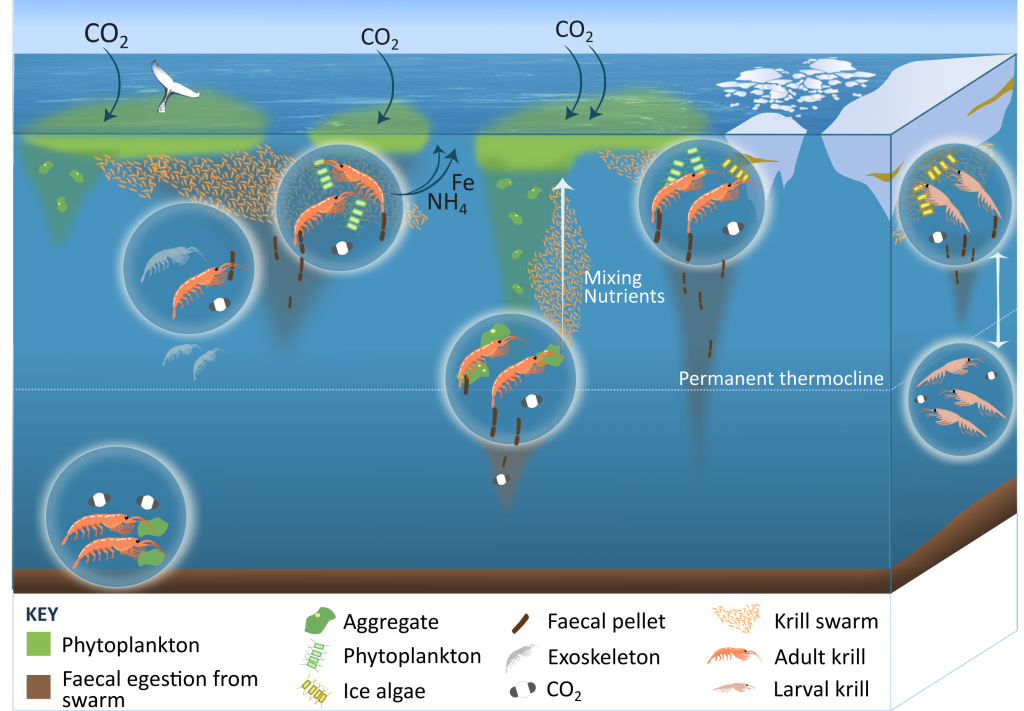
Oceanic phytoplankton generate roughly half the Earth’s oxygen. The exact percentage has been revised upward several times because we kept not counting things we didn’t know to look for.
In 2022, researchers discovered that krill and copepods—long assumed to be passive consumers in the carbon cycle—actively pump significant carbon to the deep ocean through their daily vertical migrations. The “biological pump” was substantially underestimated because the creatures running it were too small and too numerous to census properly. Some estimates now attribute 15-45% of carbon sequestration to organisms we weren’t counting a decade ago. → Source
Ecology keeps finding that the things we didn’t measure were doing the most work.
The most important variables in any system are often the ones you don’t have a spreadsheet for yet.
For most of my career I believed the number that mattered was the one on my CV. Citations. Grants. The h-index that a committee could read in four seconds and pretend it had understood a life’s work.
That number is easy to count. That is its entire appeal.
Here is what nobody warns you about in graduate school. A metric survives not because it captures what matters, but because it is cheap to measure. The citation is countable. The quiet insight you gave a student at 11pm is not. So the institution optimizes for the first and calls the second a rounding error.
Ecology keeps embarrassing us on exactly this point. We assumed the ocean’s oxygen came from the plants we could see. Then we learned that microscopic drifters we never bothered to census were running half the planet’s respiration. The creatures too small to count turned out to be doing the most work.
Science is supposed to be the discipline that resists this. Feynman’s whole posture was a refusal to be impressed by a number you could not trace back to an experiment. Yet the fields that most loudly claim his lineage now grade themselves on proxies he would have laughed out of the room.
The uncomfortable move is to ask what your own scoreboard leaves out. Not the metrics you are losing on. The ones you never thought to keep.
Measure what is convenient and you will slowly become good at the wrong thing. Slowly enough that it feels like progress the entire way down.
The most important variable in your life this year is almost certainly one you do not yet have a column for.
Have a MAGIC week!
Brian
Appearance
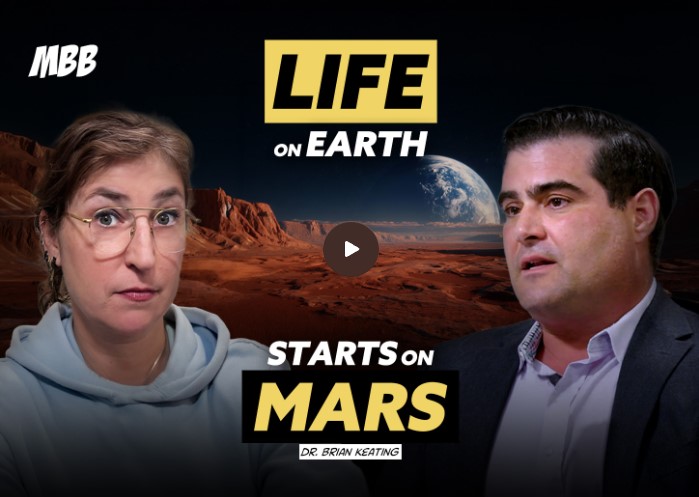
I don’t often find myself as a character in someone else’s story—but this essay put me there for a reason.
It explores a bigger question than any one scientist: Who gets to shape our understanding of the universe? Along the way, it examines ideas we’ve discussed on Into the Impossible, including some of my own.
Whether you agree with its conclusions or not, it’s the kind of piece that sparks the conversations science needs more of. Read the article, watch the video, and let me know where you stand.
Genius
Anti-Genius ✖🧠
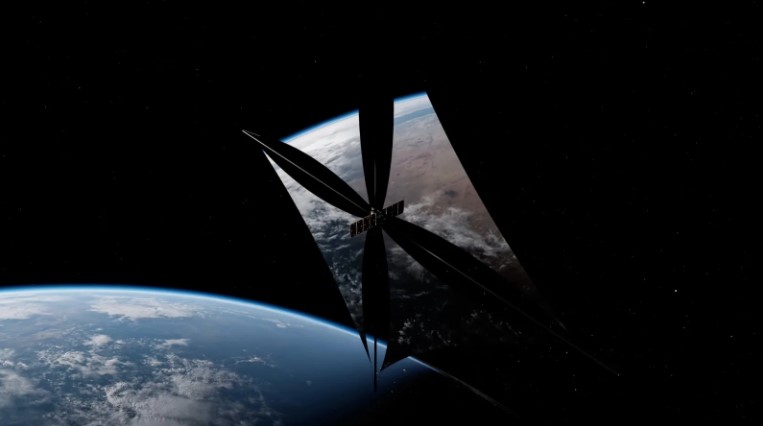
The FCC just approved the first orbital mirror designed to reflect sunlight onto Earth after dark. One satellite won’t ruin astronomy. Fifty thousand might. Every generation inherits a night sky it assumes is permanent. It ain’t. We never had to write rules protecting darkness because nobody imagined the sky itself would become commercial real estate.
Civilizations leave monuments. Ours may leave advertising space where the stars used to be.
Image
Here’s an image I never thought I’d see: me hitting 400,000 subscribers.
Here I am answering your questions. Click here and make sure you share with a friend
Conversation
Latest on Into The Impossible
What if almost everything you’ve been told about UFOs, truth, free will, and even the search for God deserves a second look?
In this conversation with Michael Shermer, we tackle some of the biggest questions in science and philosophy: Are aliens really here? Why do smart people believe extraordinary claims? Is free will an illusion? Can science ever answer life’s deepest questions? And what happens when evidence collides with ideology?
This isn’t a debate about who’s right. It’s an exploration of how we decide what’s true. If you enjoy conversations that challenge assumptions and leave you thinking long after they’re over, this is one you won’t want to miss.
Advertisement

By popular demand, and for my mental health 😳, I am starting a paid “Office Hours” where you all can connect with me for the low price of $19.99 per hour. I get a lot of requests for coffee, to meet with folks one on one, to read people’s Theories of Everything etc. Due to extreme work overload, I’m only able to engage directly with supporters who show an ongoing commitment to dialogue—which is why I host a monthly Zoom session exclusively for patrons in the $19.99/month tier.
It’s also available for paid Members of my Youtube channel at the Cosmic Office Hours level (also $19.99/month). Join here and see you in my office hours!