The Day Alfred Nobel Learned He Was Dead
Dear Magicians,
Most people never get to find out what the world will say about them after they die.
Alfred Nobel did.
And it terrified him.
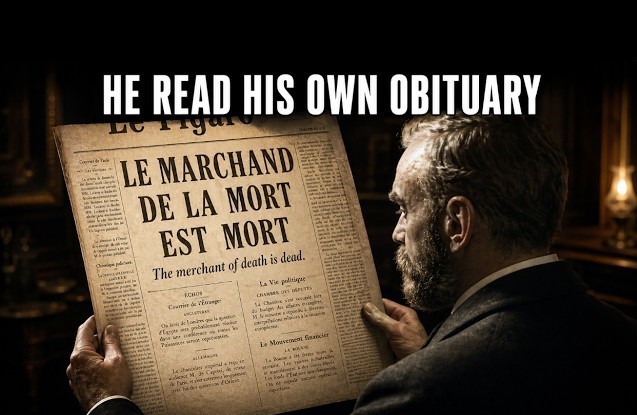
In 1888, a French newspaper accidentally published Alfred Nobel’s obituary while he was still alive. The headline reportedly described him as “The Merchant of Death,” a man who had become rich by helping people kill one another more efficiently. Imagine opening the morning paper and discovering not only that you’re dead, but that history has already decided who you were. That experience appears to have profoundly affected Nobel and may have helped inspire the creation of the Nobel Prizes themselves.
One of the strangest things about this story is that Nobel left no direct descendants. No wife. No children. Despite the persistent myth that there is no Nobel Prize in mathematics because Nobel’s wife ran off with a mathematician, Alfred Nobel never married. Yet 130 years after his death, thousands of careers, institutions, discoveries, and ambitions still orbit decisions he made with pen and paper. The man had no heirs, but his influence is everywhere.
Last month, Peter Nobel, the great-grandson of Alfred’s brother Ludvig Nobel, died at age 94. Peter spent decades criticizing the Economics Nobel Prize, calling it a “cuckoo’s egg in the Nobel nest” and arguing that it was never part of Alfred Nobel’s original vision. There is something wonderfully ironic about spending years contesting part of the Nobel legacy only to become part of Nobel history yourself.
But Peter Nobel’s death made me think about something else.
Every one of us leaves descendants.
Some leave children.
Others leave ideas.
Nobel left instructions.
Every day you’re writing a set of instructions that will survive you. Your children. Your students. Your books. Your research papers. Your code. Your habits. Your acts of kindness. Your acts of neglect. Something will continue running after you’re gone. The question is what.
Speaking of death, as a practicing astrophysicist, I don’t believe in the tunnel of light, the hovering soul, or the chorus of grieving relatives waiting in some celestial arrivals lounge. But I do believe in one near-death experience that changed the world forever: Alfred Nobel reading his own obituary and deciding he didn’t like the future it predicted – click here to watch it early.
In other news, tomorrow I’ll be interviewing a Nobel Prize-winning economist, my 25th conversation with a Nobel laureate on The INTO THE IMPOSSIBLE Podcast. Peter Nobel would probably have mixed feelings about that. What would you like me to ask him?
And before we get to economics, here’s a harder question:
If tomorrow morning you could read a completely honest obituary about yourself, would you change anything about today?
Until next time, have a M.A.G.I.C. Week,
Brian
Appearance
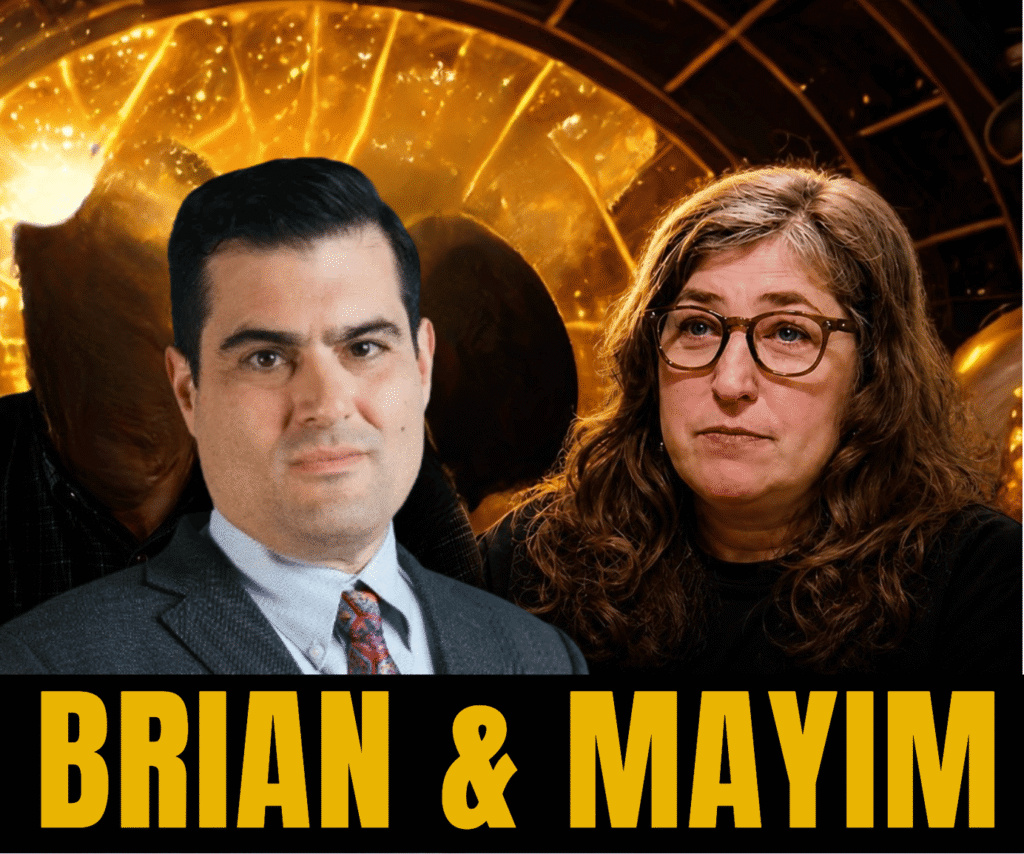
I am hitting the Big Bang Theory Circuit big time this week! To kick it off, here’s one line from Mayim Bialik’s Breakdown Substack that stopped me in my tracks:
“He [me] spends his days staring into space, looking into telescopes, and wondering what lies beyond our current limited understanding of the Universe.”
Most children dream of impossible futures. Most adults learn to negotiate with reality. Very few people get to spend their lives pursuing the same questions that fascinated them at age ten.
What struck me most about this conversation wasn’t astronomy. It was the deeper question Mayim asks: Do our childhood dreams reveal something essential about who we are?
Whether your dream was to become a scientist, artist, entrepreneur, teacher, or explorer, there is something inspiring about seeing what happens when curiosity survives adulthood.
If you’ve ever wondered whether it’s too late to reconnect with the questions that once lit you up, I think you’ll enjoy her thoughtful reflection. Stay tuned for my episode with Mayim — it drops tomorrow!
Genius
I need help from you, my genius audience!
To celebrate hitting a huge milestone, I’m taking questions from you, my beloved friends.
Click here to submit them. Ask me anything!
Image
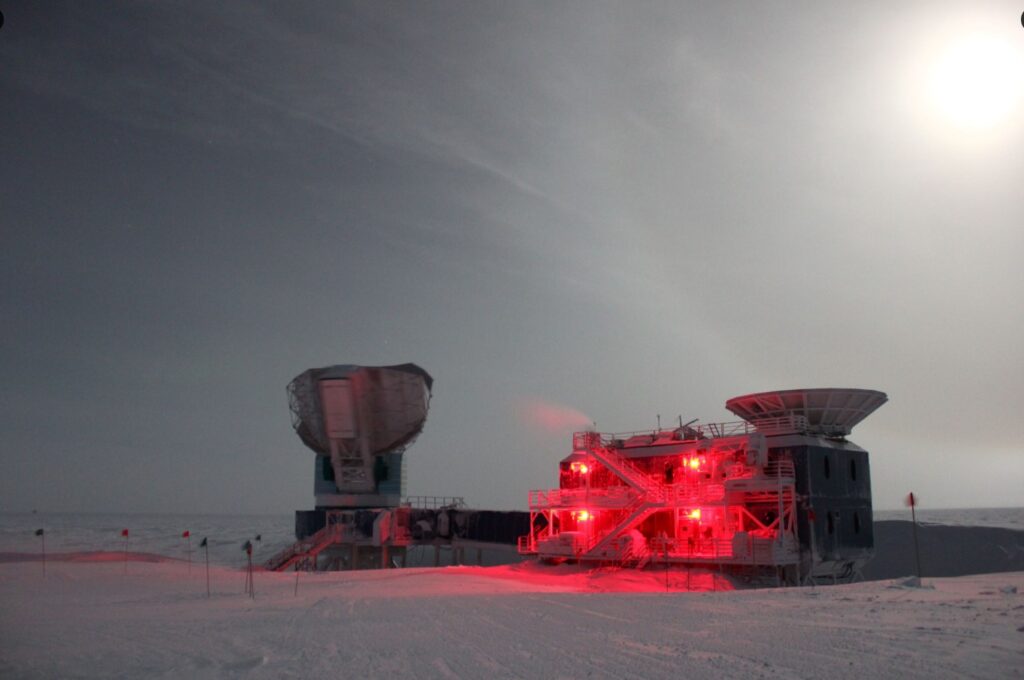
Only a few weeks away from mid-winter, during the solstice on June-21. Weather has been unseasonably warm at the South Pole, getting as high as -42 deg Fahrenheit last week. Here is a pic from winterover Michel, of SPT and DSL, lit by the moonlight.
Conversation
Latest on Into The Impossible
Latest on Into The Impossible
From my second channel, Professor Keating Explains, comes a new format of video — short explainer videos that capture the excitement without the woo, nonsense, or dumbing-down of important concepts in science, technology and philosophy.
This week — not the Nobel Prize but the Breakthrough prize which was recently awarded to an experimental result which no theorist can currently explain.
Arthur Eddington would surely be rolling in his grave!
As they say, please ‘like and subscribe’!
Advertisement

By popular demand, and for my mental health 😳, I am starting a paid “Office Hours” where you all can connect with me for the low price of $19.99 per hour. I get a lot of requests for coffee, to meet with folks one on one, to read people’s Theories of Everything etc. Due to extreme work overload, I’m only able to engage directly with supporters who show an ongoing commitment to dialogue—which is why I host a monthly Zoom session exclusively for patrons in the $19.99/month tier.
It’s also available for paid Members of my Youtube channel at the Cosmic Office Hours level (also $19.99/month). Join here and see you in my office hours!
Advertisement
Intro to Cosmology Course Lecture 1 is Now Live!
Lecture 1 of my Intro to Cosmology Course is now live and free for everyone!
In this lecture:
• Why cosmology is the oldest science
• How we know the age of the universe to within hours
• Why the biggest questions in physics are also questions of philosophy
▶ Watch it here!
Lectures 2–6 are exclusive to Channel members – join here.