The Asimov Paradox
Dear Magicians,
Isaac Asimov said: scientific breakthroughs aren’t “eureka” moments. They’re quiet. Incremental. Sometimes accompanied by a muttered “that’s odd” while squinting at data.
Like penicillin. Fleming noticed mold killing bacteria and thought, “Huh. Weird.” Not “BEHOLD, I HAVE CONQUERED DEATH.”
Or cosmic expansion. Hubble saw galaxies redshifting and basically said, “Well, that’s annoying.” Took years before anyone grasped the implications.
Yet.
AI researchers—many of whom I’ve interviewed, and who are genuinely smarter than me, which isn’t saying much—insist AGI will arrive as a sudden, irreversible, possibly catastrophic shift.
No quiet progress. No “that’s odd.”
Just… Tuesday. Then Wednesday. Then Skynet.
Why the difference?
I have theories. None of them flattering to anyone, including myself.
Maybe it’s funding. “Gradual improvement” doesn’t loosen purse strings. “Existential risk requiring immediate billions” does.
Maybe it’s ego. Discovering fire incrementally is boring. Discovering fire that might end civilization? Now you’re interesting at dinner parties.
Eric Weinstein disagreed. Vigorously.
I must disagree.
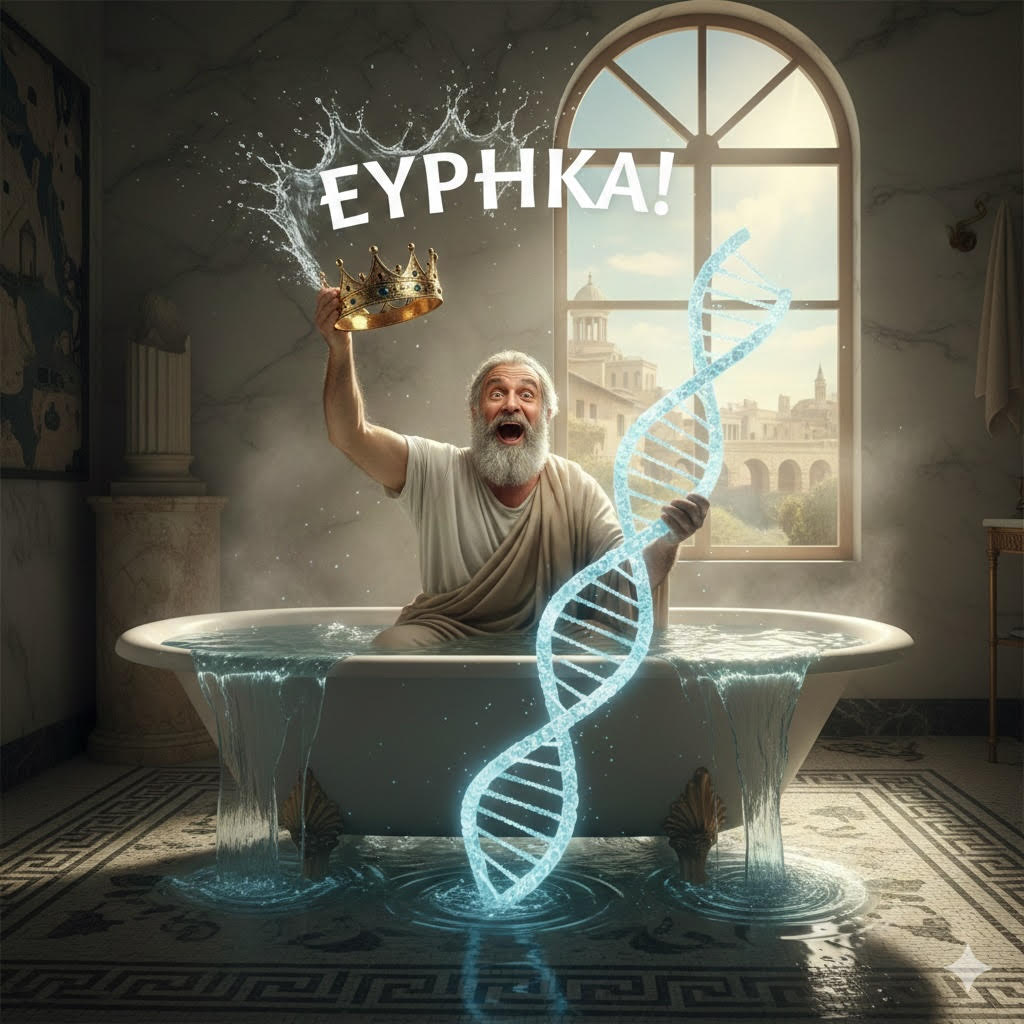
The Double Helix. Coasian rights. BPST instanton as Hopf fibration. Structure of Benzene. Etc. Yet, we keep saying this. The story of science just ISN’T all about group work, incremental improvement & slow accumulation of evidence. So why don’t we admit it?
Now, Eric’s response would didn’t exactly disprove my assertion — several people over several years is hardly a lone genius Eureka moment cum Archimedes!.
But he had the benefit of talking to Watson directly.
So two lightning bolts. Same blue sky.
Maybe the truth splits the difference. Most science is slow accumulation. But punctuated—rarely, unpredictably—by moments that can’t be reduced to process.
The question for AI: which kind of breakthrough are we waiting for?
I genuinely don’t know.
Which, given my job, is somewhat embarrassing.
Until next time, have a M.A.G.I.C. Week,
Brian
Appearance
I did an interview with the This Is World show and talked about a provocative idea: science doesn’t “prove” ultimate truths — it eliminates what’s false.
And if that’s how physics works, then the search for God (or the disproof of God) has to play by the same rules: hypotheses, predictions, and falsifiability.
Genius
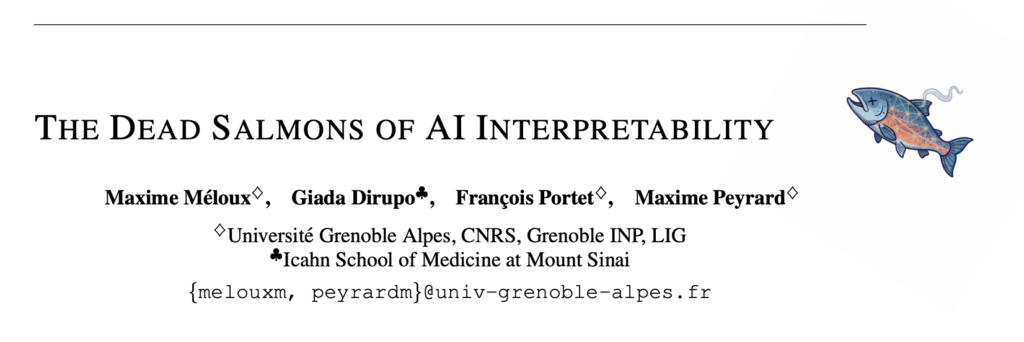
Did you know that researchers put a dead salmon in an MRI, showed it pictures, and found “brain activity”?
The salmon was dead. The “signal” was statistical noise.
This paper argues AI interpretability has the same problem. Feature attribution, probing, sparse autoencoders—they all produce plausible-looking explanations for randomly initialized networks. Networks that haven’t learned anything. Computational dead salmon.
The fix: treat interpretability like actual science. Test findings against meaningful alternatives. Quantify uncertainty. Otherwise we’re just finding patterns in noise and calling it insight.
Image
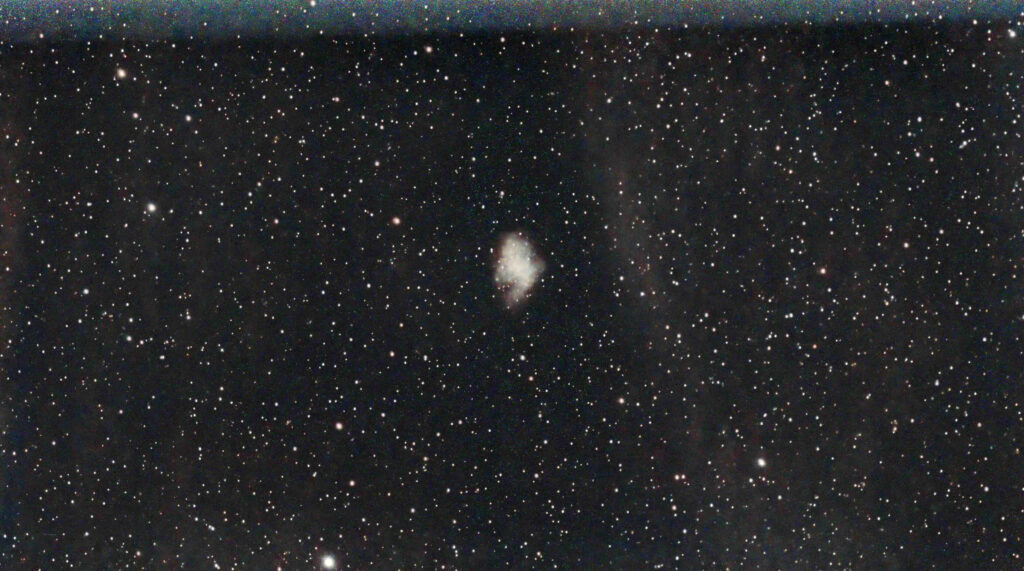
Webb recently clarified the Crab Nebula’s origin story—or complicated it. The 1054 CE supernova was long thought to be an electron-capture explosion from a star with an oxygen-neon-magnesium core, which explained its weird composition and low energy. New infrared data suggests a weak iron core-collapse supernova works too. “The composition of the gas no longer requires an electron-capture explosion,” says lead author Tea Temim. So we’ve ruled something in, not out. Progress.
📸 Credit: Me! Courtesy of the new Celestron Origin telescope I got! Not as pretty as JWST’s images, but at a fraction of the cost 😀.
Conversation
I was joined by complexity scientist and author, Sam Arbesman, to explore the captivating world of code and its profound impact on modern civilization.
Together, we discuss themes from Sam Arbesman’s new book, “The Magic of Code,” and unpack why writing code can feel like casting spells—a process filled with both wonder and risk.
Advertisement
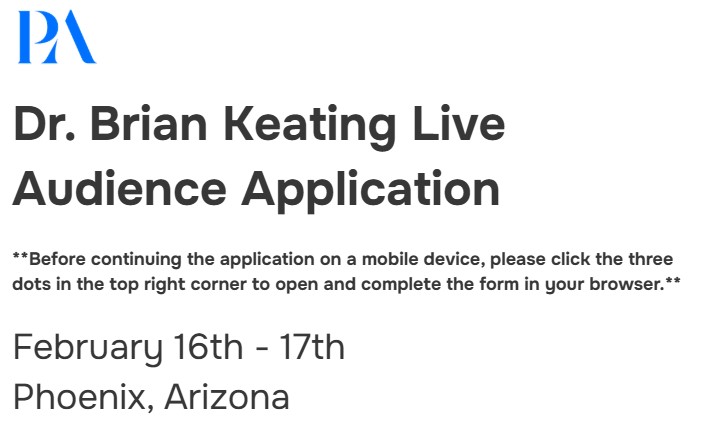
Join me for a free course on black holes in two weeks in Phoenix, AZ!
Submit your application link: https://keating.paperform.co/
You’ll be part of a live audience for your course recording. You’ll also receive 1-year access to the Peterson Academy platform.
If you can’t make it, you can take both of my PA courses — Intro to Astronomy and Intro to Cosmology, which are now available!
Join me on a 9-hour captivating journey through the cosmos, exploring its vastness, the tools used to unravel its mysteries and the groundbreaking discoveries that have shaped our understanding of the universe. We examine the evidence for an expanding universe, the forces driving its evolution, and the cosmic fossils that shed light on its distant past and future.
The course also delves into the enigmatic concepts of dark matter and dark energy, their roles in the universe’s structure and fate, and the ongoing efforts to unravel these cosmic mysteries.
Enroll now for immediate access at https://petersonacademy.com/?utm_source=Keating
Advertisement

By popular demand, and for my mental health 😳, I am starting a paid “Office Hours” where you all can connect with me for the low price of $19.99 per hour. I get a lot of requests for coffee, to meet with folks one on one, to read people’s Theories of Everything etc. Due to extreme work overload, I’m only able to engage directly with supporters who show an ongoing commitment to dialogue—which is why I host a monthly Zoom session exclusively for patrons in the $19.99/month tier.
It’s also available for paid Members of my Youtube channel at the Cosmic Office Hours level (also $19.99/month). Join here and see you in my office hours!
Upcoming Episode
Caleb Scharf will be on The INTO THE IMPOSSIBLE Podcast soon.
He’s NASA’s Senior Scientist for Astrobiology, a 2022 Carl Sagan Medal winner, and the author of provocative books like The Ascent of Information and his newest, The Giant Leap—which reframes space exploration not as a technological achievement but as biology in motion, life extending its reach beyond Earth for the first time in 4.5 billion years.
His argument that “alien life could be so advanced it becomes indistinguishable from physics” alone should keep us busy for hours.
What questions do you have for him?
Submit your questions here!