The peer reviewer was wrong. But if you tell him, he’s gonna….
Dear Magicians,
In 2010, I helped choose the site for a telescope in the Chilean Atacama Desert. The decision matrix had seventeen variables. Atmospheric opacity. Precipitable water vapor. Logistics costs. Stability of the host country. We debated for months.
You know what we didn’t model? The fact that the access road would wash out every three years during El Niño, stranding equipment worth more than my department’s annual budget on the wrong side of a mudslide.
That telescope is no longer there. But the road still washes out from time to time. Looking back, we spent more on road repair than we spent on parts of the telescope. And every time I think of the costs we paid over the life of the instrument for snowplowing, I think about the meeting in 2010 where someone said, “The road seems fine…it’s the driest desert on Earth!” and everyone nodded because we were tired and the more fun argument we wanted to get on to was about detector sensitivity. We did end up solving the road maintenance issues but those first few years sure were rough. But not for the cosmological reasons I would’ve naively thought were most important.
Path dependence is the term economists use for this. It sounds clinical. It isn’t.
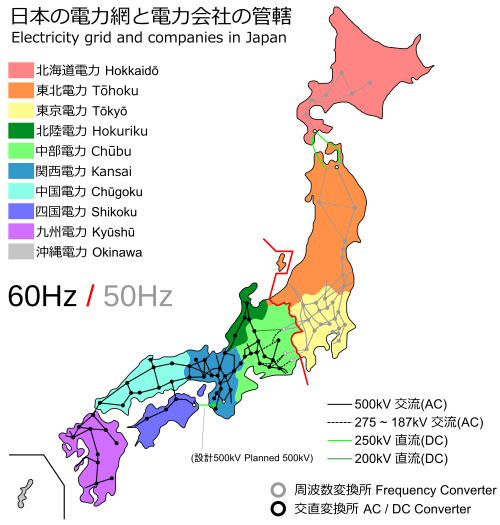
Path dependence is the reason Japan runs two separate electrical grids — one at 50 hertz, one at 60 — because in 1895, Tokyo imported German generators and Osaka imported American ones.
Nobody standardized. By the time anyone noticed, both systems were too embedded to rip out. During the 2011 Tōhoku earthquake, power from western Japan couldn’t be rerouted east at scale. A purchasing decision made by people who’d been dead for decades was still shaping disaster response.
I see this everywhere now. In physics, we’re still publishing in journals designed for the postal system. The formatting requirements — those absurd margin specifications, the insistence on .eps figure files — exist because someone in 1960 optimized for a phototypesetting machine that hasn’t existed since the Reagan administration. Nobody remembers why. Nobody can change it, because the tenure committees still count publications in those journals, and the tenure committees are staffed by people who got tenure by publishing in those journals.
It’s generators all the way down.
The uncomfortable version of this insight is personal. The major decisions in your career, like the advisor you chose, the subfield you wandered into during your second year, the city you moved to for a postdoc because your partner had a job there…none of those were data driven and optimized. They were contingent. And now they’re load-bearing. You’ve built twenty years of infrastructure on top of choices you made when you were twenty-six and running on caffeine and the vague sense that you should probably say yes to the offer that came first.
I’m not saying those choices were wrong. I’m saying they were arbitrary in a way that we retroactively narrate as intentional. The access road seemed fine. The generators worked. The journal was prestigious. And by the time the cracks showed, the switching costs were astronomical. I’m reminded of another economics term, this time from coding — technical debt.
The antidote isn’t better planning. You can’t model the El Niño you haven’t met yet. The antidote is building in enough slack that when the road washes out — and it will — you can reroute without plowing your entire career to the other side of the mountain.
That’s what I wish someone had told me back then. Not “choose better.” Just “leave room to choose again”…or as some wise economist once said, “always take the option that gives you the most options”.
Until next time, have a debt-free, M.A.G.I.C. Week,
Brian
Appearance
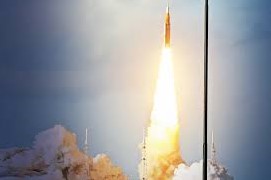
The Washington Examiner published a major magazine feature — “How Trump put America back in space, and what comes next” — covering the Artemis II mission and the future of America’s human spaceflight program. I was quoted on the significance of the mission and what it means for the next chapter of lunar exploration. Artemis II sent four astronauts around the moon in April, traveling 4,700 miles beyond it — farther from Earth than any humans in history. The piece runs through the political and technical backstory of how we got back to crewed deep-space missions after a half-century hiatus and my hopes for the future.
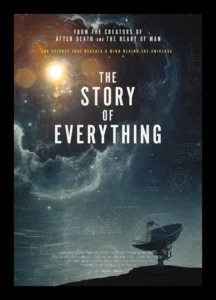
The Story of Everything is also still in theaters — the documentary featuring yours truly alongside Stephen Meyer, Peter Thiel, and John Lennox making the case for cosmic fine-tuning.
I’m set to interview Stephan Meyer this week to discuss this film and the reactions to it. Let me know if you have a question for him — hit reply.
Genius
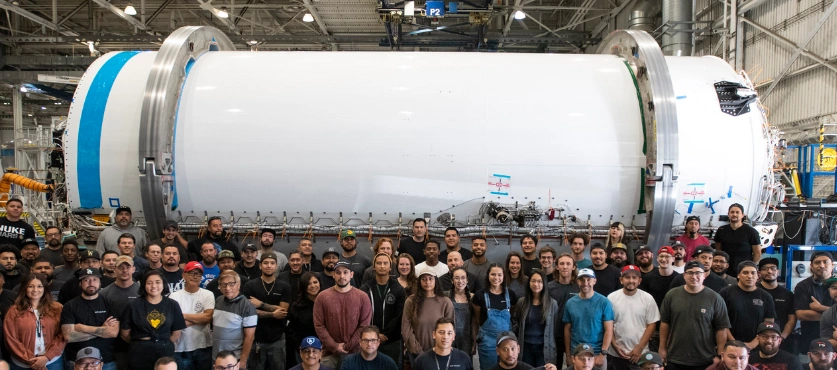
A SpaceX Falcon 9 rocket booster is on track to hit the Moon this August. Not on purpose. Nobody planned this. The booster was left in a high orbit after a 2025 launch, and gravitational perturbations from the Earth, Moon, and Sun have slowly bent its trajectory into a lunar collision course.
We spent sixty years worrying about space debris in low Earth orbit — building tracking systems, drafting mitigation guidelines, convening international panels. Meanwhile, we’ve been casually lobbing spent hardware into cislunar space with no tracking and no plan. The Moon is about to receive its first piece of commercial litter before Artemis III even lands a crew there.
It’s a perfect inversion: we’re contaminating the destination before we arrive. The campsite has trash in it, and we haven’t even unpacked.
What frontier in your work are you polluting before you’ve properly explored it?
Read the article here.
Image
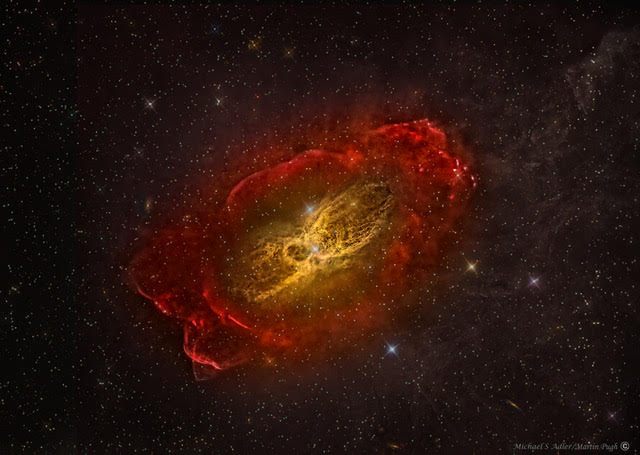
The Toby Jug Nebula (IC 2220)
A dying red giant sheds its skin in the southern constellation Carina, 1,200 light-years away. Mike’s image reveals what even the ESO’s Very Large Telescope didn’t emphasize: a crimson “spaceship” halo of hydrogen-alpha emission surrounding the bipolar dust structure — a star rehearsing the death our Sun will perform in five billion years.
Conversation
Latest on Into The Impossible
Scientists have mapped every single neuron and synapse in a tiny worm — all 302 of them — and still can’t simulate its behavior.
Joscha Bach thinks that tells us something fundamental about what we’ve gotten wrong in neuroscience. If neurons are more like wires than computers, the entire connectome project is mapping the wrong layer of the brain, and mind uploading rests on an assumption nobody’s actually examined.
One of the most original thinkers on mind and computation, Bach makes the case for a different picture entirely. This one reframes a lot.
What if spacetime isn’t fundamental — but something that emerges from quantum entanglement? That’s the idea Juan Maldacena, the most-cited theoretical physicist alive, has spent decades building a case for. In this conversation, we go deep on wormholes, black holes, and why the information paradox might be the most important unsolved problem in physics.
If you’ve ever wondered what actually happens to matter when it falls into a black hole — or whether sci-fi wormholes are even theoretically possible — this one’s worth your time.
Channel members can watch it a day early — join here.
You can doubt the physical world, your memories, even science itself — but you cannot doubt that something is being experienced right now. Sam Harris argues that consciousness is the one bedrock fact of reality, more certain than physics. Free will, though? A different story entirely.
In this conversation, we get into why free will collapses under scrutiny whether the universe is deterministic or not, a thought experiment that could genuinely shake your intuitions, and where Harris parts ways with Robert Sapolsky. If you find yourself thinking about it hours later, that’s kind of the point.
Advertisement

By popular demand, and for my mental health 😳, I am starting a paid “Office Hours” where you all can connect with me for the low price of $19.99 per hour. I get a lot of requests for coffee, to meet with folks one on one, to read people’s Theories of Everything etc. Due to extreme work overload, I’m only able to engage directly with supporters who show an ongoing commitment to dialogue—which is why I host a monthly Zoom session exclusively for patrons in the $19.99/month tier.
It’s also available for paid Members of my Youtube channel at the Cosmic Office Hours level (also $19.99/month). Join here and see you in my office hours!
Advertisement
Intro to Cosmology Course Lecture 1 is Now Live!
Lecture 1 of my Intro to Cosmology Course is now live and free for everyone!
In this lecture:
• Why cosmology is the oldest science
• How we know the age of the universe to within hours
• Why the biggest questions in physics are also questions of philosophy
▶ Watch it here!
Lectures 2–6 are exclusive to Channel members – join here.