The real reason your goals fail (it’s not willpower)
Dear Magicians,
January takes its name from Janus, the Roman god of gates and portals—a deity who could simultaneously gaze backward and forward. Appropriate, then, that we use this month to reflect on where we’ve been and where we’re headed.
Since we’re already one-twelfth through the year, it seems like a good moment to revisit those goals you set. Or didn’t set. Or set and immediately forgot while binge-watching something on Netflix.
No judgment.
I’ve found some additional research that might help. And I’ve included a short private video message just to you, my Magicians! (Please don’t share).
Write It Down
A study in the Journal of Applied Psychology found that people who commit to action and build in accountability see roughly a 25% boost in goal achievement compared to those who merely scribble intentions on paper (like writing “exercise more” and then using the notebook as a coaster).
Dr. Gail Matthews’ research showed an even larger effect when people shared their goals and submitted progress reports. So if you want results, tell someone what you’re working toward.
Better yet, tell someone you admire.
There’s something clarifying about announcing your intentions to a person whose opinion you actually care about. Suddenly “I’ll get around to it” becomes significantly less convincing—even to yourself.
Get Accountability
The real engine of goal achievement isn’t willpower.
It’s witnesses.
If someone is going to ask you about your progress regularly, it becomes much harder to rationalize procrastination. Researchers at the University of Chicago found that sharing a goal with just one other person increases your likelihood of success by 25%.
Why? Because public commitment creates social pressure. You can’t make excuses when you’ve told a friend you’re training for a marathon and posted your schedule online. The cost of failure suddenly includes embarrassment—a currency we all prefer not to spend.
This is one reason I wrote an entire book on accountability systems and focus techniques: Focus Like a Nobel Prize Winner. I figured if I put my methods in print, I’d have to actually use them. Mostly this has worked. Mostly.
Share Your Goals With Me
I can’t respond to every email—I’m one person with finite hours and an infinite capacity for distraction—but I do read every reply. 😀
One goal I had this year was to publish my fourth book — Focus Like a Nobel Prize Winner… and publish it I did!
Done.
Now on to losing that stubborn last five pounds. Right after I lose the first twenty. 😂
You’ll also notice improvements coming from my upgraded home studio soon—thank you to my Patreon patrons and YouTube Members for making that possible.
And as I mentioned in my recent video, look for the first-ever audiobook by Galileo, produced by yours truly, featuring my voice alongside Carlo Rovelli, Lucio Piccirillo, Frank Wilczek, Fabiola Gianotti, and Jim Gates. More on Galileo Galilei below…
Good company for an amateur like me.
Until next time, have a M.A.G.I.C. Week,
Brian
Appearance
The Simons Observatory appeared in BBC sky at night.
Genius
I need help with a survey from you my genius audience!
Surveys help me improve the podcast and this newsletter too. I treasure each reply and you can win a $100 Amazon gift card.
Unlike meteorites, I can send these cards anywhere on earth!
Image
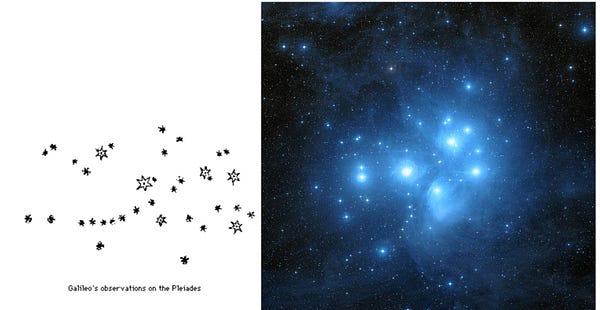
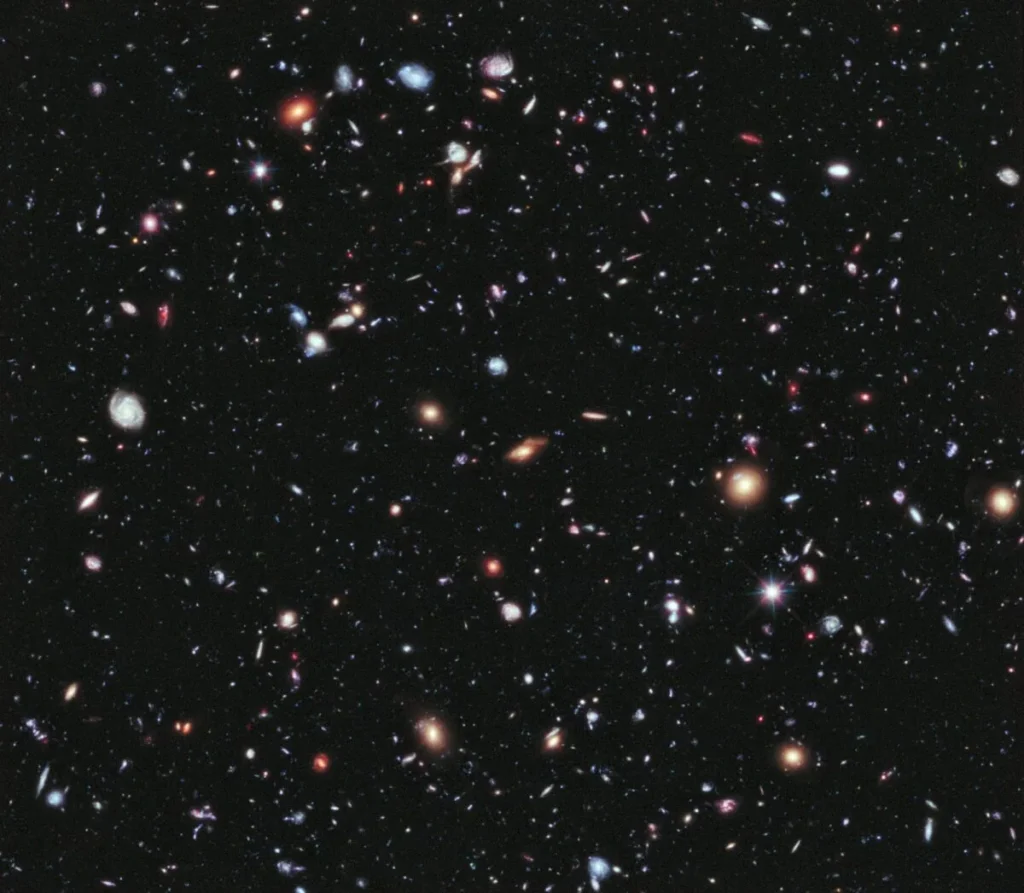
In January 1610, Galileo Galilei observed the Pleiades, aka the Seven Sisters, aka Messier 45. Galileo’s Pleiades moment is the first time the sky betrayed the naked eye. In Sidereus Nuncius (1610) he aimed a crude telescope at M45 and the “six or seven” stars exploded into dozens—about 36 he bothered to plot.
As an experimentalist, that’s the whole story: increase resolution, watch certainty dissolve, and force theory to catch up. It’s also a warning I carry into CMB work: nature hides structure until your detector earns it. Compare his Galileo sketch with a modern Hubble image and you can see, literally, what “more sensitivity” does to reality. That’s why I trust instruments over instinct.
Learn more about Galileo Galilei — flaws and all — in my first book, Losing the Nobel Prize.
Conversation
In this episode with Terry Tao, we discuss the mysterious world of mathematics, artificial intelligence, and the very fabric of reality with one of the greatest minds of our time.
With Fields Medalist Terence Tao, often called “the Mozart of Math”, we unravel why large language models (LLMs) might be simpler than we imagine, and why the true enigma lies in understanding why they actually work.
Advertisement
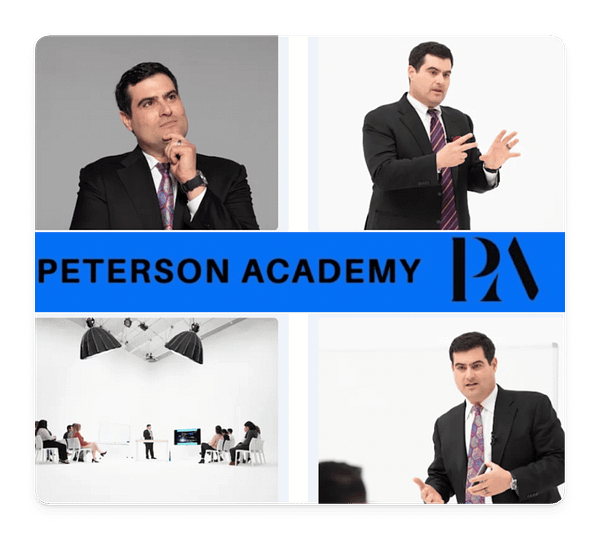
My Intro to Cosmology course is now appearing exclusively at Peterson Academy. Join me on the 9-hour captivating journey through the cosmos, exploring its vastness, the tools used to unravel its mysteries, and the groundbreaking discoveries that have shaped our understanding of the universe.
We examine the evidence for an expanding universe, the forces driving its evolution, and the cosmic fossils that shed light on its distant past and future. The course also delves into the enigmatic concepts of dark matter and energy, their roles in the universe’s structure and fate, and their ongoing efforts to unravel these cosmic mysteries.
Enroll now for immediate access!
I’ve gotten great feedback from dozens of my PA students. Join us on a cosmic adventure!
Advertisement

By popular demand, and for my mental health 😳, I am starting a paid “Office Hours” where you all can connect with me for the low price of $19.99 per hour. I get a lot of requests for coffee, to meet with folks one on one, to read people’s Theories of Everything etc. Due to extreme work overload, I’m only able to engage directly with supporters who show an ongoing commitment to dialogue—which is why I host a monthly Zoom session exclusively for patrons in the $19.99/month tier.
It’s also available for paid Members of my Youtube channel at the Cosmic Office Hours level (also $19.99/month). Join here and see you in my office hours!
Upcoming Episode
Tom Griffiths will be on The INTO THE IMPOSSIBLE Podcast soon. He’s the Princeton professor who co-wrote Algorithms to Live By—a book MIT Technology Review named one of 2016’s best—arguing that the same elegant algorithms computers use to solve problems can help humans make better decisions about everything from when to stop apartment hunting to how to organize a closet. As founding director of Princeton’s AI Lab and a cognitive scientist with 84,000+ citations, he sits at the exact intersection of human and machine intelligence, asking the question that matters most right now: what can AI teach us about our own minds, and vice versa?
What would you ask him?
Submit your questions here!