Evolution builds what your blueprints can't
Dear Magicians,
Science rarely collapses in flames; it erodes like a coastline, grain by grain, under the steady pressure of incentives misaligned with truth. We imagine error as fraud or ignorance, but more often it is compliance masquerading as rigor. The system doesn’t reward being right. It rewards being publishable, fundable, and—above all—agreeable.
Consider the strange case of Ignaz Semmelweis, who demonstrated that handwashing could collapse mortality rates from puerperal fever from ~21% to nearly zero. His reward was not acclaim but exile into professional irrelevance. Fast forward a century and a half, and the story rhymes uncomfortably. During the pandemic, dissent from orthodoxy was not merely debated but often suppressed, even when articulated by highly credentialed scientists like Jay Bhattacharya, who argued for focused protection strategies. His treatment—quiet marginalization, reputational risk—was not an aberration but a signal.
You can watch my full conversation with Bhattacharya here: Jay Bhattacharya: Follow Science, Not Scientists
The irony is that science, the one human enterprise explicitly designed to correct itself, has built an immune system that sometimes rejects its own antibodies. Figures like Anthony Fauci and Francis Collins did not operate as cartoon villains; they operated as institutional actors optimizing for stability under uncertainty. But stability, when over-optimized, becomes dogma in a lab coat.
The replication crisis, p-hacking, grant-chasing—these are not bugs. They are emergent properties of a system that confuses consensus with correctness. Even the mythology of Galileo Galilei persists in distorted form because it flatters our narrative that truth inevitably triumphs. It doesn’t. It competes.
This is not an indictment of science, but of its operating system. Fix the incentives, and you recover truth as a byproduct. Leave them untouched, and truth becomes optional—an aesthetic choice in a marketplace of results.
So the real question isn’t whether science is broken. It’s whether we have the courage to debug it.
Until next time, have a M.A.G.I.C. Week,
Brian
P.S. I share other life lessons from generous Nobel Prize winners in my newest book, Focus Like a Nobel Prize Winner. Please pick up a copy and if you already did, Thank you (and please leave a review)
P.P.S. 📷Check out Ad-free episodes on Patreon:patreon.com/drbriankeating
Appearance
I was a guest on the This is The World Show this March.
In this conversation, I explore why today’s AI may be trapped by its own success, how close we really are to existential risk, what went wrong with our inflation discovery, and how future experiments could reshape our understanding of the Big Bang, the multiverse, and even the possibility of alien intelligence.
Genius
🏗️ You Can’t Design Your Way Out of Evolution
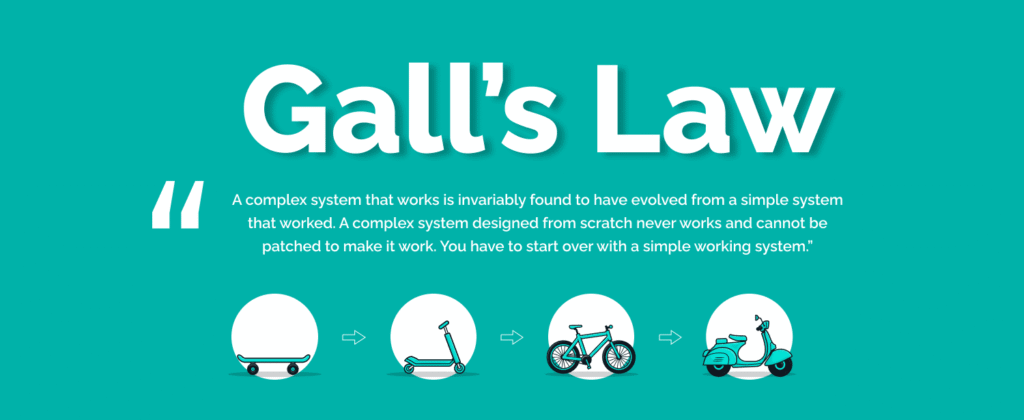
Every complex system that works evolved from a simpler system that worked. Every complex system designed from scratch doesn’t work.
John Gall wrote this in 1975. Nobody in systems engineering has successfully falsified it since. The implication is uncomfortable: you cannot design complexity. You can only grow it. The Soviet central planning apparatus, the U.S. healthcare system, every ambitious government IT project — all collapsed under the weight of top-down complexity that had no working simple version underneath it.
Evolution doesn’t draft blueprints. It iterates relentlessly from functional simplicity. Every successful institution you admire started as something embarrassingly small that actually worked.
This isn’t an argument against ambition. It’s an argument about method.
What are you trying to design from scratch that you should be growing instead?
Image
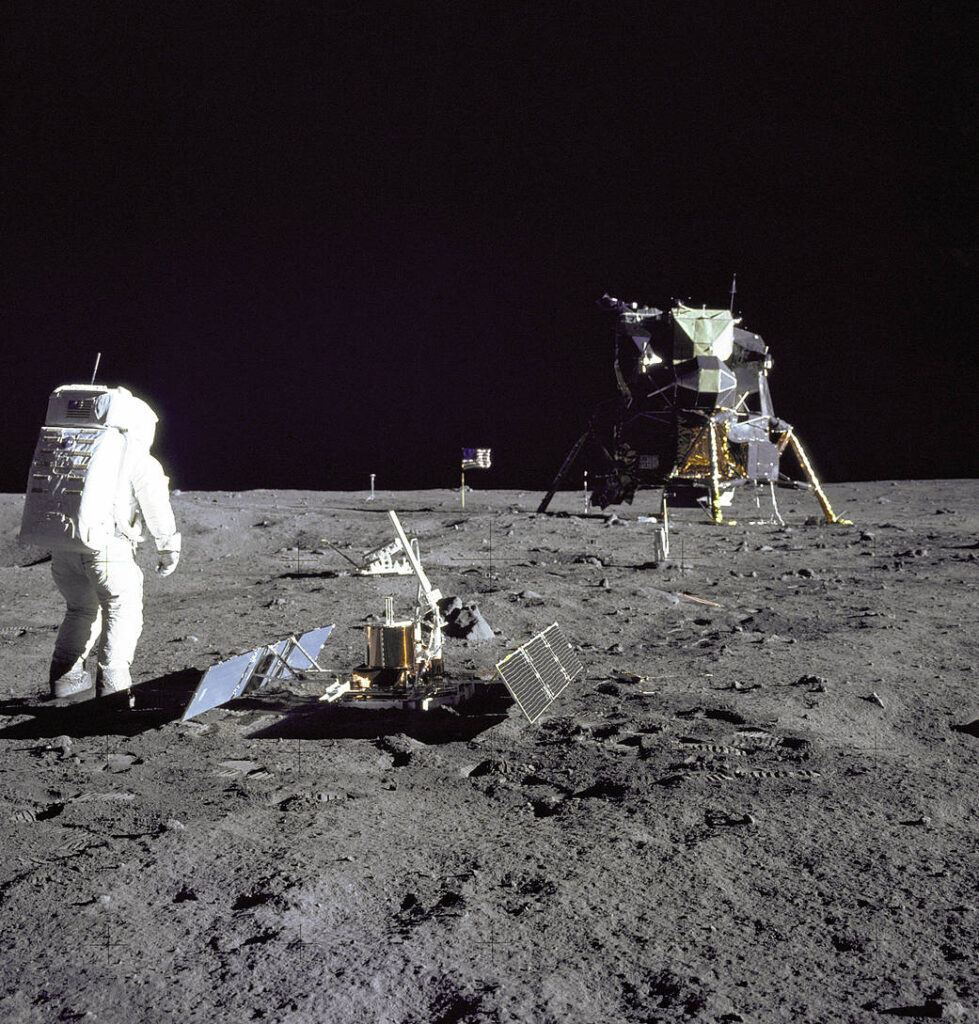
I’ll be a guest on Piers Morgan Uncensored tomorrow to discuss the Artemis 2 mission.
I’ll be debating my old ‘friend’ Bart Sibrel.
Check out my previous rebuttal of Bart’s claims that we never went to the Moon in the 1960s!
Conversation
Latest on Into The Impossible
In this conversation, I am joined by Matt Kaplan, and we discuss why the pandemic exposed science’s dirty secrets to the public, how Ignaz Semmelweis discovered handwashing saved lives and was thrown in an asylum for it, why Katalin Karikó survived where others didn’t, the replication crisis and how funding models are making it worse, whether older scientists should control research dollars, why Galileo was never actually tortured, and what journalists and scientists must do differently before public trust collapses entirely.
Channel members can watch it a day early — join here.
Advertisement

By popular demand, and for my mental health 😳, I am starting a paid “Office Hours” where you all can connect with me for the low price of $19.99 per hour. I get a lot of requests for coffee, to meet with folks one on one, to read people’s Theories of Everything etc. Due to extreme work overload, I’m only able to engage directly with supporters who show an ongoing commitment to dialogue—which is why I host a monthly Zoom session exclusively for patrons in the $19.99/month tier.
It’s also available for paid Members of my Youtube channel at the Cosmic Office Hours level (also $19.99/month). Join here and see you in my office hours!