The Thermodynamics of the Vanities (Or what 1347 crackpots taught me about attention)
Dear Magicians,
This week I learned something I already knew.
Again.
Attention is never neutral. It arrives with baggage: incentives, asymmetries, and people who want something from you. Your credibility. Your legitimacy. Or just a convenient villain for their own story.
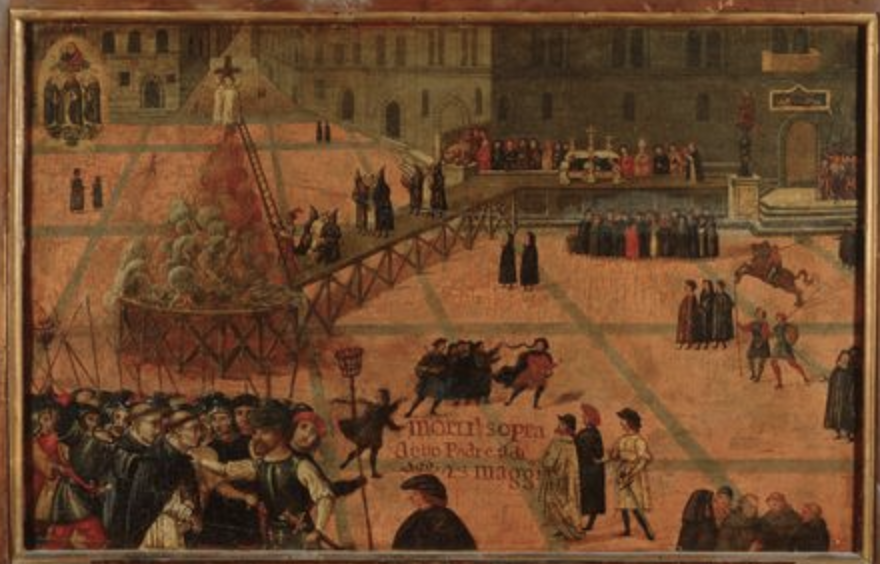
In 1497, Florence held the Bonfire of the Vanities. People piled their mirrors, books, cosmetics, instruments—anything associated with status or self-regard—and set them on fire. It wasn’t about purification. It was about spectacle. Heat mistaken for morality.
I recently went on a podcast expecting disagreement, but instead got ambushed by my hosts’ supplication to their audience.
Debate is good; science needs friction.
What I didn’t expect was the flavor of the response. “They” say never read the comments. Usually, I listen to that advice. This time, I didn’t. I wanted to see what this particular audience—of a once-great podcast—was actually doing with the conversation.
Most of the outrage wasn’t about ideas. It was about identities.
For the high crime of defending the Big Bang, evolution, and even the scientific method + peer review, I was roasted in the comments — declared a “priest,” a “gatekeeper,” a “douchebag,” a “hubristic asshole,” and my favorite: “Buzz Lightyear wannabe” (guilty as charged).
I won’t pretend some of that didn’t sting. But a pattern emerged quickly. When your entire worldview rests on “experts are ignorant,” and “consensus is groupthink”, well then disagreement isn’t a productive conversation. It’s an attack. And attacks shouldn’t be answered. They must be repelled.
Every creator begs the audience to like, comment, and subscribe. I do too. Here’s something most creators won’t say out loud: comments are not feedback. They’re algorithmic kindling.
Comments are thermodynamics. Bonfires of vanity. They measure heat, not work. Views measure something quieter—attention that doesn’t need a keyboard and a grievance to announce itself.
The data were clarifying. The episode soared. Serious people watched. Some disagreed thoughtfully. Many simply moved on with their lives. And here’s the part that surprised me—
Nothing came of it.
No emails from colleagues. No institutional fallout. No crater where my reputation used to be. Just noise. Dissipating. Exactly like noise always does. Because the audience of this particular podcast no longer matters in the way it once did. At some point, it got captured by the gravity of ten thousand cranks.
I should have known this. I did know this. Apparently, I needed to feel it at scale. Consider that lesson received.
In 2026, I finally realized I don’t need to engage grifters to “expand reach.” There’s a reason Terence Tao doesn’t debate Terrence Howard about why 1×1 ≠ 2. It’s not fear.
It’s triage.
Some conversations aren’t brave. They’re just expensive. Attention is finite. Credibility compounds slowly. Credulity and outrage go hyperbolic.
This episode closed a door—one I’d been holding open out of some misplaced sense of obligation. Or maybe vanity. Probably vanity.
That door is closed now.
Not loss.
Clarity.
Focus.
And clarity—unlike outrage—burns brighter than any sanctimonious bonfire ever ignited.
Until next time, have a M.A.G.I.C. Week,
Brian
Appearance
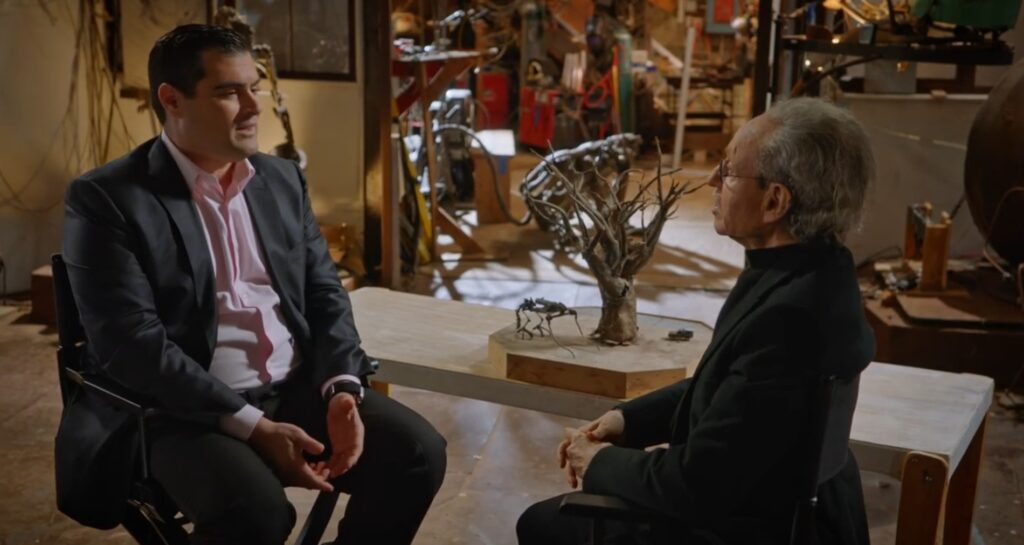
I was featured in Close To Truth’s show and talked about what multiverses would mean in the biggest sense of the term and in different categories.
Genius
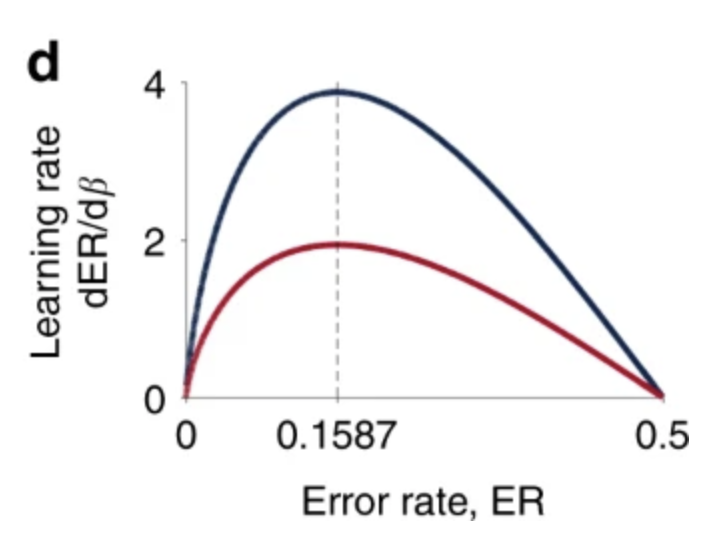
This paper, The Eighty Five Percent Rule for optimal learning, conducted in part by some UCSD colleagues, shows that learning is fastest when performance hovers around 85% correct, meaning about 1 in 6 attempts results in an error. It studies binary decision tasks where learners update via gradient-descent-like rules, and defines difficulty by the current error rate.
The authors mathematically derive that an error rate of about 15.87% maximizes learning speed, and confirm this in artificial and biologically inspired neural networks. Too few errors give too little feedback; too many create noisy, unhelpful feedback. A practical takeaway is to aim for conditions where learners succeed roughly four out of five times.
Image
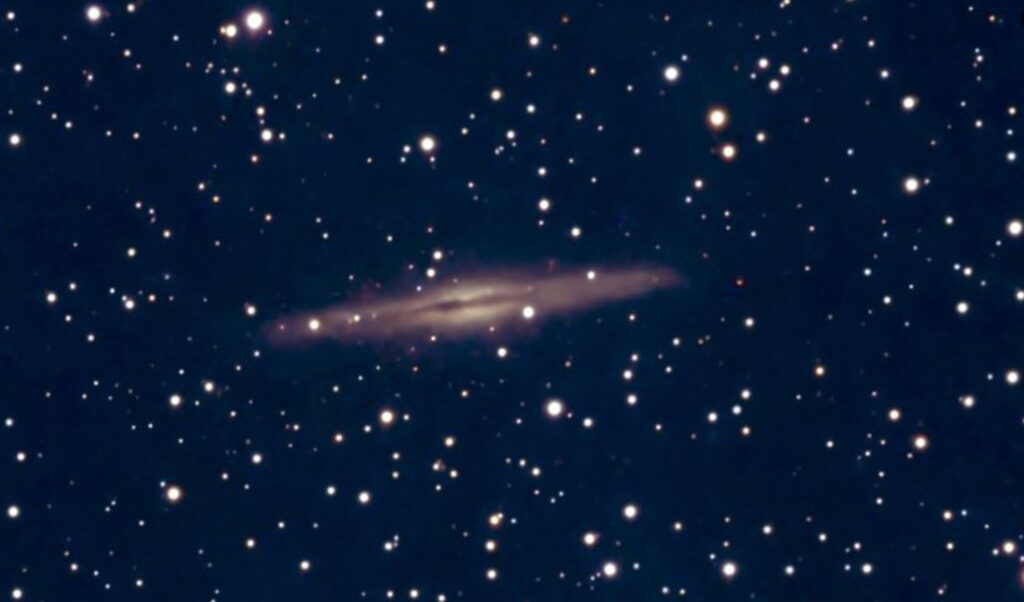
NGC 891, a nearly perfectly edge-on spiral galaxy 32 million lightyears away in Andromeda. Razor-thin dust lane, classic disk+halo structure, & rotation curves just like our galaxy. We study it because we can’t see the Milky Way from the outside. Taken in San Diego with my Seestar.
Conversation
In this episode, I am joined by cosmologist Andrew Jaffe, author of “The Random Universe,” for a fascinating exploration into the very nature of reality.
Together, we tackle some of the biggest and most intriguing questions in science: Is the universe truly random, deterministic, or perhaps something in between?
Advertisement

WANTED: Developers and STEM experts!
Get paid up to $150/hour to create benchmarks and improve AI models.
Sign up for Alignerr using my link.
Advertisement

By popular demand, and for my mental health 😳, I am starting a paid “Office Hours” where you all can connect with me for the low price of $19.99 per hour. I get a lot of requests for coffee, to meet with folks one on one, to read people’s Theories of Everything etc. Due to extreme work overload, I’m only able to engage directly with supporters who show an ongoing commitment to dialogue—which is why I host a monthly Zoom session exclusively for patrons in the $19.99/month tier.
It’s also available for paid Members of my Youtube channel at the Cosmic Office Hours level (also $19.99/month). Join here and see you in my office hours!
Upcoming Episode
Nick Lane will be on The INTO THE IMPOSSIBLE Podcast soon.
He’s one of the most original thinkers on the origins of life, arguing that energy flow, metabolism, and deep chemistry—not genes alone—set the trajectory for complexity, consciousness, and even death. What would you ask him about life, energy, evolution, or where biology breaks from physics.
What would you ask him?
Submit your questions here!