A thousand years of academia hardware. Zero software updates.
Dear Magicians,
Last week I was musing about the recent—and not so recent—scandals that have rocked academia. It was a simple list: Jason Arday. Dan Ariely. AI cheating. Varsity Blues. COVID. Claudine Gay. Nature op-eds. Marc Tessier-Lavigne. Then I asked what seemed to me an obvious question: if academia can pass through scandals that should have produced deep introspection and reform with scarcely a dent in its operating system, what, exactly, would it take to change academia?
More than 30,000 people viewed the post, which is roughly 29,900 more than I expect when I tweet about something I actually know about. The cases on my list are obviously not equivalent. They involve everything from plagiarism and questionable data to admissions corruption, institutional hypocrisy, political conformity, and technology capable of outdoing many undergraduates. What interested me was the common outcome. Academia absorbed all of it. There were headlines, investigations, resignations, statements, task forces, and committees—God knows there were committees. We even have a few committees on committees. Which always makes me wonder what committee is responsible for forming the committee on committees? But I digress. So, peer review remained peer review. Tenure remained tenure. Prestige begat more prestige in a nearly biblical manifestation of the Matthew effect.
Grants continued to flow through familiar channels, hiring committees continued to recognize familiar signals, and journals remained considerably more excited by startling discoveries than by someone announcing that she had carefully checked an important result and found nothing at all. Science has an unusually beautiful correction mechanism: nature gets the last word. Institutions have spent roughly a millennium developing defenses against anything so abrupt.
The University of Bologna appeared in the eleventh century, and parts of academic life would still be recognizable to its faculty. That should terrify us. How many jobs still exist from the year 1080, yet alone have remained more or less unchanged?!
There remain sages standing on stages before groups of young people and scraping symbols onto large flat rocky surfaces with smaller cylindrical rocks. There is still tuition. There is still networking. We have even preserved ceremonial robes, though mercifully not the medieval arrangement in which students could strike and stop paying their professors. I suspect this innovation would suddenly make faculty extraordinarily attentive to student satisfaction surveys.
The replication crisis should have altered the reward structure of science. Instead, among its more durable products are conferences about the replication crisis. Varsity Blues revealed an admissions system remarkably permeable to money, celebrity, and fraud; elite universities somehow retained their elite status. The brand value of elite admissions barely moved and the progenitors of the scandal are back celebrating their extravagant lifestyle on insta and that renowned academic journal, People Magazine.
And now we get to AI, which may prove more consequential precisely because it is not a scandal. It works. A student can generate competent prose, code, summaries, and problem sets in seconds. The proposed solution at many universities is more oral assessment, more supervised work, and more in-person testing.
This sounds excellent until I remember that I have taught 200 students with one TA. Conducting meaningful oral examinations for everyone would turn a ten-week quarter into something resembling the auditions for American Idol, except with calculus. I often say that being a professor is the hardest three-hour-a-week job in America. The joke survives because the three hours are the lectures. Around them we counsel students, sit on committees, run meetings, organize conferences, attend conferences, write papers, referee papers, prepare lectures, write exams, grade exams, submit evaluations, advise undergraduates, supervise graduate students, manage postdocs and research scientists, write grants, administer grants, and, whenever conditions permit, occasionally do science. Asking professors to personally authenticate every student’s cognition is a magnificent idea provided someone first invents the 37-hour day and explains to my wife and kids why I’m away for 30 of them.
We should examine what the assignment was supposed to be measuring. More broadly, if scandal after scandal leaves the architecture of academia essentially unchanged, perhaps scandal is simply the wrong mechanism for reform. Incentives have more leverage. I would like to see grants that place far greater value on replication, open data, negative results, and adversarial collaboration; hiring that rewards discoveries that remain true rather than papers that remain cited; independent audits of unusually influential results; and assessments designed around genuine understanding wherever this is practical. The ending is now less sermon-like and, I think, more dangerous: it leaves the reader with the possibility that academia’s celebrated stability may itself be the pathology.
What do you think we should do about academia’s failure to adapt to the 21st century? Is it as hopeless as I fear in my worst moments?
Let me know and, as always, have a M.A.G.I.C. Week.
Brian
Appearance
What makes a scientist tick, and what makes them impossible to work with?
In this interview, I pull back the curtain on the hidden psychology driving the world’s greatest minds, including my own. Scientists are fueled by a childlike wonder that powers breakthroughs, but that same obsessive passion can turn colleagues into competitors the moment credit is on the line. I get into academic jealousy, scientific resilience, the link between magic and science, and whether string theory even deserves to be called science.
If you’ve ever wondered what it really takes to push the boundaries of human knowledge, this one’s for you.
Genius
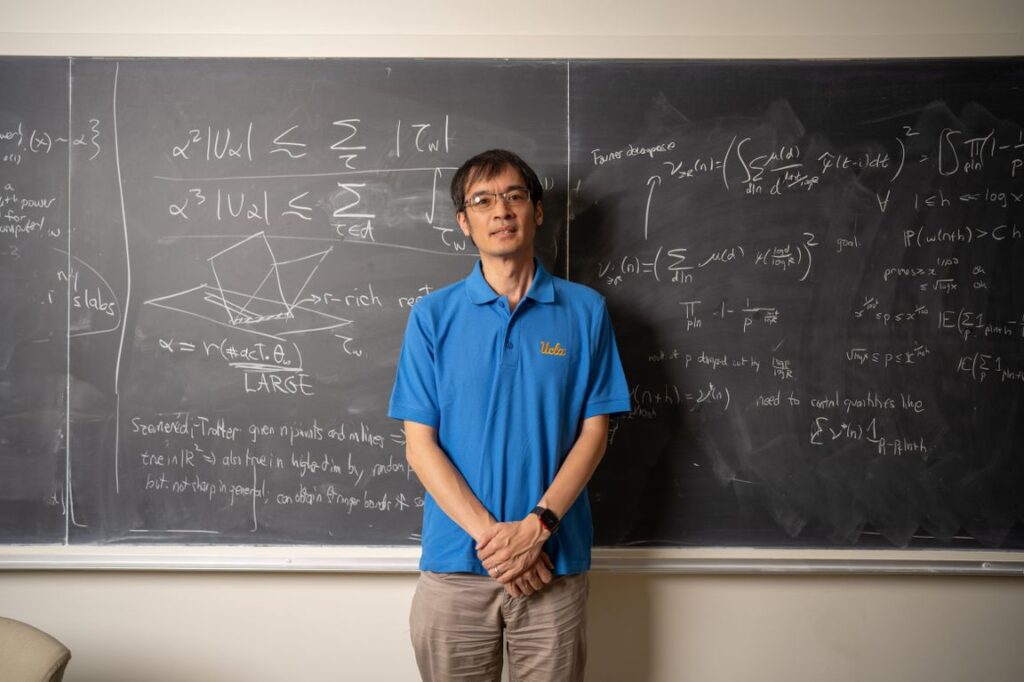
Past guest Terry Tao has thoughts about AI.
In his case, he sees things through a mathematician’s eyes and unsurprisingly, knowing Terry, has developed an antidote to fears of AI Slop – call it AI shine. Human math proofs retain traces like scars. An awkward sentence or perhaps notation that suddenly changes because, somewhere around 2 a.m., the mathematician’s coffee wore off. Tao calls this “natural friction.” It tells the reader where the author actually had to think.
AI treats the scars as if it’s aloe vera I suppose. The better AI gets at making our thinking look effortless, the harder it may become to see where the thinking actually happened. For this reason, I will never stop using emdashes! And best of all, my first book was written 4 years before ChatGPT was a gleam in Altman’s eye…and it’s rotten with em
Image
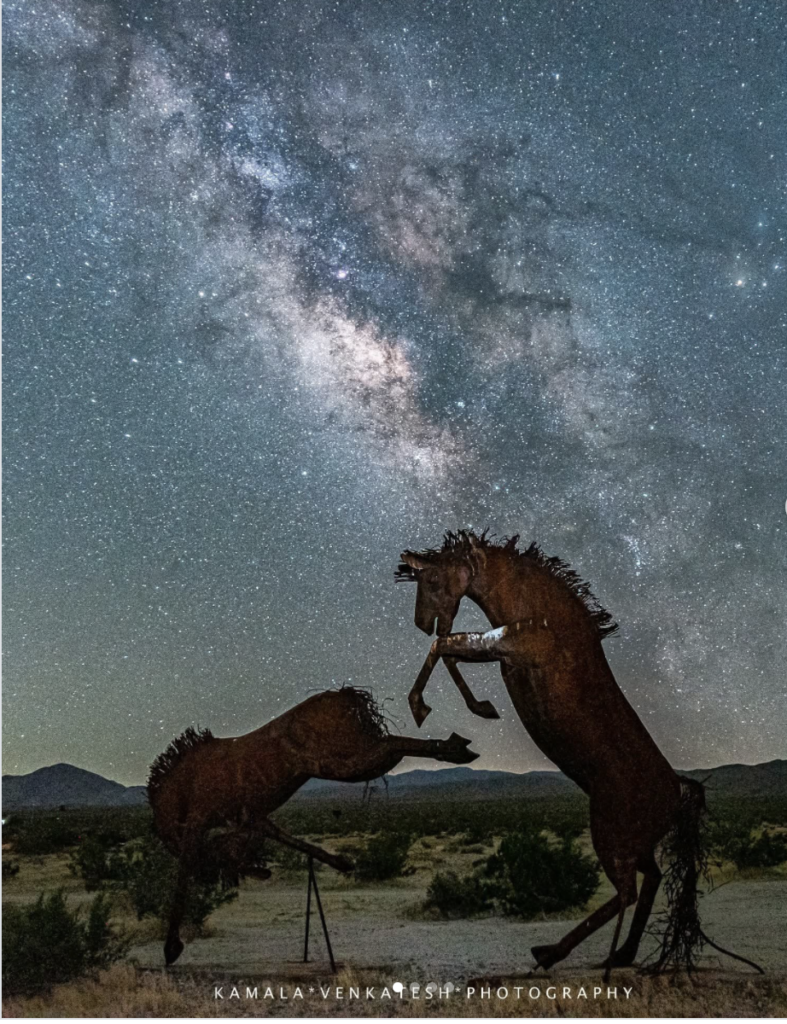
How cool is this pic from Kamala Venkatesh
Find more of her work here.
Conversation
Latest on Into The Impossible
Throwback to my conversation with Yann LeCun who’s one of the AI boomers I trust the most. I’m so sick of the AI doom going around some of which I’ve helped to perpetuate with my viral conversation last week with my friends like Roman Yampolskiy and Emad Mostaque most recently. Yann is the antidote we all need!
Audio is live on Apple Podcasts and at briankeating.com/podcast.
Advertisement

By popular demand, and for my mental health 😳, I am starting a paid “Office Hours” where you all can connect with me for the low price of $19.99 per hour. I get a lot of requests for coffee, to meet with folks one on one, to read people’s Theories of Everything etc. Due to extreme work overload, I’m only able to engage directly with supporters who show an ongoing commitment to dialogue—which is why I host a monthly Zoom session exclusively for patrons in the $19.99/month tier.
It’s also available for paid Members of my Youtube channel at the Cosmic Office Hours level (also $19.99/month). Join here and see you in my office hours!