Aristotle Was a Genius. But He Couldn’t Count Teeth.
Dear Magicians,
Imagine being a scientist in the twelfth century. The greatest intellectual authority was a Greek philosopher who had been dead for 1,500 years. Aristotle had written about physics, biology, logic, ethics, astronomy, and practically everything else. Disagreeing with him probably seemed fatal, career-wise. He was the closest thing the ancient world had to superintelligence, except that he couldn’t answer questions in real time and was hardly known to hallucinate or be a sycophant.
Aristotle really was a genius. He recognized that whales and dolphins breathe air, give birth to live young, and nurse their offspring, identifying biological features that distinguish them from fish. He developed systematic approaches to logic and even theatrics that influenced centuries of intellectual history. Try producing a comparable body of work without electricity, a microscope, or a university library. But great minds make great mistakes.
Aristotle believed heavier objects naturally fall faster than lighter ones. He explained nature using four terrestrial elements: earth, water, air, and fire, plus a fifth substance for the heavens. And in History of Animals, he confidently asserted that men have more teeth than women. I have no idea why he didn’t ask Mrs. Aristotle to open up and say “ahhhh” before reaching this conclusion.
His cosmology was equally ambitious. Aristotle believed the universe was eternal, without a beginning in time. But, modern observations establish an early hot, dense phase of cosmic expansion, although whether time itself began remains unresolved. The Big Bang doesn’t prove creation from nothing, but Aristotle’s philosophical commitments excluded possibilities before evidence could decide. There’s a danger in being too generous intellectually too early. The pattern repeated with the titanic mind of Albert Einstein, who initially favored a static, eternal universe. Unlike Aristotle, Einstein eventually had Edwin Hubble’s observational evidence confronting his beautiful but incorrect cosmological assumptions.
The medieval philosopher Moses Maimonides faced a similar problem. Educated people were encountering Aristotle’s intellectual system and wondering whether their inherited beliefs could survive it. Maimonides neither rejected Aristotle nor surrendered to him. He distinguished demonstrated knowledge from impressive arguments and recognized that ancient religious texts couldn’t always be interpreted literally. Neither philosophers nor theologians deserved immunity from criticism. Scientists, after all, sometimes defend their theories with a passion that would embarrass a medieval theologian.
I recently discussed Aristotle, Maimonides, and artificial intelligence with teachers, parents and grandparents in San Diego. With apologies to the Rambam, I called it A Guide to Perplexity 2.0. The central problem hasn’t changed much. We again confront an authority that seems to know everything, answers confidently, and occasionally produces complete nonsense. Aristotle required centuries of translation and commentary to spread his ideas. ChatGPT can mislead a million people before lunch, and the resulting prose will probably be beautifully formatted.
AI’s leading figures disagree about what comes next. Sam Altman argues that comparisons of human and machine intelligence should account for the biological investment required to produce an educated adult. Dario Amodei worries that capabilities may develop faster than our ability to evaluate safety. Roman Yampolskiy argues that advanced AI might prove impossible to control. And the less said about recently fallen-from-grace Jensen “I didn’t wake up a loser” Huang, the better. None of these predictions establishes the future scientifically. Yet technological forecasts acquire the status of revealed truth when delivered by sufficiently impressive people. Aristotle had followers; today we have podcasts, conferences, and investors paying handsomely to hear someone predict the future incorrectly.
I mentioned the company Perplexity, which offers an AI-powered answer engine. The name is almost too perfect. Maimonides wrote The Guide for the Perplexed to help people think through difficult questions. Eight centuries later, we’ve built a service to answer them. I use AI constantly, so I’m hardly advocating a return to parchment. But does removing the effort required to find an answer also remove some of the effort required to understand it? Aristotle’s teeth claim reminds us how long a confident answer can survive without anyone checking.
The Tower of Babel is often interpreted as a warning against arrogance, but I find its relationship between technology and judgment more interesting. Nothing is inherently wrong with better bricks or better computers. Trouble begins when our capabilities advance faster than our understanding of their consequences. I don’t know whether superintelligence will become uncontrollable, and nobody possesses reproducible experimental evidence about systems that don’t yet exist. Uncertainty warrants investigation, not panic or complacency.
More immediate consequences are appearing in classrooms. A randomized study involving nearly 1,000 high-school mathematics students found that unrestricted AI assistance improved practice performance but reduced subsequent independent performance once assistance disappeared. A more carefully designed tutor largely avoided the effect. This doesn’t justify banning AI, but it suggests we can improve students’ answers without improving their understanding.
I don’t romanticize intellectual suffering. Calculators didn’t destroy mathematics, and search engines didn’t eliminate historical scholarship. AI tutors could democratize individualized instruction. But we should judge educational technology by what students can accomplish after removing it, not merely by how impressive their assisted work looks. It’s almost the reverse of the Tower of Babel story. At Babel, people wanted to do the work themselves, collectively building with one language before being dispersed. Today we outsource thinking to machines speaking in every language. I recently appeared on a podcast discussing these themes.
This returns me to Maimonides. He didn’t possess every correct answer. He accepted much of Aristotle’s physics, including ideas science subsequently overturned. His achievement was intellectual independence while taking the strongest available arguments seriously. He refused to assume that an authority must be right because it was brilliant, ancient, or widely admired.
Our children may have systems that know more mathematics than their teachers’ teachers, more literature than university librarians, and deeper knowledge of history than their grandparents. I hope they use them. But I also hope they ask where answers come from, what evidence supports them, and what would prove them wrong. Those questions matter whether the authority is Aristotle, a Nobel laureate, a parent, or a machine. They’re especially useful when the authority is me. Just ask my kids.
I fear we’ll stop noticing when we or our children have stopped thinking. I have no intention of abandoning these remarkable tools, but I’d like to preserve something every good teacher recognizes and every impatient student resents: the educational value of being genuinely perplexed. Aristotle got whales right and women’s teeth wrong. The lesson isn’t that genius is worthless. It’s that even genius benefits from occasionally opening its mouth and counting.
Until next time, have a M.A.G.I.C. week!
Brian Keating
Appearance
Strong-Sounding Argument? The Devil Is in the Premises
Georgios Mappouras at Mind Matters wrote an essay on November 11 answering my Oklo natural nuclear reactor argument, from my conversation with Stephen Meyer.
I had pointed to a uranium deposit in what is now Gabon that, about two billion years ago, sustained a chain reaction and ran as a reactor with no designer at all. If nature can build that, I asked, why should a complicated functional system automatically require a mind?
Mappouras turns the question around and asks how we know the Oklo reactor was natural in the first place, because a strong-sounding argument can hide its real work in the premises.
That is a fight worth having: check the premises before you trust the conclusion.
Genius
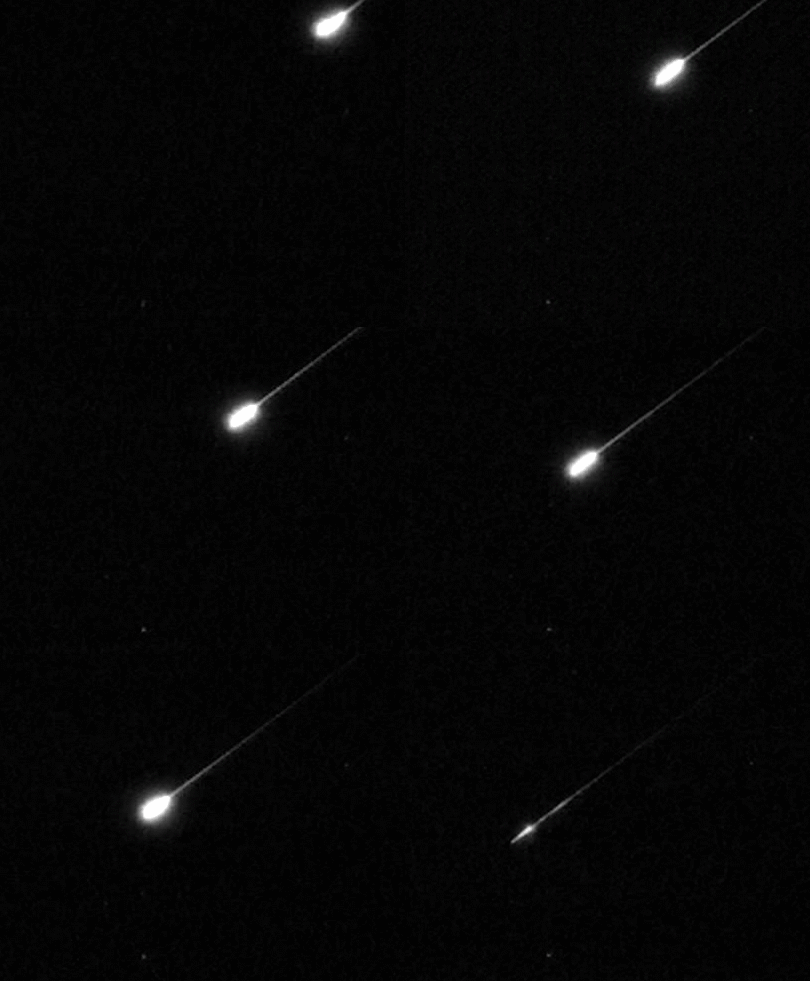
The Leonid Meteor Shower is next up! This is the biggest meteor shower of the fall. It is active from Nov. 6 to 30, peaking on Nov. 17-18. The best viewing is during the pre-dawn hours of Nov. 18, after the moon sets.
The Leonids typically produce about 15 meteors per hour with occasional bright fireballs and long trails. The meteors are produced when Earth passes through the debris left behind by comet 55P/Tempel-Tuttle.
Image
The Day Two Seas Met
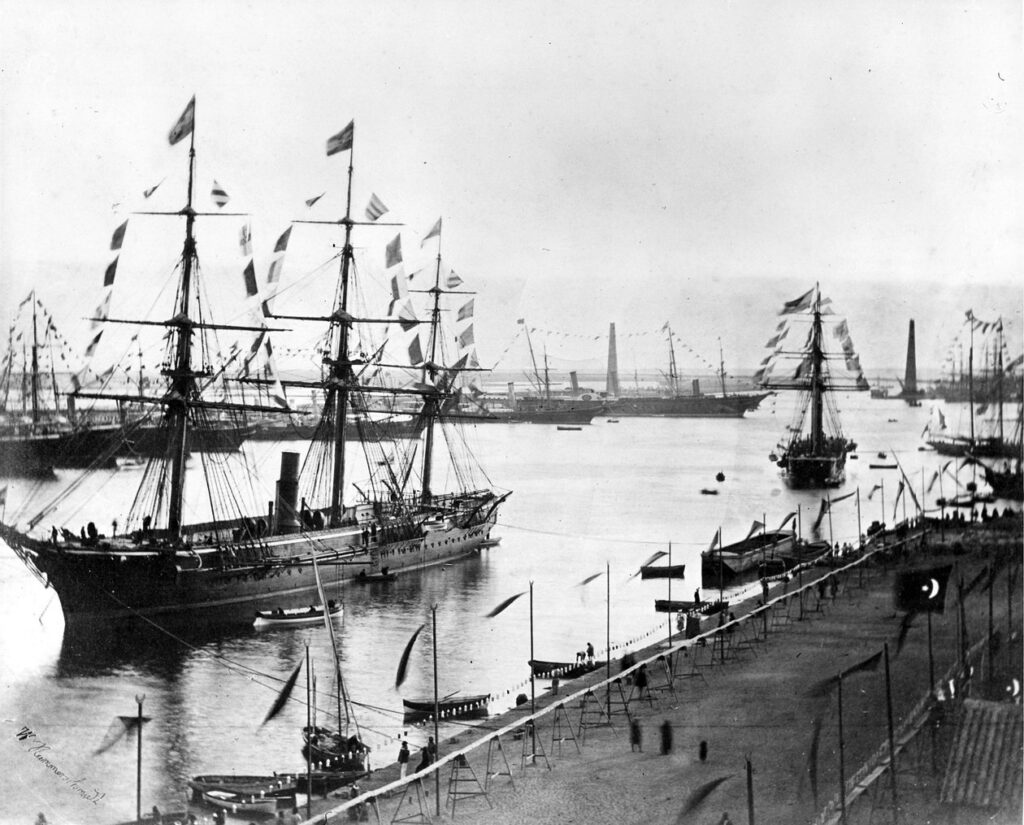
On November 17, 1869, steamships and sailing vessels dressed in flags filled the harbor at Port Said for the opening of the Suez Canal. After ten years of digging, a waterway joined the Mediterranean to the Red Sea, and with it Europe to Asia, without a voyage around Africa. The crowd on the quay came to watch a shortcut change the map.
Image: Unknown photographer, opening of the Suez Canal at Port Said, November 17, 1869. Public domain, via Wikimedia Commons.
Conversation
Latest on Into The Impossible
Why Physics Might Be Fundamentally AI-Proof
I sat down with Hans Busstra of the Essentia Foundation for a 45-minute conversation they titled “Why Physics Might Be Fundamentally AI-Proof.” He asked whether a machine that can do the math can ever discover a new law of nature, and what would have happened if Einstein had ChatGPT.
I told him I do not want to speculate: I want to test it, starting with a model trained only on what physics knew before 1900, to see whether it can invent the twentieth century.
We also talked about the 2014 BICEP claim of primordial gravitational waves, a signal that looked like a path to a Nobel Prize until it turned out to be cosmic dust. That failure is why I wrote Losing the Nobel Prize, and it left me with a rule I learned from Adam Grant: do not believe everything you can prove, and do not automatically disbelieve everything you cannot falsify.
A model can rearrange the known world. It has a harder time with the Tuesday before the Big Bang, or with the questions our best theories still cannot close.
Advertisement
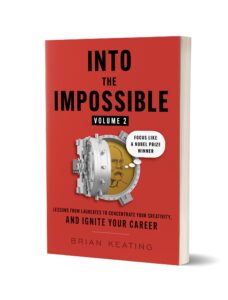
Tomorrow’s prize goes to a discovery made decades ago. Here’s how the winners made it: Focus Like a Nobel Prize Winner!
In Into the Impossible, Volume 2, I sat down with Nobel Prize winners to find out how they actually work: how they protect their attention, pick problems worth decades of their lives, and keep going when nobody else believes the result. Their answers are full of practical lessons you can use to concentrate your creativity and ignite your career, whether or not Stockholm ever calls.
Get your copy on Amazon and learn from the laureates themselves.