Can a Machine Feel Einstein's Happiest Thought?
The Happiest Thought
Dear Magicians,
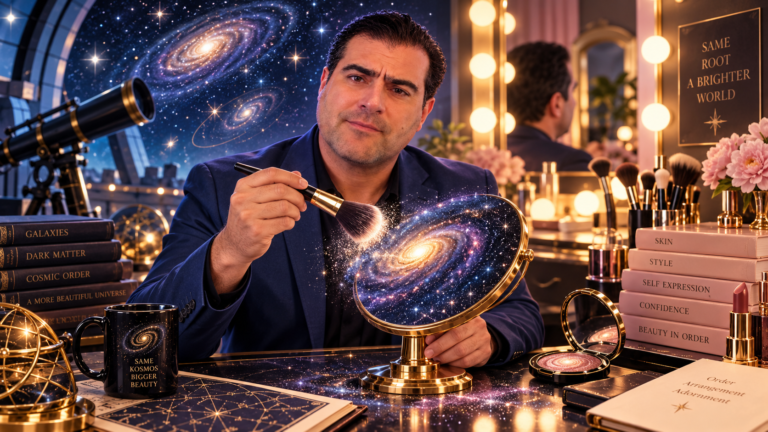
Can a machine feel the happiest thought of Einstein’s life?
In 1907, Einstein imagined a man falling freely from a roof. As he falls, he feels no gravity at all. Einstein called it the happiest thought of his life. That one image cracked open general relativity.
Lately I’ve been asking a strange question. What if we built an AI that knew only what physicists knew before 1907? No relativity, no quantum mechanics. Could it find that falling man on its own?
It turns out to be very hard to even run that test. You have to strip out more than physics papers. You have to strip out popular culture too. Interstellar, Kip Thorne’s wormholes and decades of science fiction all leak the answer. A clean, uncontaminated mind is almost impossible to build.
But I don’t think the deeper problem is contamination. It’s data.
Cosmology’s biggest open fight is over how fast the universe is expanding. Measure it with nearby galaxies and you get one number. Measure it with the oldest light in the universe, the cosmic microwave background I study, and you get another. Each side claims better than 1 percent precision. They disagree at five to seven standard deviations, odds of roughly one in a trillion that it’s a fluke.
So ask the smartest AI ever built which side is right. What can it do?
It can’t build a telescope. It can’t order a supernova to explode ten billion years ago. In biology, a robot lab can mix reagents all night and generate fresh data. In cosmology, there is one universe, and we can’t rerun it.
Language models are brilliant at math because math is a language. Physics is not a language. Physics is described by language, but the word is not the thing. The word for bread doesn’t feed you.
And then there’s the stomach drop. The weightless lurch of a roller coaster, the moment you feel free fall in your gut. Einstein’s insight began as a feeling. Can a model that has never fallen ever have it?
I don’t know. That’s what makes it exciting.
So here’s my question for you this week. What do you know because you felt it, not because you read it? Write down one thing. That’s your edge, and no machine can download it.
Until next time, have a M.A.G.I.C. week.
Brian
Appearance

Richard Dawkins: Genes and the Meaning of Life, Carnegie Hall
Next Tuesday, October 20 at 7:00 pm, I’ll be on stage at Carnegie Hall in conversation with Richard Dawkins. It’s his first time at Carnegie Hall, and the evening marks fifty years of The Selfish Gene. We’ll talk about the gene’s-eye view of life, what it says about being human, and his idea that every living creature is a “genetic book of the dead,” an archive of the worlds its ancestors lived in.
It’s presented by How To Academy in Stern Auditorium / Perelman Stage, at 57th and Seventh in New York. Tickets are at carnegiehall.org or 212-247-7800. I’d love to see you there.
Genius
A Cloud Made of Thin Air
Every cloud we have ever seen, on Earth, Venus or Mars, needs a seed: a speck of dust or soot for water to condense on.
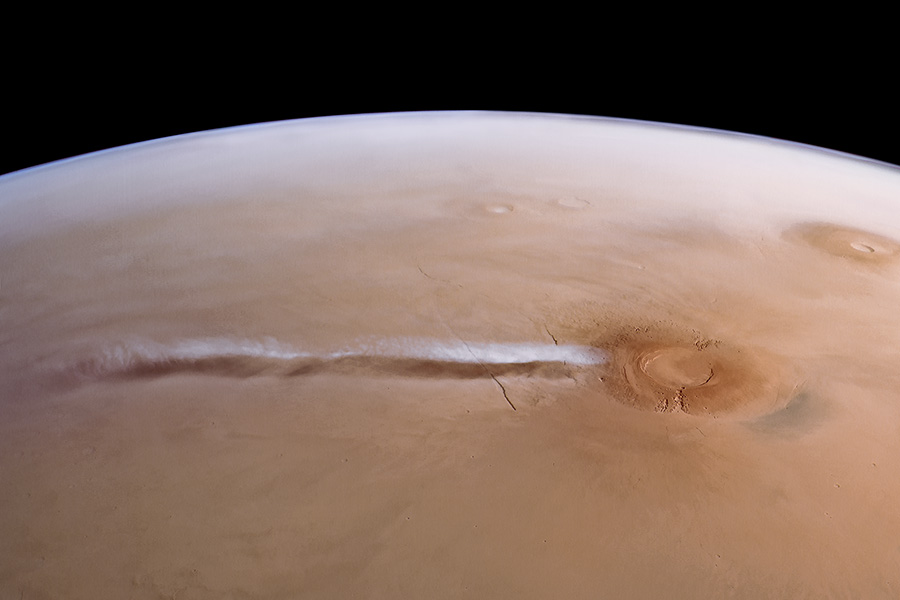
Over Arsia Mons, a Martian volcano about 20 kilometers tall, ESA’s Mars Express orbiter has watched a thin cloud stretch some 1,800 kilometers downwind every morning for a few months around the southern summer solstice. A team led by Jorge Hernández-Bernal of Sorbonne University now reports in Nature Geoscience that the volcano drives air up to 45 kilometers high and chills it by 30 degrees Celsius in minutes, so the water vapor becomes wildly supersaturated with no dust up there to grab onto, and it condenses all by itself. It may be the first time anyone has caught a seedless cloud in the act.
Mars keeps teaching us about limits, which is the heart of my talk “A T. rex on Mars”: the physics of a world decides what can grow there, from ice crystals to minds. Some ideas come out of thin air, and on Mars, so do clouds.
Image
Conversation
Latest on Into The Impossible
Adam Grant: How to Build Chemistry in a Remote World
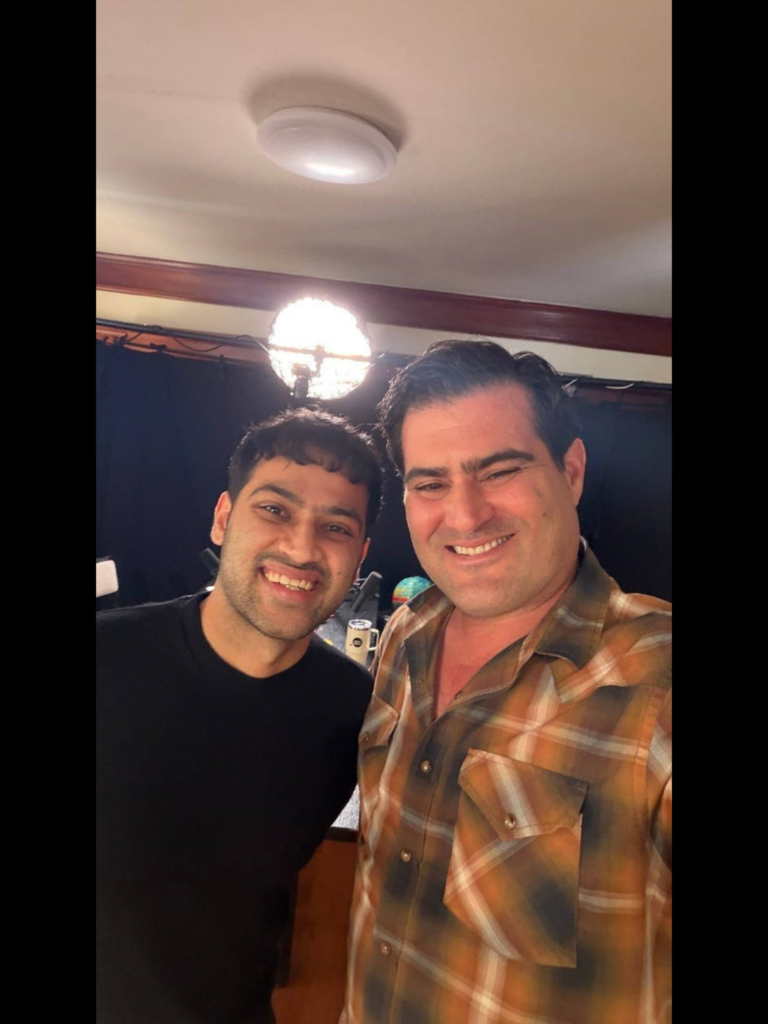
When two people are really vibing, their brainwaves sync up and so do their heartbeats. That is not a metaphor, and organizational psychologist Adam Grant has spent his career learning how to make it happen on purpose. His new book, Vibe, argues that the science of human connection has been hiding in plain sight for a century. We talk about why remote work causes boreout rather than burnout, why the highest paid person’s opinion can kill a team’s best ideas, and why desirability bias may be more dangerous than confirmation bias. He also explains the five-minute intervention that tripled revenue for university fundraising callers, and why he A/B tested the subtitle of his own book. We even found common ground on false certainty and thinking in conditional probabilities. My favorite line from Adam: “The highest sign of chemistry between people is not agreeing with them. It’s enjoying your disagreements.”
Advertisement
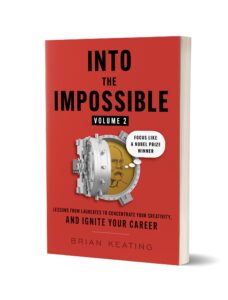
Tomorrow’s prize goes to a discovery made decades ago. Here’s how the winners made it: Focus Like a Nobel Prize Winner!
In Into the Impossible, Volume 2, I sat down with Nobel Prize winners to find out how they actually work: how they protect their attention, pick problems worth decades of their lives, and keep going when nobody else believes the result. Their answers are full of practical lessons you can use to concentrate your creativity and ignite your career, whether or not Stockholm ever calls.
Get your copy on Amazon and learn from the laureates themselves.