Cosmetologist or Astrologer?
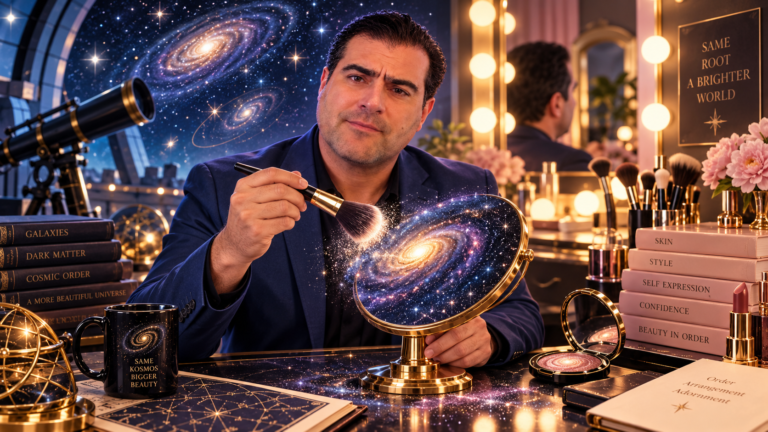
All Their Kosmos
Dear Magicians,
A TV host once introduced me on air as “an experimental… I want to say cosmetologist.”
He caught himself and fixed it. I told him he could keep “cosmetology.” He’s a very handsome man with very good hair, and cosmetologists do have good hair.
Then he asked what percentage of people call me a cosmetologist.
“More than call me an astrologer,” I said, “which I’m also not.”
We laughed and moved on. But here’s the funny part: he was closer to the truth than either of us knew.
“Cosmos” and “cosmetic” are cousins. Both come from the Greek kosmos, a word that means order, arrangement, and adornment. The verb kosmein means to arrange, to put in order, to adorn. A cosmetologist arranges a face. A cosmologist tries to understand how everything else got arranged. One works with a brush, the other with a telescope. We are both, in a sense, in the beauty business.
The Torah got there first.
Every Friday night, Jews welcome Shabbat with the opening words of Genesis 2: Vayechulu hashamayim veha’aretz v’chol tseva’am. “The heavens and the earth were finished, and all their host.”
Tseva’am means their host, their array, the way an army stands in ranks. When the Torah was translated into Greek, in the version we call the Septuagint, the translators needed a word for that array. They chose kosmos: Καὶ συνετελέσθησαν ὁ οὐρανὸς καὶ ἡ γῆ καὶ πᾶς ὁ κόσμος αὐτῶν. “And the heaven and the earth were finished, and all their kosmos.”
Centuries later, the Latin Vulgate went one step further: omnis ornatus eorum, “all their adornment.” One old English translation made from that Latin renders it “all the furniture of them,” which makes Creation sound like a showroom. I love it anyway.
Put those translations side by side and you get a picture of a universe that is both ordered and adorned. It works, and it is beautiful. It did not have to be both. A universe could follow its rules in the dark, with no one to notice and nothing worth noticing. Ours is dressed up. “The heavens declare the glory of God,” says the Psalmist, and a declaration is meant to be heard.
So the host’s slip was a gift. Sometimes the wrong name points you to the right thing. A slip of the tongue can be a better etymologist than a dictionary.
That brings me back to the other label, the one I’m also not.
Astrology and cosmology look up at the same sky. The difference is what they ask of it. Astrology asks the sky to decide for you: whether to take the job, whether to sign the lease, whether Mercury is to blame for your inbox. It turns the heavens into a Magic 8 Ball.
Cosmology asks you to look closer. It does not tell you what to do on Tuesday. It hands you a question bigger than you are and asks you to be worthy of it. That takes humility. The sky is not there to run our lives. It is there to be noticed, studied, and wondered at.
So call me a cosmetologist anytime. I’ll take it as a compliment to the universe. Just please don’t call me an astrologer.
Until next time, have a M.A.G.I.C. week.
Brian
Appearance
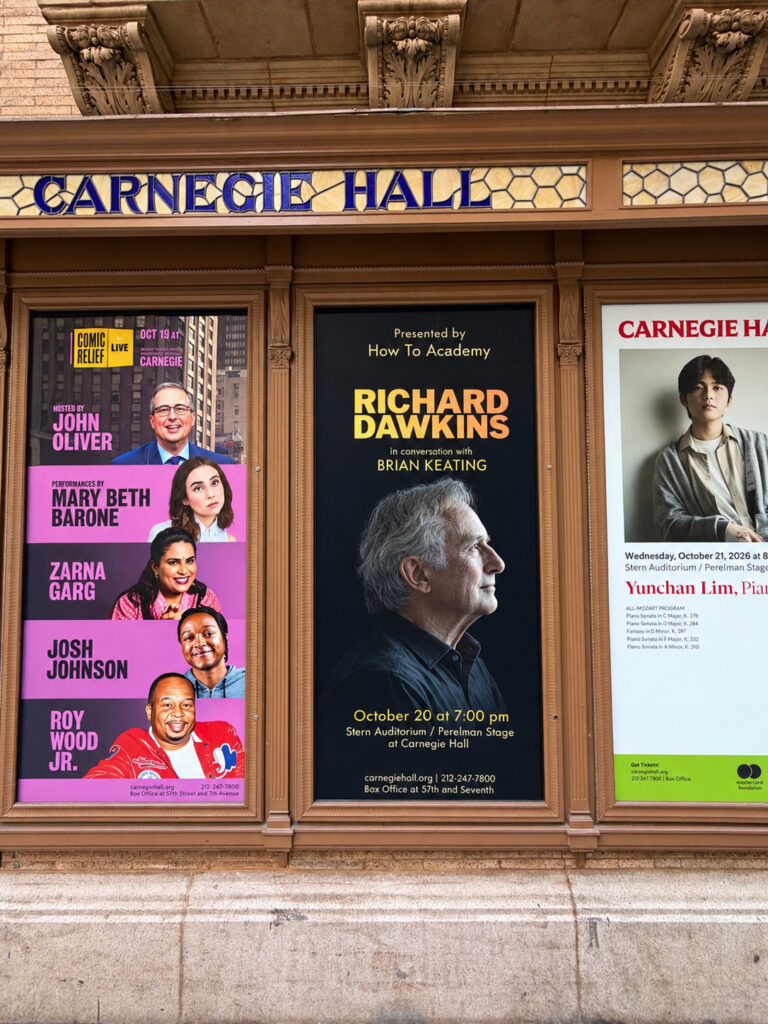
Richard Dawkins: Genes and the Meaning of Life, Carnegie Hall
Next Tuesday, October 20 at 7:00 pm, I’ll be on stage at Carnegie Hall in conversation with Richard Dawkins. It’s his first time at Carnegie Hall, and the evening marks fifty years of The Selfish Gene. We’ll talk about the gene’s-eye view of life, what it says about being human, and his idea that every living creature is a “genetic book of the dead,” an archive of the worlds its ancestors lived in.
It’s presented by How To Academy in Stern Auditorium / Perelman Stage, at 57th and Seventh in New York. Tickets are at carnegiehall.org or 212-247-7800. I’d love to see you there.
Genius
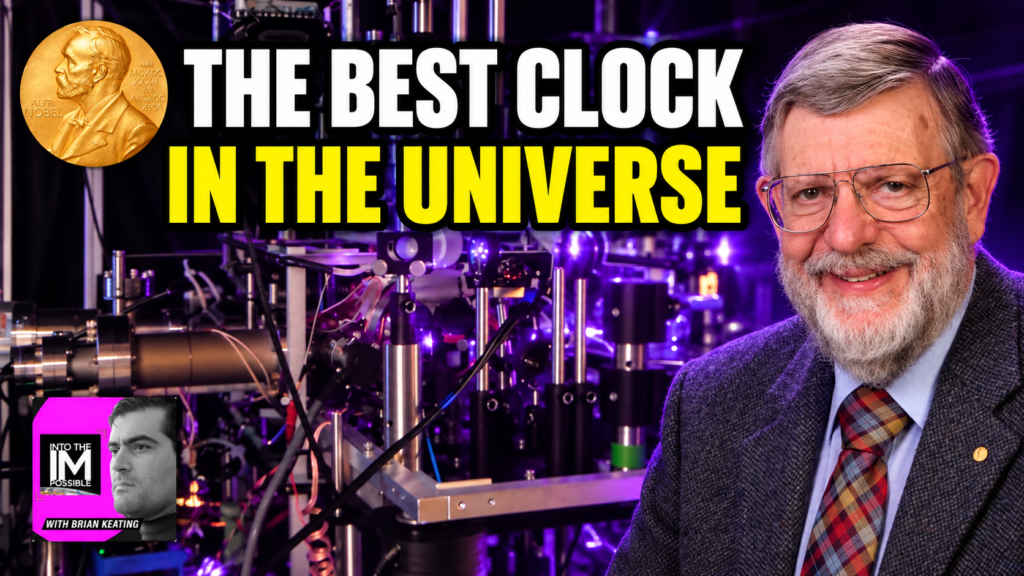
Ticking Inside the Nucleus
For seventy years, the best clocks on Earth have kept time by listening to electrons. This month, two teams started listening to the nucleus instead.
Physicists in Vienna and Beijing have independently built the first working nuclear clocks. Today’s atomic clocks track electrons jumping between energy levels. These new clocks shine lasers on thorium-229 nuclei held inside a crystal and lock onto a tiny energy shift in the nucleus itself. They don’t beat the best atomic clocks yet. But the nucleus is small and well shielded from the outside world, so the designs could end up smaller and sturdier. That could eventually improve GPS, telecommunications, data synchronization, and precision measurement of every kind.
This story runs straight through my friend Bill Phillips. Bill came to the National Bureau of Standards in 1978 hoping to build a better atomic clock. To do it, he learned to slow atoms down with laser light, chilling them to a hair above absolute zero. That work shared the 1997 Nobel Prize in Physics, and it is why modern atomic clocks are as good as they are. When Bill came on The INTO THE IMPOSSIBLE Podcast, he walked me through the whole history of the second, from sundials to cesium. I left convinced that the history of physics is really the history of better clocks.
Now the same tool that tamed the atom, a precisely tuned laser, is reaching one level deeper, into the nucleus. Every time we build a better clock, we learn to ask the universe a sharper question.
If you could measure one thing with perfect precision, what would it be?
Image
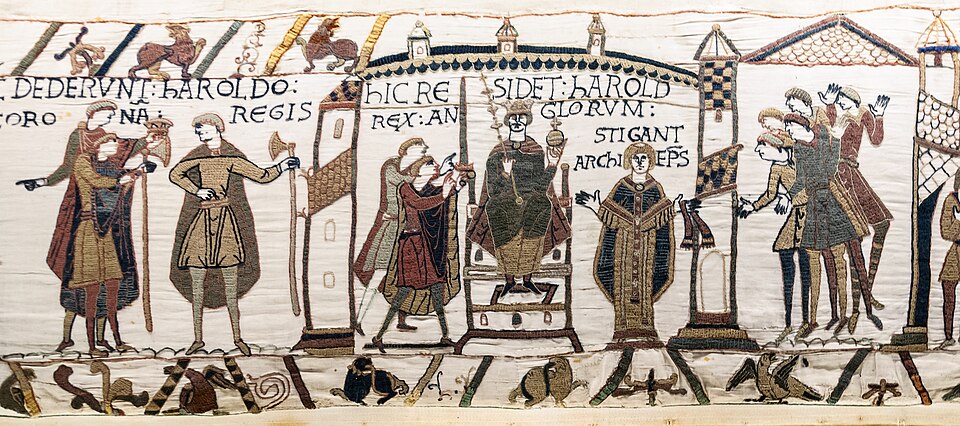
On October 14, 1066, William of Normandy defeated King Harold at the Battle of Hastings, 960 years ago this week. The Bayeux Tapestry tells the story in wool on linen, nearly 70 meters of it. Strictly speaking it isn’t a tapestry at all: it’s an embroidery, stitched, not woven. Here Harold sits crowned, with the Latin overhead: HIC RESIDET HAROLD REX ANGLORUM, “Here sits Harold, King of the English.” On the right, a crowd points up at something we can’t yet see. History likes a cliffhanger.
In the next scene we find out: it’s Halley’s Comet, which passed over England that spring and was read as an omen of Harold’s fall. Embroidered in England, kept for centuries in France, it is now on display in Britain for the first time, at the British Museum through July 11, 2027. A little kosmos of its own: order and adornment, one stitch at a time.
Credit: Bayeux Tapestry (11th century), scenes 29 to 31, the coronation of Harold. Photo by Myrabella, public domain, via Wikimedia Commons. Exhibition dates: BBC News.
Conversation
Latest on Into The Impossible
Roman Yampolskiy vs Joscha Bach: Can Anyone Control Superintelligence?
Two brilliant people, one microphone, and almost no common ground. Roman has spent more than a decade on the AI control problem and thinks keeping a superintelligence safe forever is like building a perpetual motion machine. Joscha thinks today’s AI is more controllable than anyone expected, and that pulling the plug would doom us anyway. I mostly tried to keep up. We argue about whether “P(doom)” is even a real number, whether nukes actually kept the peace, and why nobody has bothered to wipe out the spiders. My favorite line came near the end: being conscious does not make you kind.
Advertisement
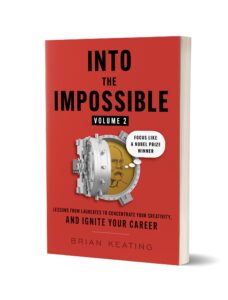
Tomorrow’s prize goes to a discovery made decades ago. Here’s how the winners made it: Focus Like a Nobel Prize Winner!
In Into the Impossible, Volume 2, I sat down with Nobel Prize winners to find out how they actually work: how they protect their attention, pick problems worth decades of their lives, and keep going when nobody else believes the result. Their answers are full of practical lessons you can use to concentrate your creativity and ignite your career, whether or not Stockholm ever calls.
Get your copy on Amazon and learn from the laureates themselves.