Why Google Demoted a Nobel Prize Winner
Dear Magicians,
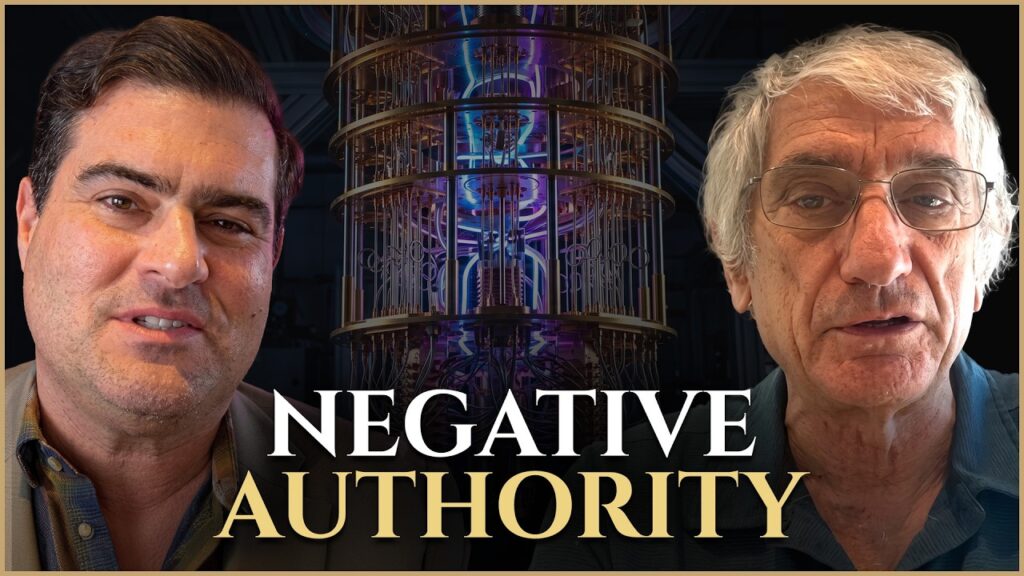
Last week, a 2025 Nobel laureate told me, on tape, that Google demoted him. Not for failing. For succeeding.
John Martinis led the team that achieved quantum supremacy — the moment a machine did in minutes what the world’s best supercomputer could not. Then Google “reorganized.” He went from head of hardware to what he called “one-over-N authority” — And that his authority had been reduced to a fraction of a percent of what it used to be a committee role, in effect. He tried it for nine months. He discovered what he calls “negative authority,” which he analogizes to parenting a teenager. Then he left.
“I was too much like Elon Musk to work at Google,” he told me said. Previously he said that “I had already lost control. I wasn’t really leading the hardware group.” His former UCSB students “naturally wanted to leave their advisor and form their own group and be independent.” Management and the team together decided the co-leader model was better. John clearly didn’t — he left 9 months after the re-org and 5 years before he’d win the Nobel Prize. Wonder what Google would have done had they known about the Nobel Prize? Actually, I don’t wonder at all….
Notice what’s actually being said here, because it might be the most important sentence in the entire conversation. The same Google that built him up to win the quantum race could not metabolize the kind of person who wins quantum races. Not the science. The person. The archetype. The ‘founder-as-father’ who makes a thousand decisions a day and owns every one.
The symmetry is striking. The co-authors of “Attention Is All You Need” — the paper that launched modern AI — also all left Google. Same company, same pattern. The institution that enables the breakthrough cannot survive the breacher.
This is not a Google problem. It’s an institutions problem. Physicists have a name for it: decoherence. The irreversible loss of phase coherence between a system and its environment. A coherent signal enters a system. The system interacts with its environment. The signal decays into thermal noise. The system is now stable, predictable, and useless.
John Martinis’ crime wasn’t incompetence. It was coherence. He was too phase-locked to the original problem. He didn’t want to be reorganized. He wanted to build a million-qubit machine, not a roadmap that pleased a steering committee.
The Talmud tells us to carry two notes in our pockets. One says: “I am nothing but dust and ashes.” The other: “The whole world was created for me.” Every Nobel laureate I know carries the second one. Institutions can’t.
Even if you’re not doing Nobel-quality work, here’s what should concern you : The person capable of your next breakthrough is, by structural necessity, the person your institution is most likely to lose. Innovation is, in this sense, a decoherence event. The signal that arrives is the signal that leaves.
Martinis did what physicists do when the apparatus stops working. He built a new one. With Alan Ho, he started a company to do what Google wouldn’t let him do: scale qubits the way you scale semiconductors. Deposition and etch. The way the entire chip industry has worked since 1955.
“The right way to do it,” he says, with the disarming directness of a man who’s already survived a Nobel and a demotion.
The rest of us are still arguing about whether AI can replace us. John Martinis is in a cleanroom.
I think he knows what he’s doing.
Until next time, have a M.A.G.I.C. week.
Brian
Appearance
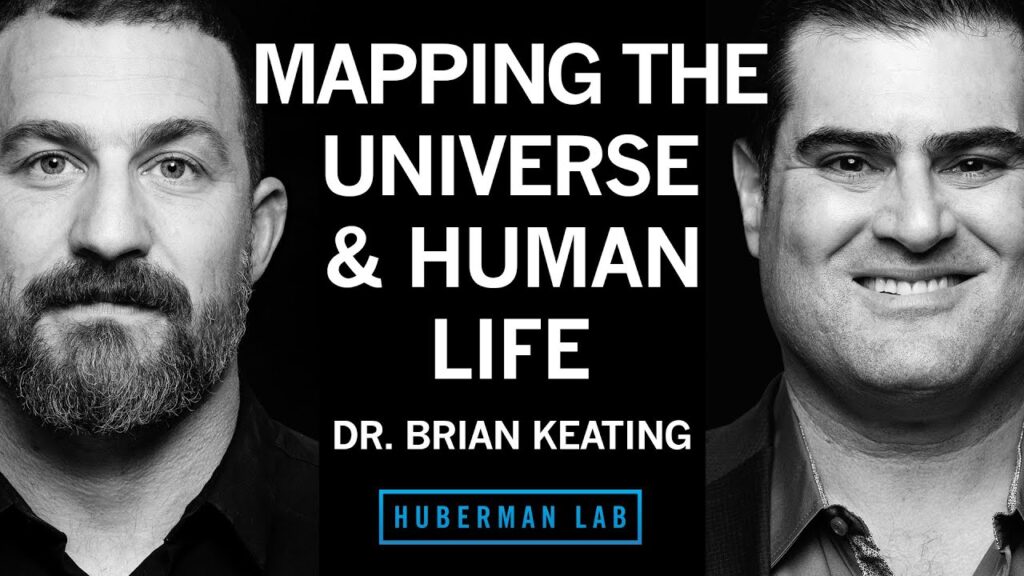
I sat down with Andrew Huberman to talk about the oldest science in existence, and things got weird fast.
We covered why astronomy might be the most visceral science humans have ever practiced, since the origin of the universe is the one event no one was ever around to witness. I also busted a few myths (sorry, astrology fans) and explained why the Big Bang wasn’t actually the beginning of time and space, just the birth of the first elements on the periodic table. Oh, and we got into the South Pole, the best telescope for under $50, and why I think the pyramids were built by us, not aliens.
Curious what a Gutenberg Bible has to do with your eyesight? You’ll have to listen to find out.
Genius
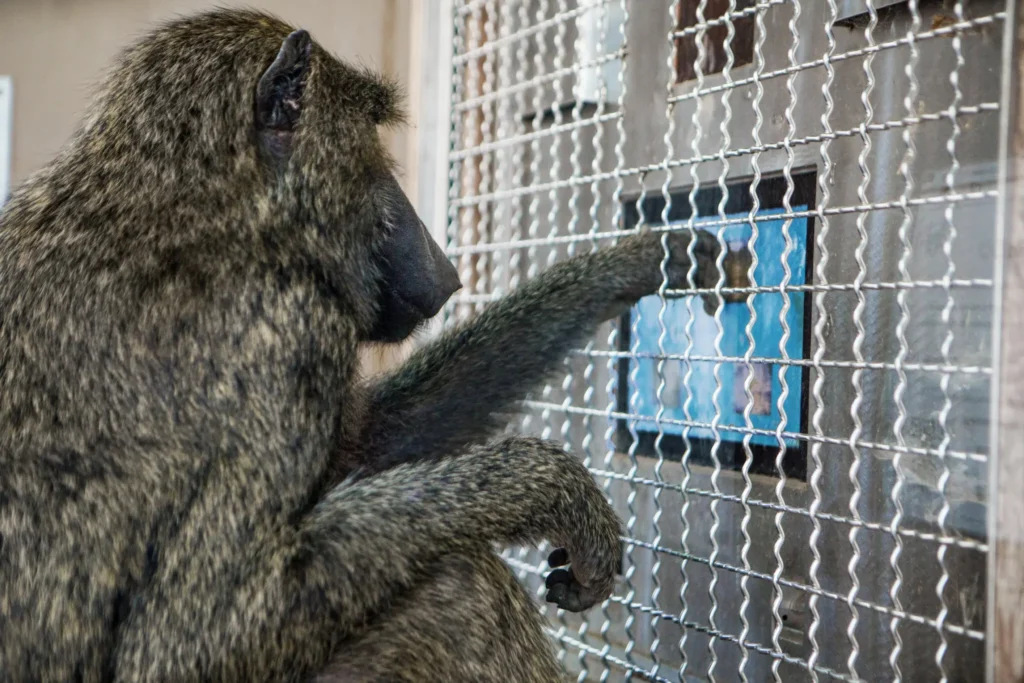
We love assuming our best tricks are uniquely human, but macaques and baboons recognize abstract geometry just like preschoolers.
Why are primates so good at math? Because they always know how to find the right angle!
Euclid’s foundations predate Homo sapiens by millions of years. Evolution doesn’t reinvent the wheel; it just repurposes it. When we trade human exceptionalism for testable science, nature is far more continuous—and surprising—than we think.
Image

The best photo of the eclipse… By Ander Gillenea / AFP
Conversation
Latest on Into The Impossible
My former UCSD colleague came back to campus, and I couldn’t let him get away with a typo in his own book.
Darren Lipomi and I go way back, all the way to our first conversation during Covid, and this time he’s returned as a full professor and department chair at Rochester with a memoir under his belt. We get into what it actually means to be an organic materials chemist (hint: it’s basically the science behind everything you touch, from OLED screens to space junk cleanup), the brutal odds of landing a tenure track job, and why he thinks the future belongs to people who aren’t afraid to get their hands dirty. We also settle the debate on his infamous h-index error, and yes, I made him own it on camera.
Stick around for the part where we talk about chirality, Louis Pasteur’s tweezers, and how a $99 Fisher-Price camcorder from the 80s quietly shaped two scientific careers.
Advertisement

By popular demand, and for my mental health 😳, I am starting a paid “Office Hours” where you all can connect with me for the low price of $19.99 per hour. I get a lot of requests for coffee, to meet with folks one on one, to read people’s Theories of Everything etc. Due to extreme work overload, I’m only able to engage directly with supporters who show an ongoing commitment to dialogue—which is why I host a monthly Zoom session exclusively for patrons in the $19.99/month tier.
It’s also available for paid Members of my Youtube channel at the Cosmic Office Hours level (also $19.99/month). Join here and see you in my office hours!